
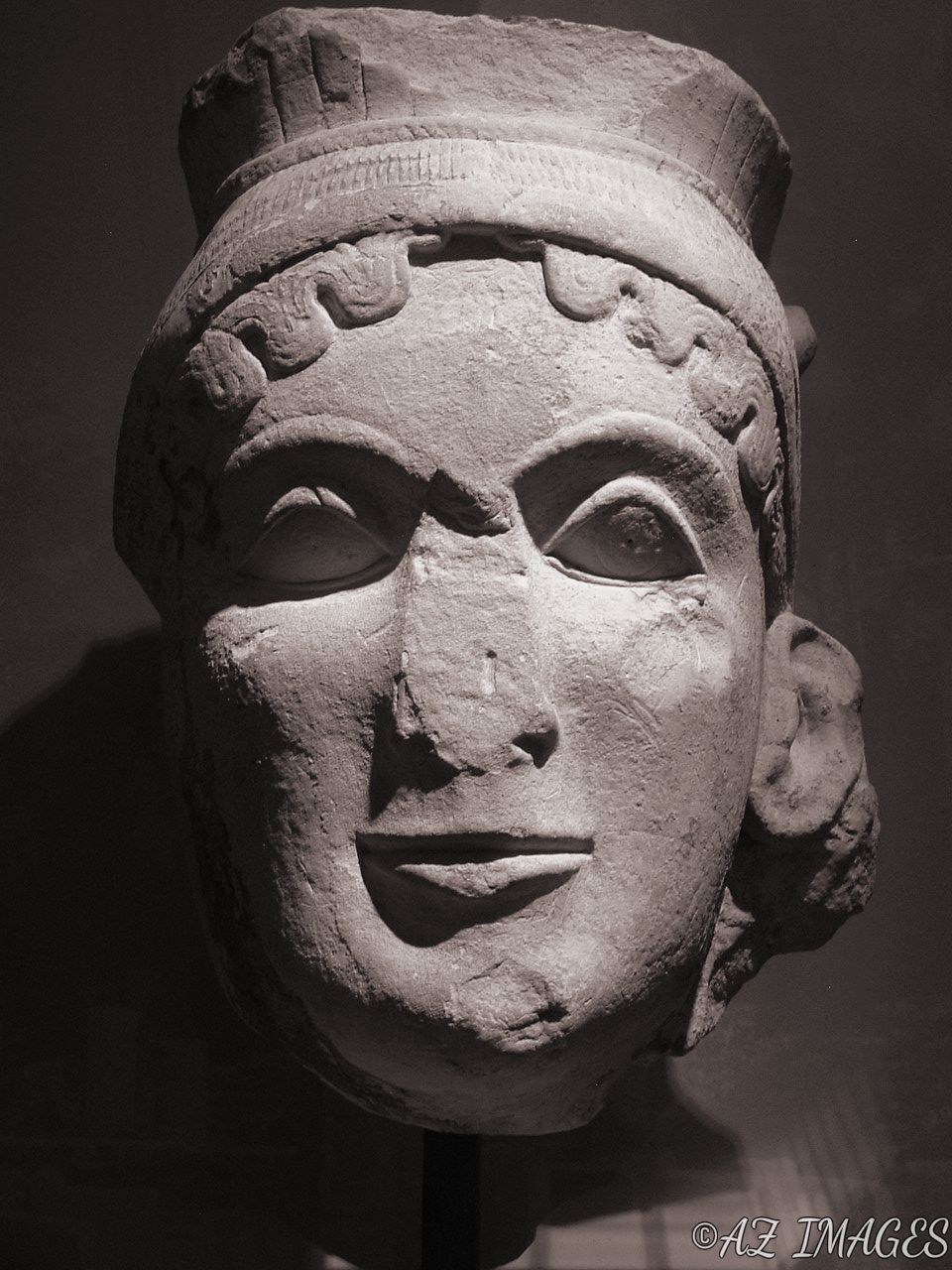
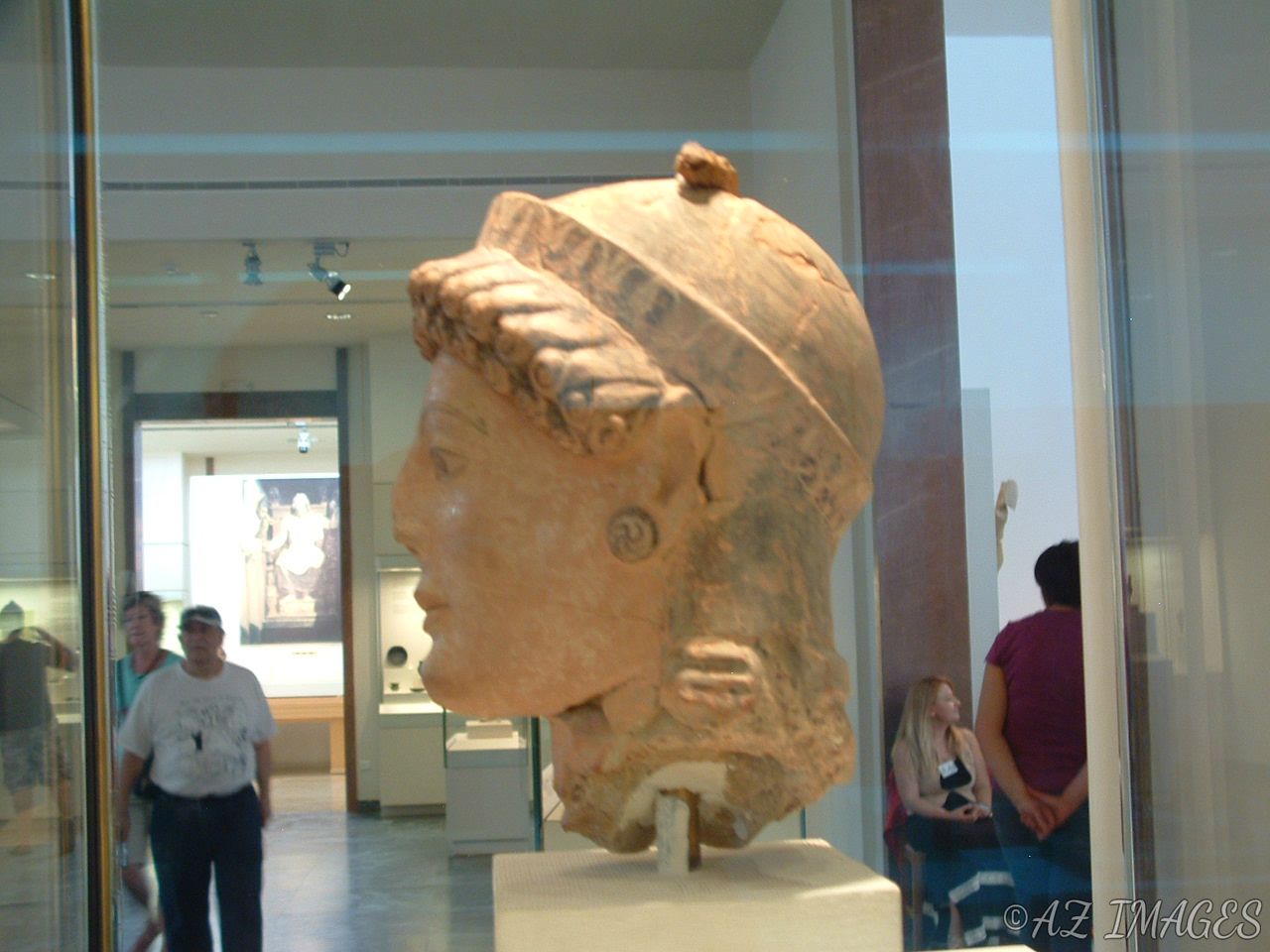
A Colossal female head made of lime stone. Possibly the Goddess Hera.
This was my second visit to the Archaeological Museum of Olympia in Greece. This year, I had some cousins that were working there and they, with their observant eyes and knowledge. were able to point out some things that I did not notice on my first visit.
One of the things that I didn’t notice on my first visit was a snake that is coming out of Hera’s head in the photograph below.
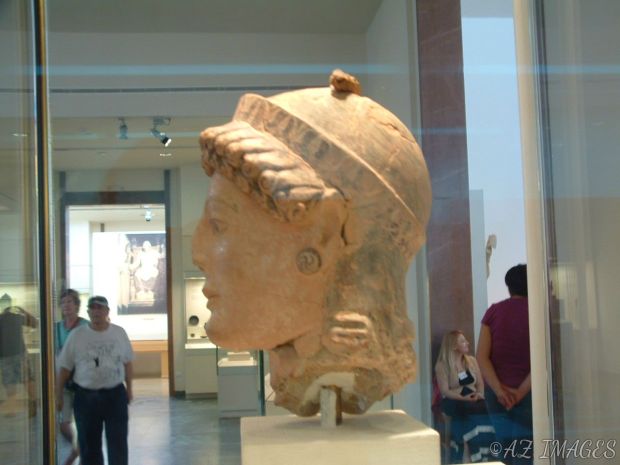
Snake coming out of the Goddess Hera’s Head. Yuck I hate snakes!
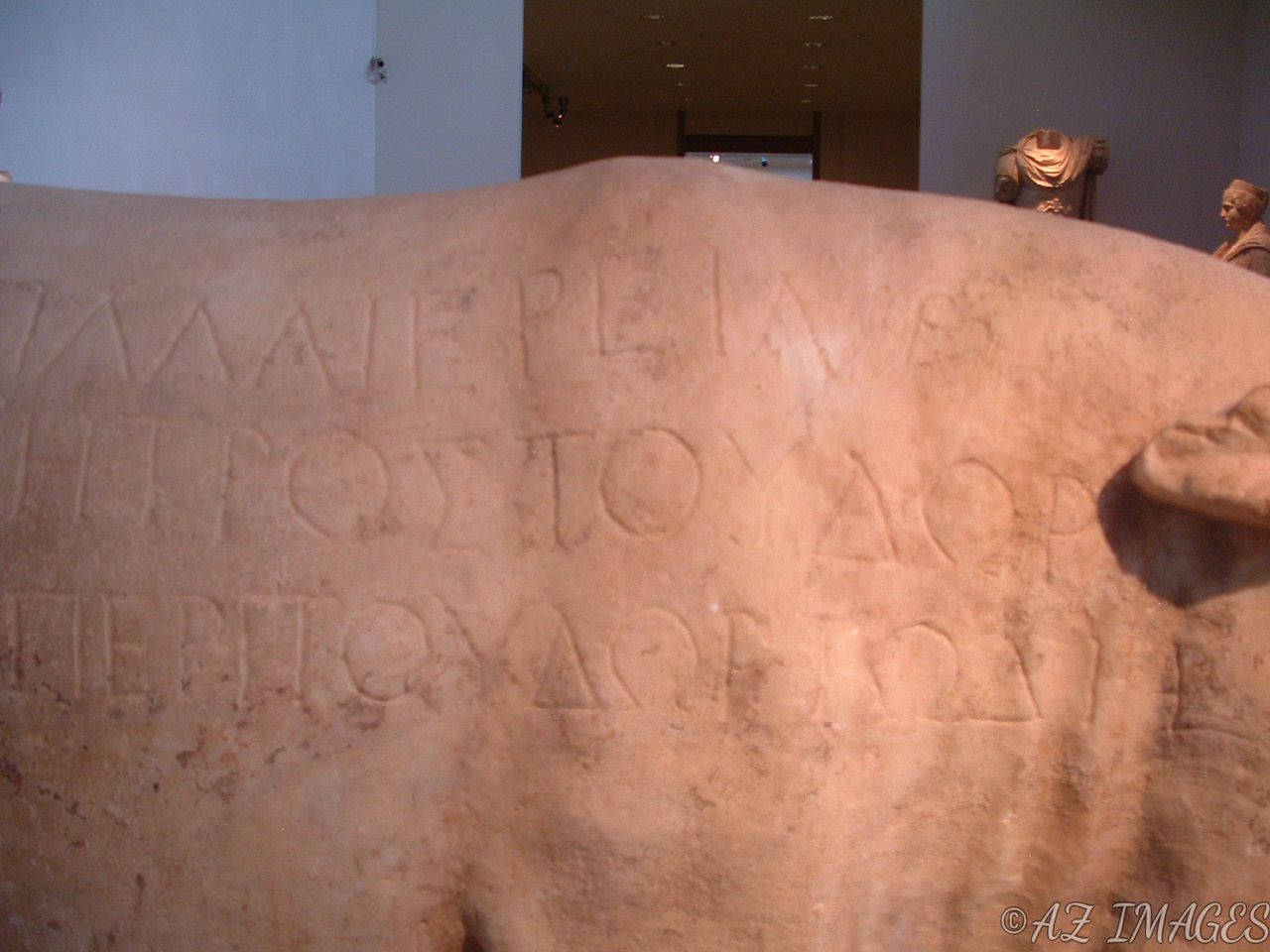
I was suprised to discover a heart shape on the upper right side of this sculpture of a bull. It was prominent Greek aristocrat Herod of Atticus who had this statue of a bull made in honour of his Roman wife Aspasia Regilla. He even built the theatre ‘Odeon of Atticus’, which is next to the Parthenon, in memory of her. This man really loved his wife! So much so that he even had a little heart drawn on the upper right side. Who knew people drew hearts back then too?
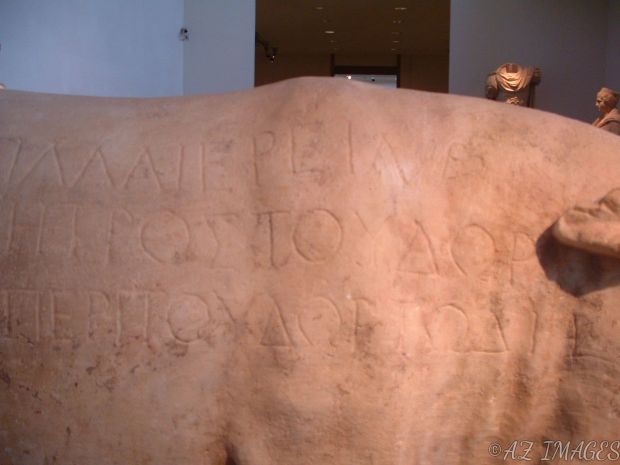
The inscription reads, ‘Regilla priestess of Demeter offers the water and appendices to Zeus’.
Aspasia hung around Olympia a lot and was even the only woman to be officially a spectator at the games. Only men were allowed to take part and be spectators at the games. Yes, my ancestors were very misogynistic. Also, bulls were used as sacrifices for Zeus at his temple in Olympia.
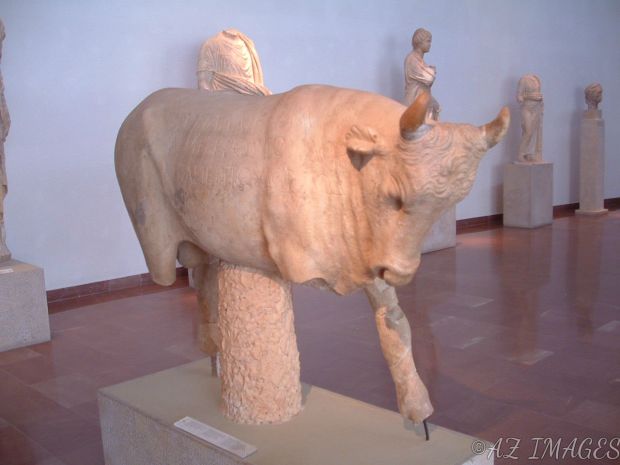
The Bull was a gift for Aspasia Regilla the wife of Herod
The is the very famous statue of Hermes by Greek Sculptor Praxiteles from Athens. This is the only authentic statue that has been saved from Praxiteles. It was found in the temple of Hera in Olympia in 1877 and it dates back to 343 A.D. Hermes (messenger of the Gods) is holding baby Dionysos (God of wine) who is crying trying to grab something while crying. Hermes (when he had his arm) most likely had some grapes in his hand. There are some very skilful techniques in this statue, from the left he looks sad, from the right happy and from the front he looks calm.
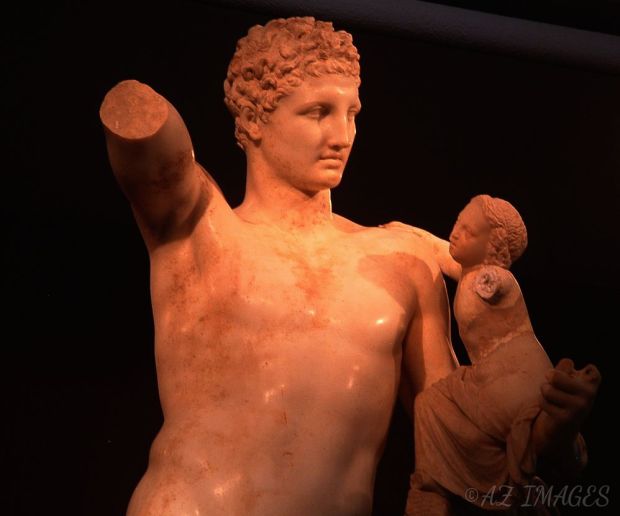 I didn’t know that Praxiteles wasn’t happy with his masterpiece, and that is why the back of the marble statue has not been polished. Artists are such perfectionists!

Front and back view of Hermes. The front is polished the back is not.
This is the breast-plate of Roman emperor Marcus Aurelius. Marcus had an affinity towards Greece. He wrote his famous philosophical book called ‘The Meditations’ in Greek. To show his love for Greece he had carved on his breast-plate the Goddess Athena (with the owl and serpent on each side of her representing wisdom) standing on top of the Etruscan she-wolf who is nursing the twins Romulus and Remus. The twins are central characters in the origin mythology of Rome. The fact that the Goddess Athena is depicted as standing over the twins means that Marcus believed that Athens was superior to Rome. We can see that Athena is being crowned as well.
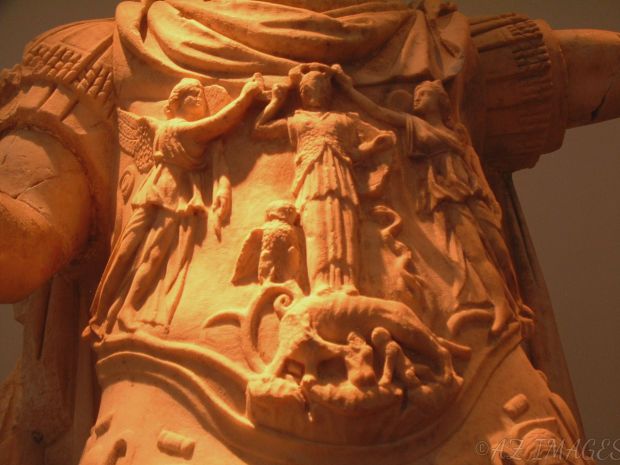
Breast-plate of Roman Emperor Marcus Aurelius.
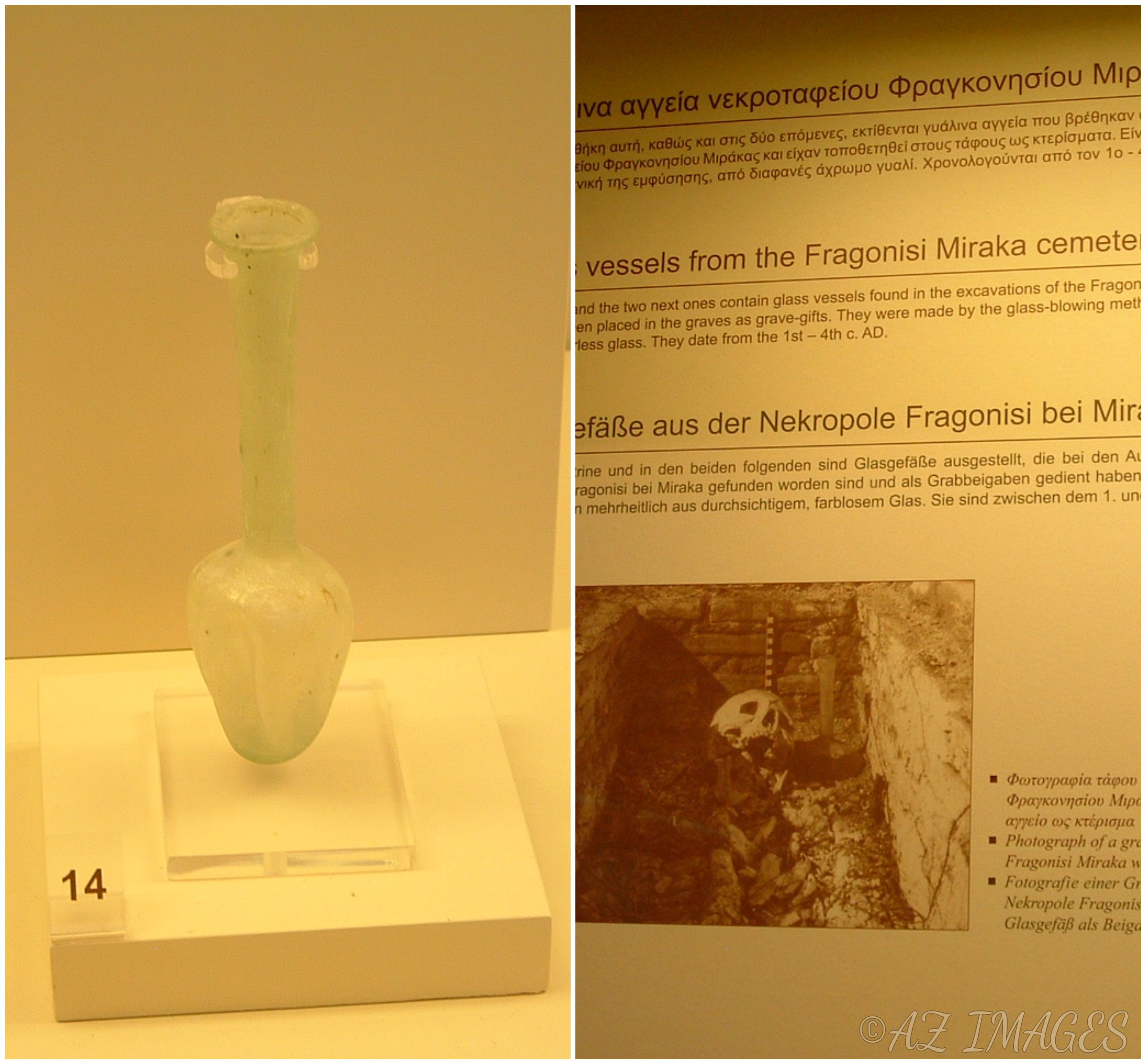
I wasn’t aware of the history of tear bottles. These tear bottles were found in a cemetery in a grave in Miraka cemetery. The ancient mourners of the deceased would collect their tears in the glass bottles and place them in the graves to show their respect and grief. This tradition dates back to ancient Persia, Biblical times, Rome and it made a come back in the Victoria era.
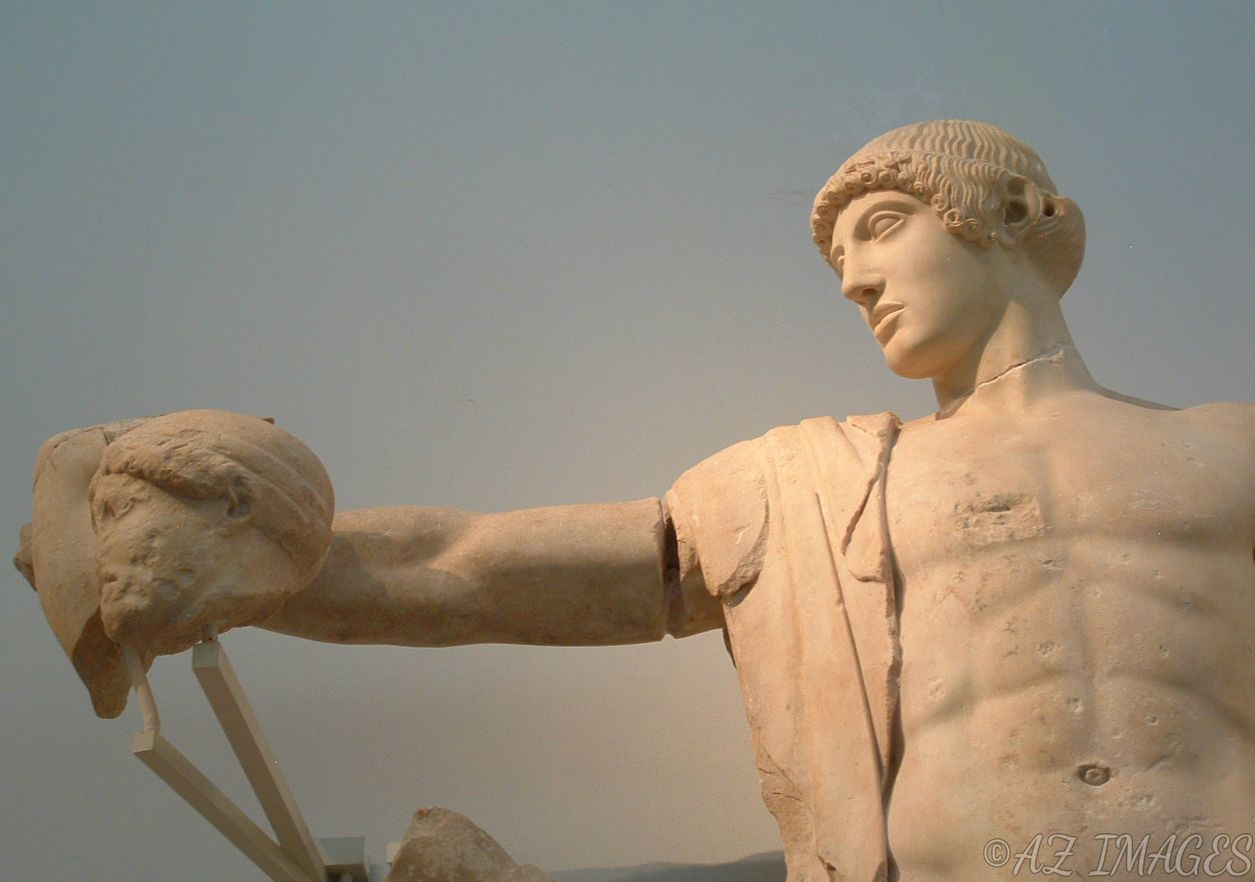
 One of my favourite statues at the museum. The statue of Apollo in the west pediment of the temple of Zeus which was built in 472 and 456 BC. The temple was built by sculptor Phidias at Olympia. The temple housed the 13 m (43 ft) high statue of Zeus-one of the 7 wonders of the ancient world.
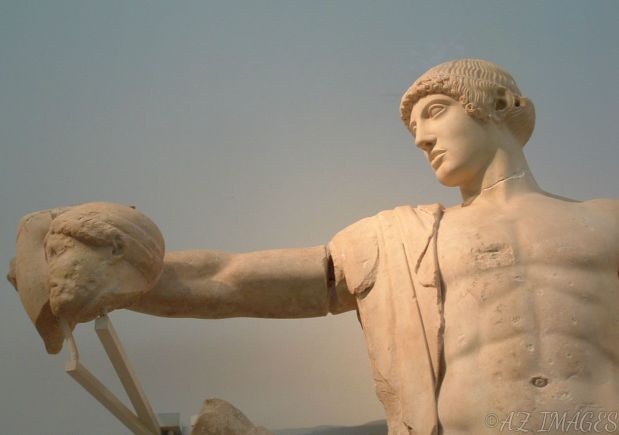
The God Apollo
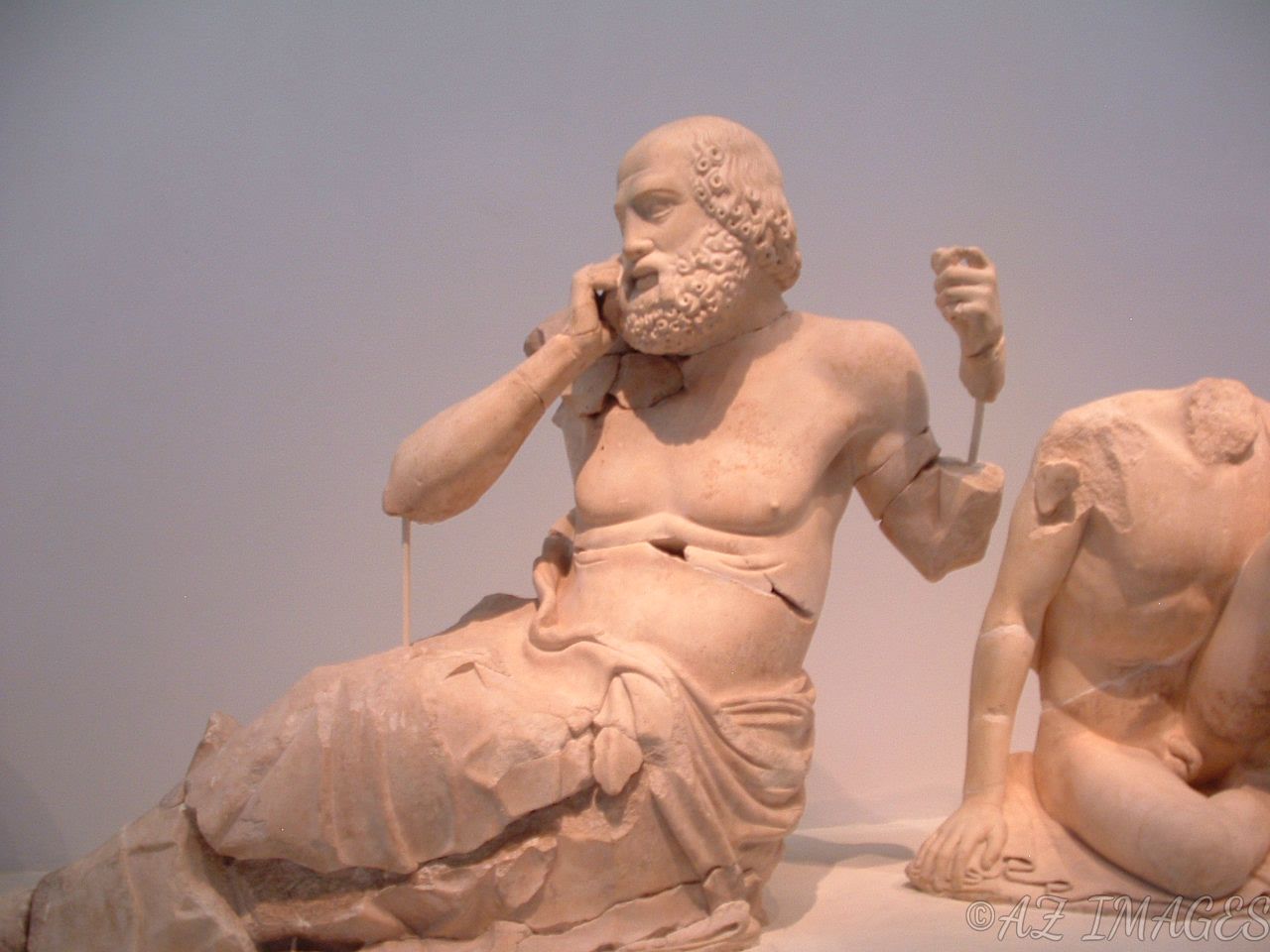
This old man is not on a cell phone, he is in deep thought, because he is ‘the Seer’.
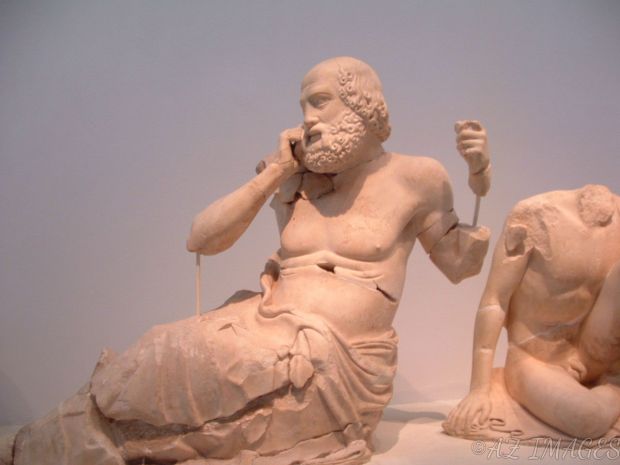
The Seer from the West Pediment of the Temple of Zeus.
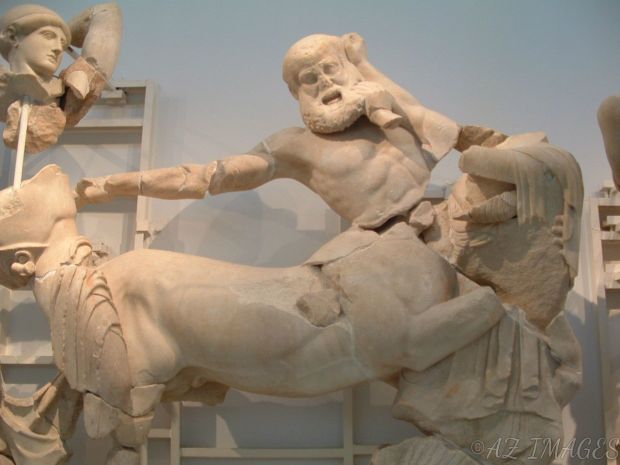
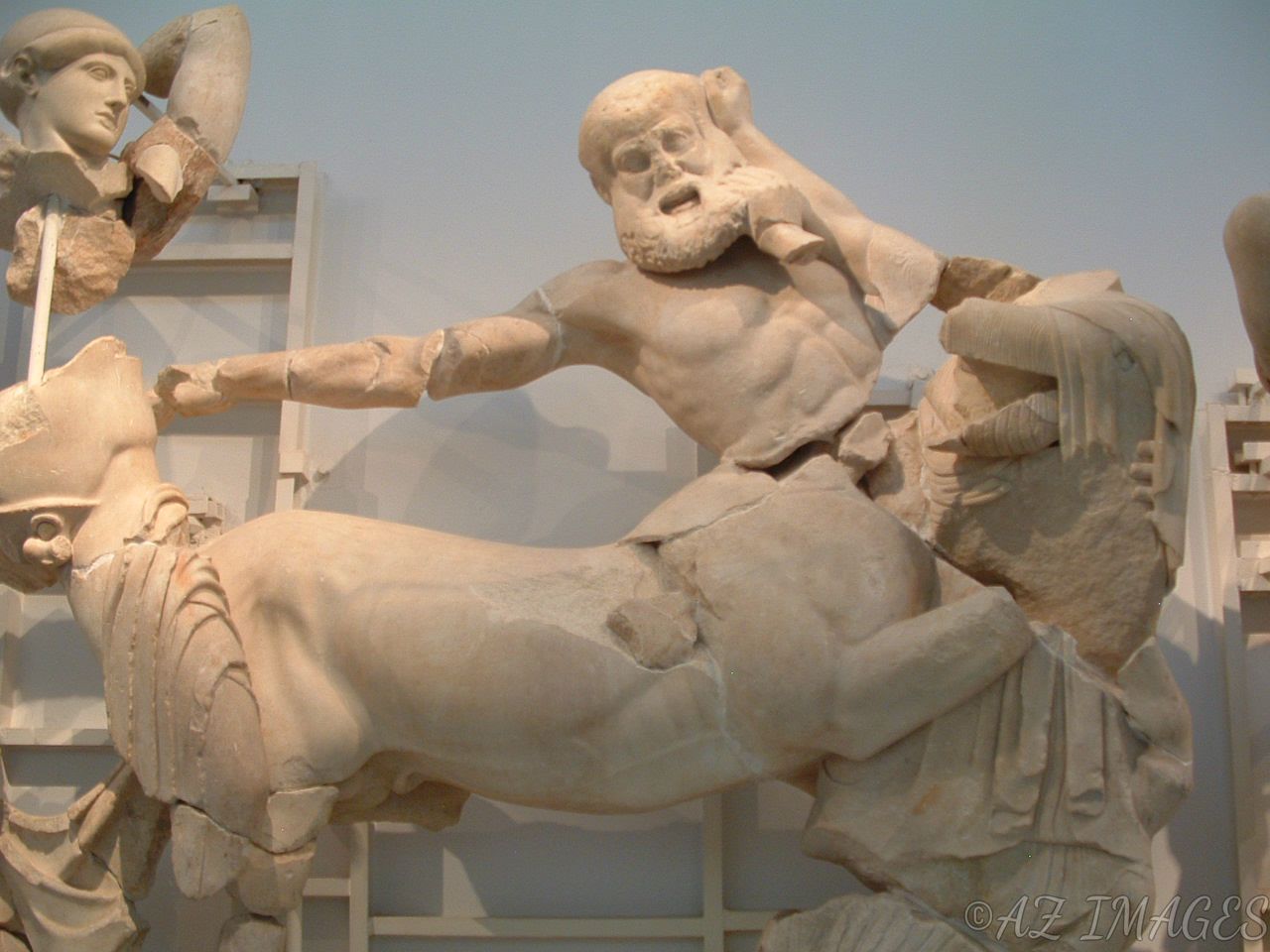
The Centaur in a battle from The West Pediment of the Temple of Zeus.
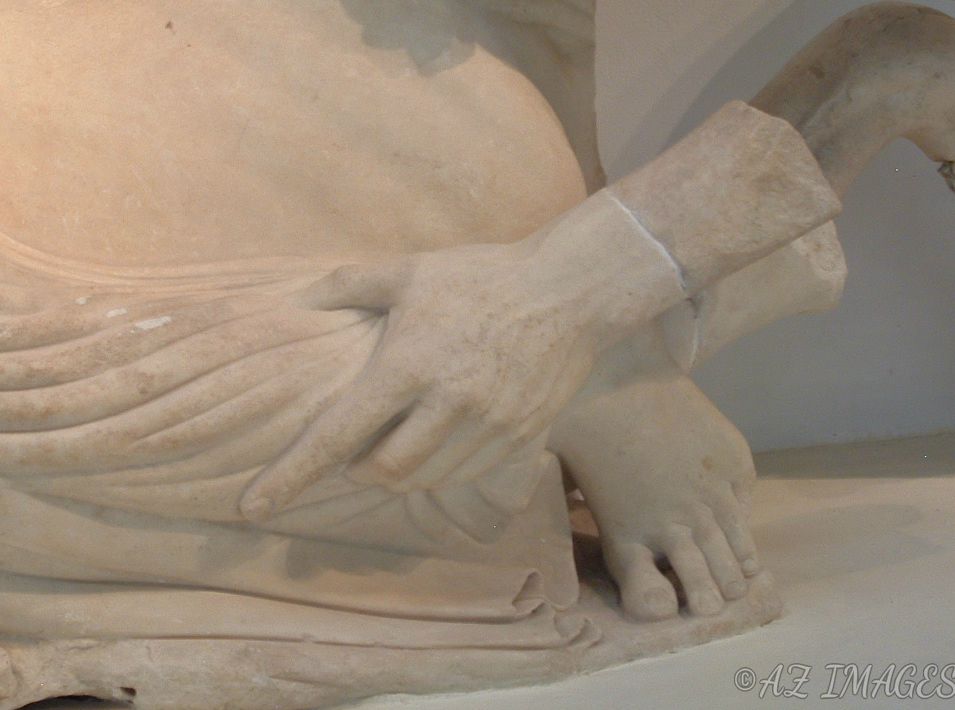
Notice the veins on the hands-now that’s impressive.
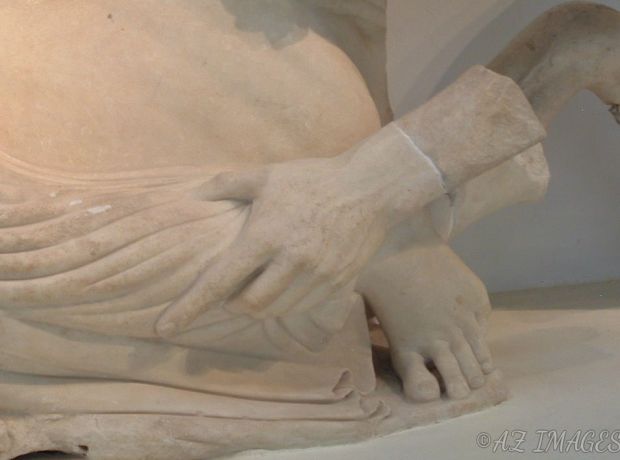
Details of a hand.
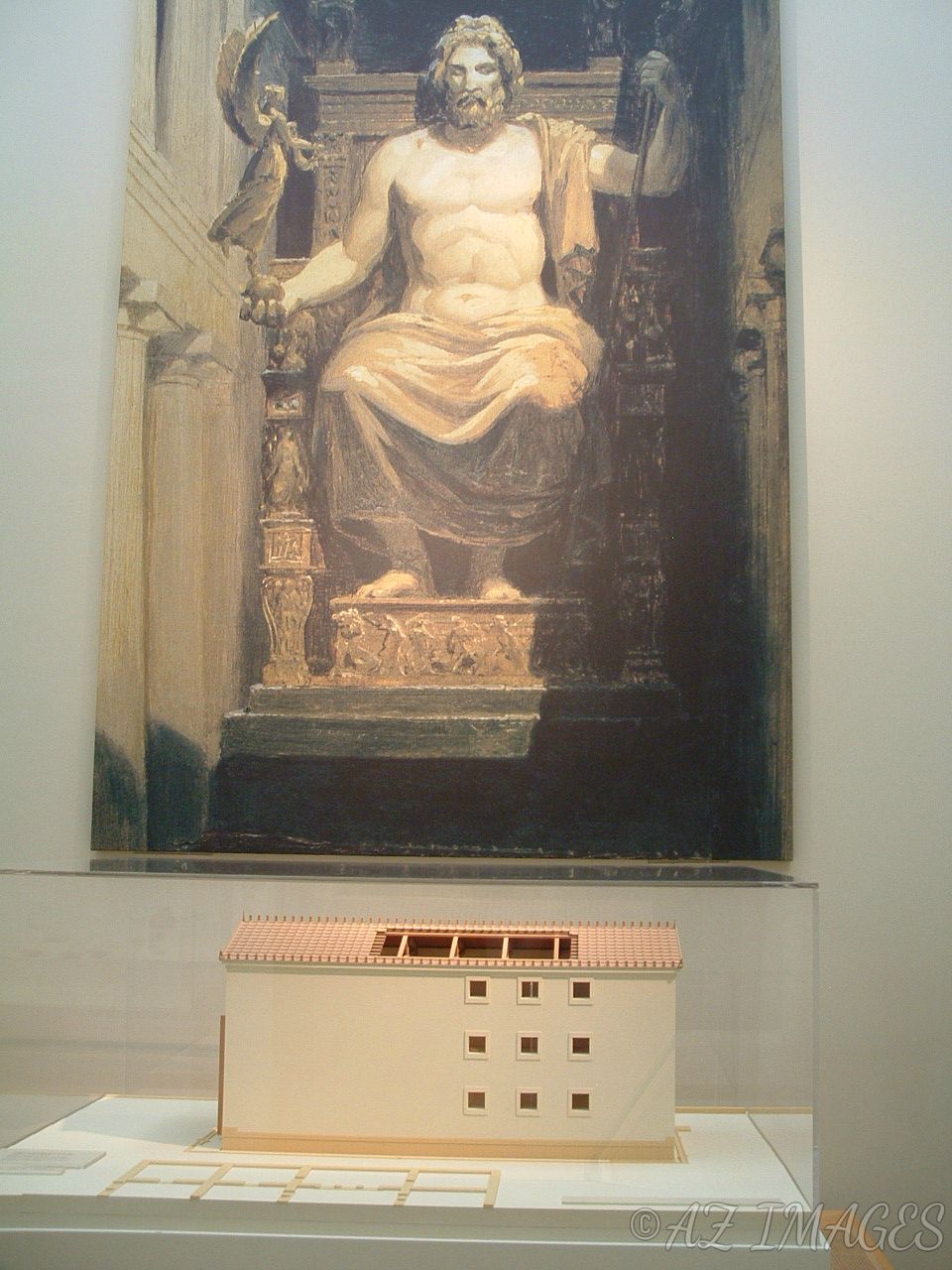
Sculptor Phidias’ work shop was as big as the temple of Zeus. It had to be the same size as the temple since the statue was so tall.
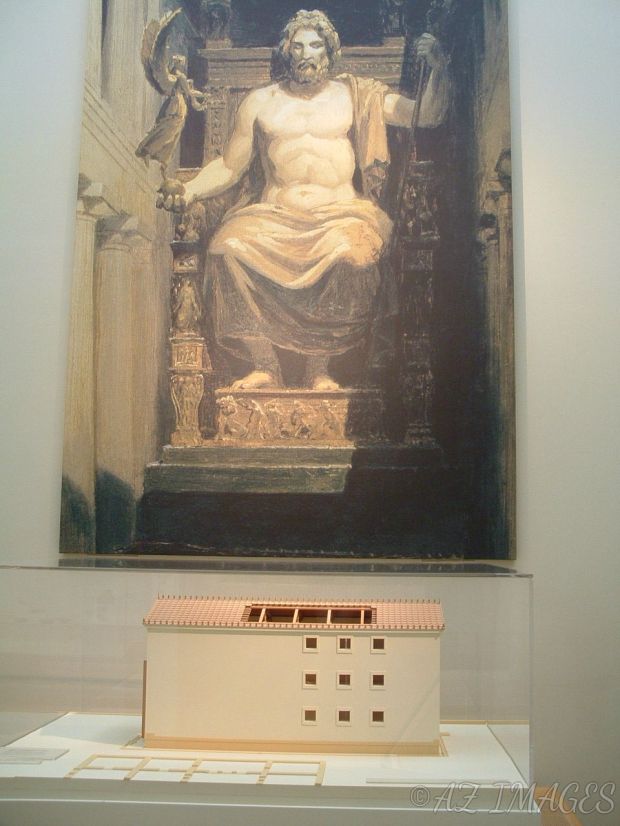
A painting of the statue of Zeus and Phidias’ workshop
There are more ‘secrets’ in the museum, but I can only put so much in a blog post. I find that some the tour guides are more knowledgable than other tour guides and some like to divulge more information than others.
37.643458
21.629408






 My Creative Wayz