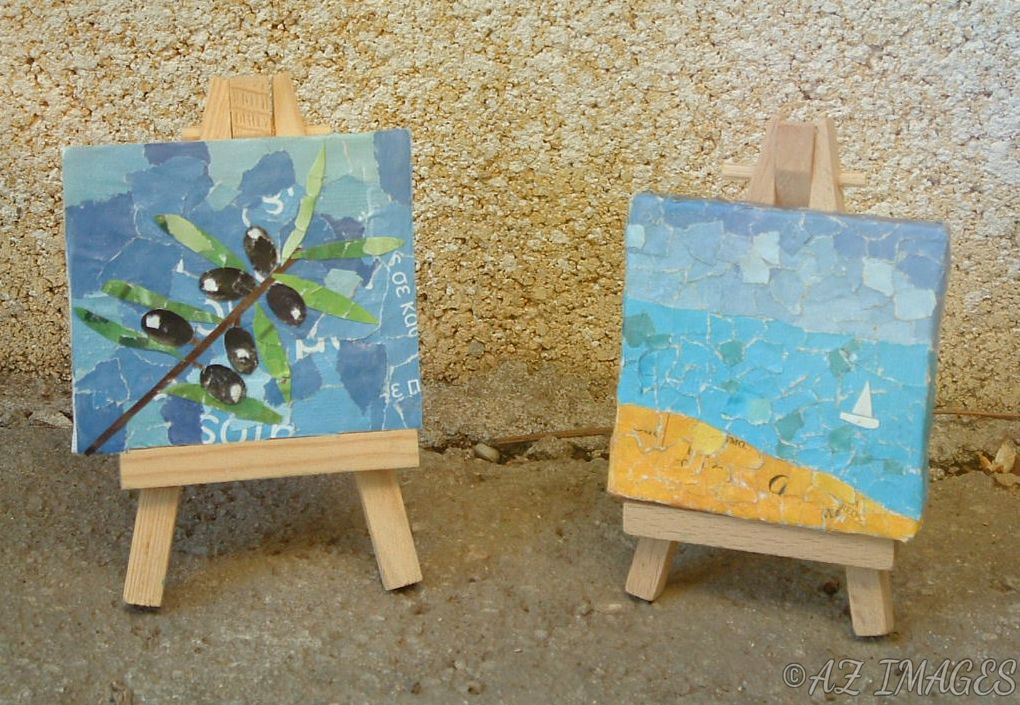
Tiny artworks made from torn bits and pieces of paper from magazines. A beach scene on the left and an olive branch on the right.
Tiny artworks made from torn bits and pieces of paper from magazines. A beach scene on the left and an olive branch on the right.
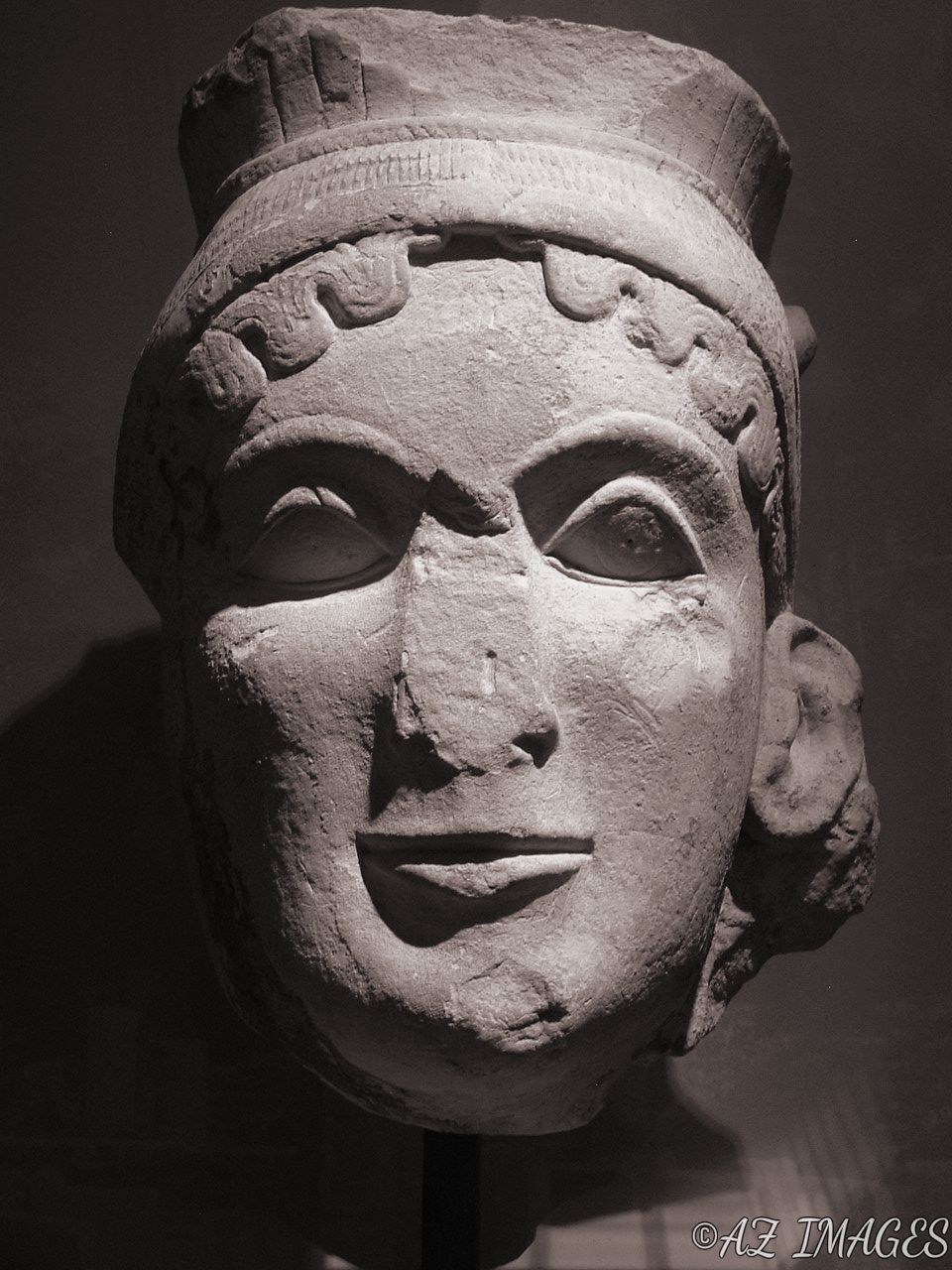
A Colossal female head made of lime stone. Possibly the Goddess Hera.
This was my second visit to the Archaeological Museum of Olympia in Greece. This year, I had some cousins that were working there and they, with their observant eyes and knowledge. were able to point out some things that I did not notice on my first visit.
One of the things that I didn’t notice on my first visit was a snake that is coming out of Hera’s head in the photograph below.
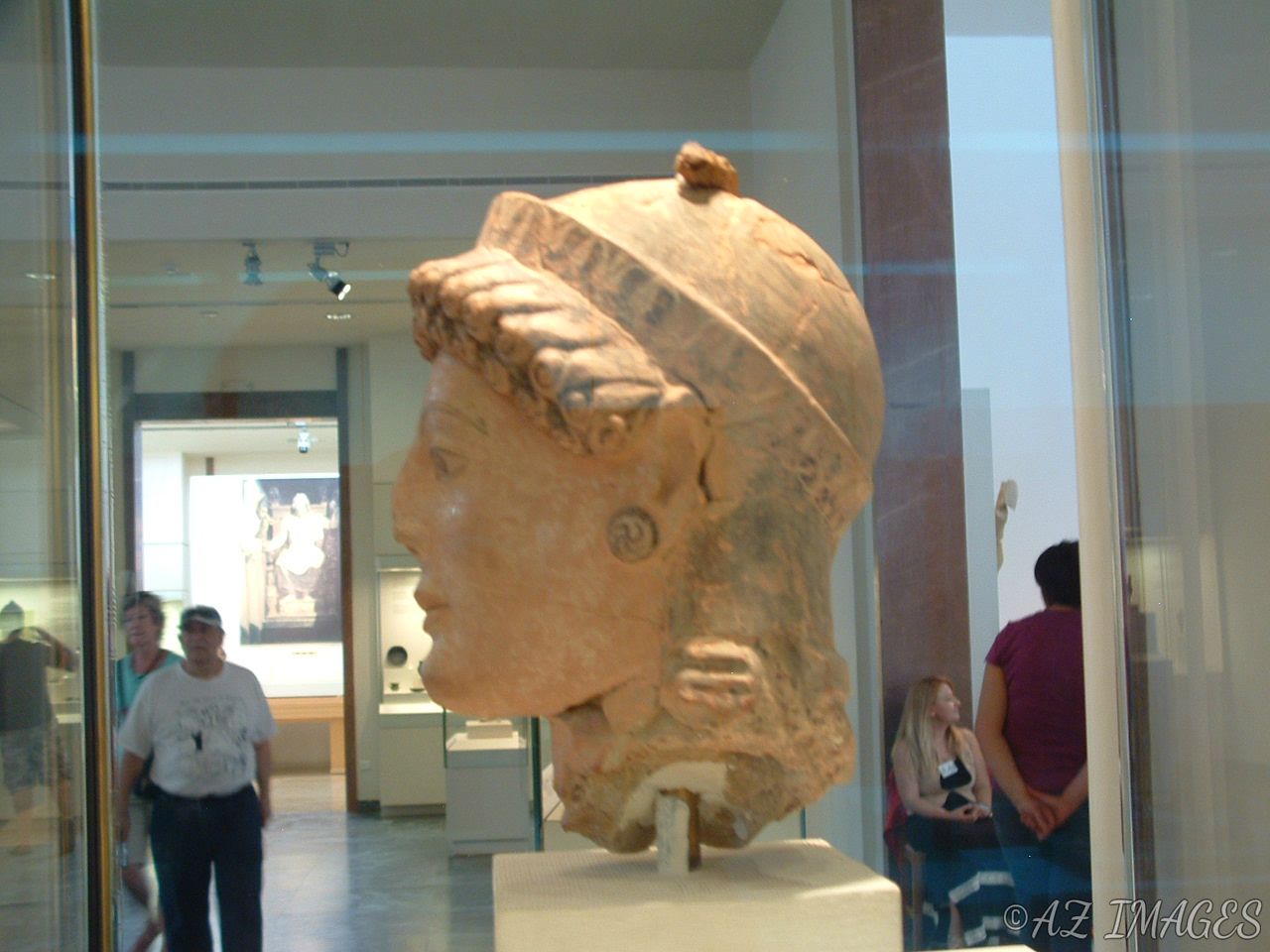
Snake coming out of the Goddess Hera’s Head. Yuck I hate snakes!
I was suprised to discover a heart shape on the upper right side of this sculpture of a bull. It was prominent Greek aristocrat Herod of Atticus who had this statue of a bull made in honour of his Roman wife Aspasia Regilla. He even built the theatre ‘Odeon of Atticus’, which is next to the Parthenon, in memory of her. This man really loved his wife! So much so that he even had a little heart drawn on the upper right side. Who knew people drew hearts back then too?
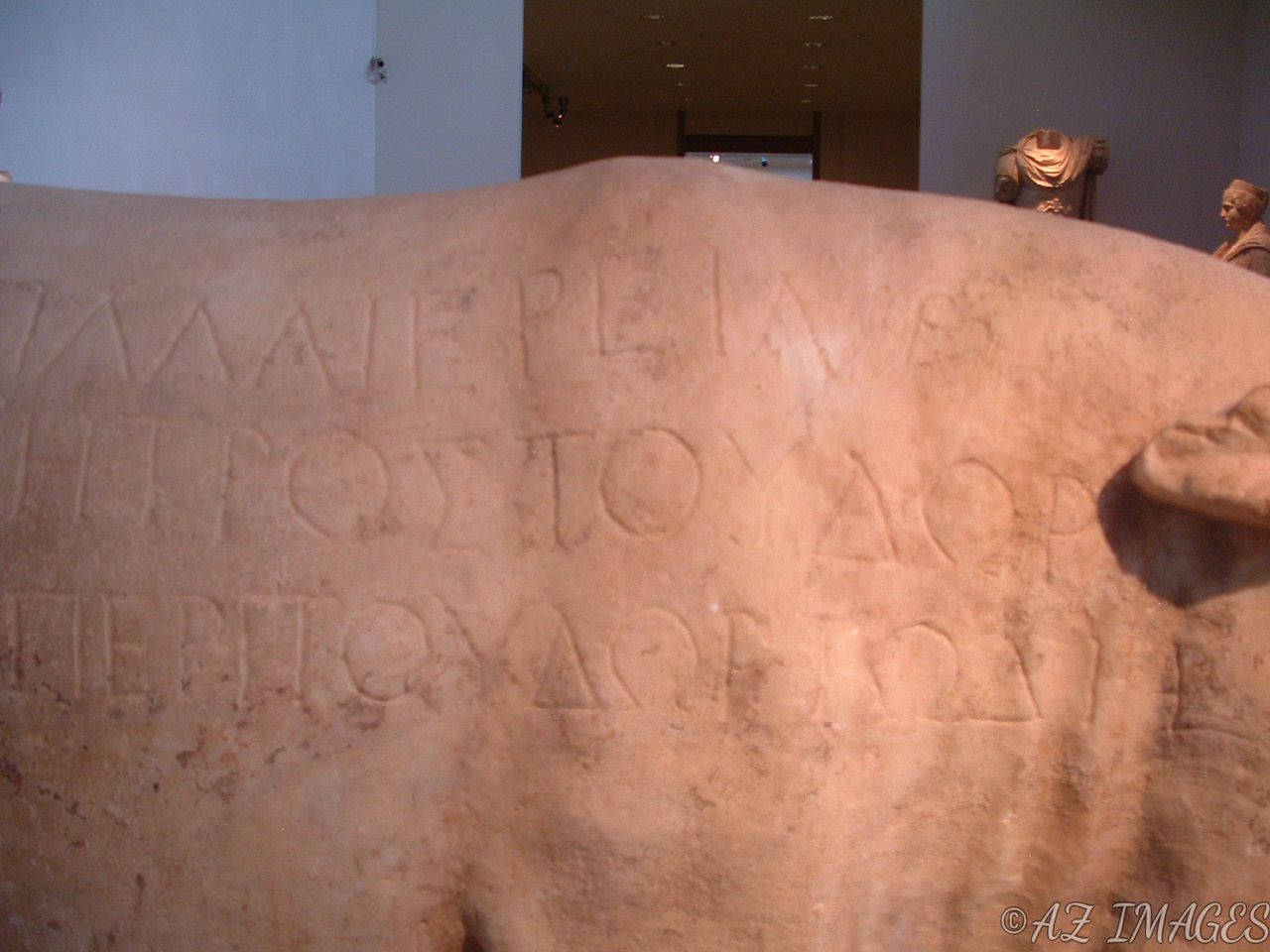
The inscription reads, ‘Regilla priestess of Demeter offers the water and appendices to Zeus’.
Aspasia hung around Olympia a lot and was even the only woman to be officially a spectator at the games. Only men were allowed to take part and be spectators at the games. Yes, my ancestors were very misogynistic. Also, bulls were used as sacrifices for Zeus at his temple in Olympia.

The Bull was a gift for Aspasia Regilla the wife of Herod
The is the very famous statue of Hermes by Greek Sculptor Praxiteles from Athens. This is the only authentic statue that has been saved from Praxiteles. It was found in the temple of Hera in Olympia in 1877 and it dates back to 343 A.D. Hermes (messenger of the Gods) is holding baby Dionysos (God of wine) who is crying trying to grab something while crying. Hermes (when he had his arm) most likely had some grapes in his hand. There are some very skilful techniques in this statue, from the left he looks sad, from the right happy and from the front he looks calm.
 I didn’t know that Praxiteles wasn’t happy with his masterpiece, and that is why the back of the marble statue has not been polished. Artists are such perfectionists!

Front and back view of Hermes. The front is polished the back is not.
This is the breast-plate of Roman emperor Marcus Aurelius. Marcus had an affinity towards Greece. He wrote his famous philosophical book called ‘The Meditations’ in Greek. To show his love for Greece he had carved on his breast-plate the Goddess Athena (with the owl and serpent on each side of her representing wisdom) standing on top of the Etruscan she-wolf who is nursing the twins Romulus and Remus. The twins are central characters in the origin mythology of Rome. The fact that the Goddess Athena is depicted as standing over the twins means that Marcus believed that Athens was superior to Rome. We can see that Athena is being crowned as well.

Breast-plate of Roman Emperor Marcus Aurelius.
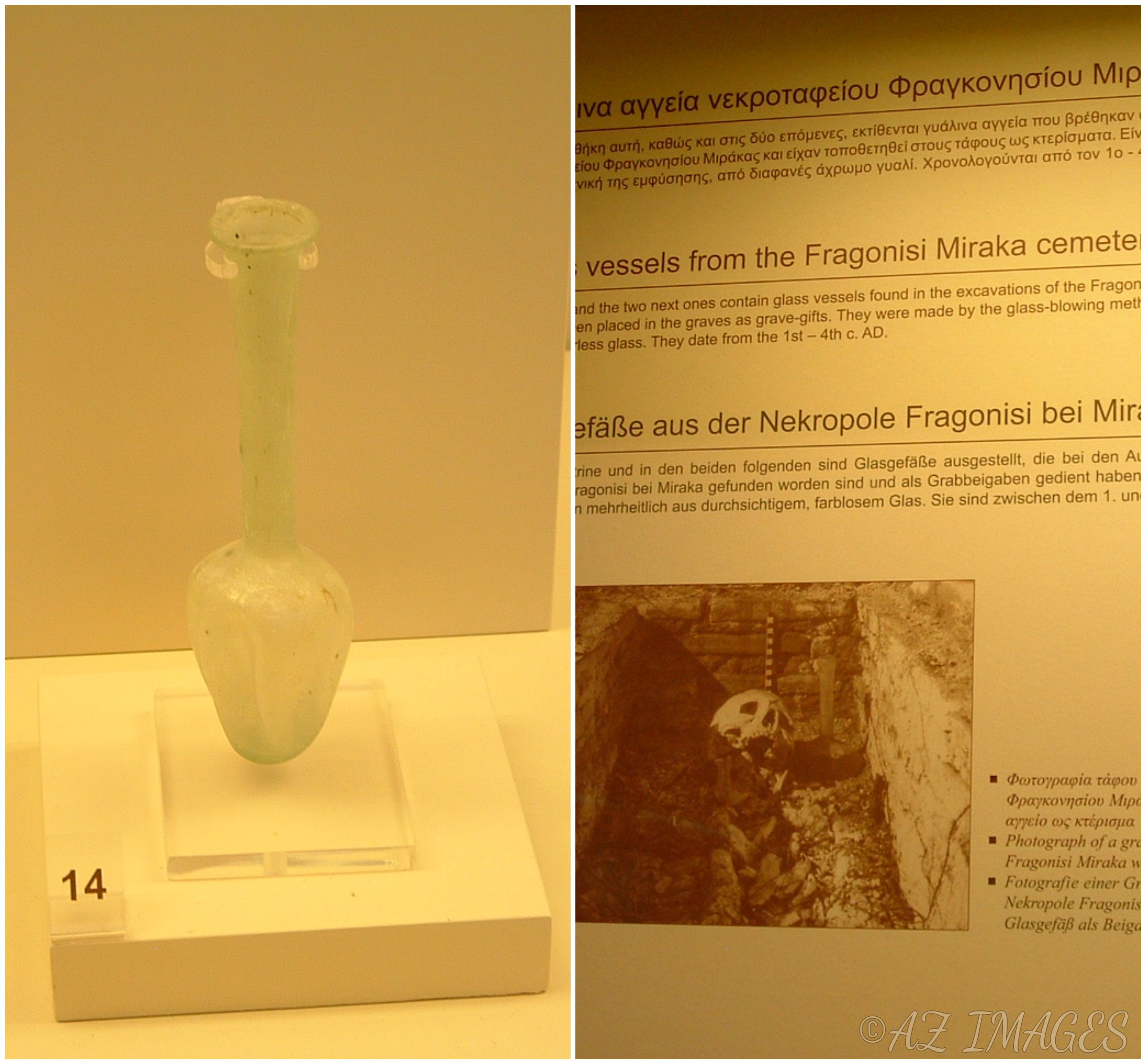
I wasn’t aware of the history of tear bottles. These tear bottles were found in a cemetery in a grave in Miraka cemetery. The ancient mourners of the deceased would collect their tears in the glass bottles and place them in the graves to show their respect and grief. This tradition dates back to ancient Persia, Biblical times, Rome and it made a come back in the Victoria era.
 One of my favourite statues at the museum. The statue of Apollo in the west pediment of the temple of Zeus which was built in 472 and 456 BC. The temple was built by sculptor Phidias at Olympia. The temple housed the 13 m (43 ft) high statue of Zeus-one of the 7 wonders of the ancient world.
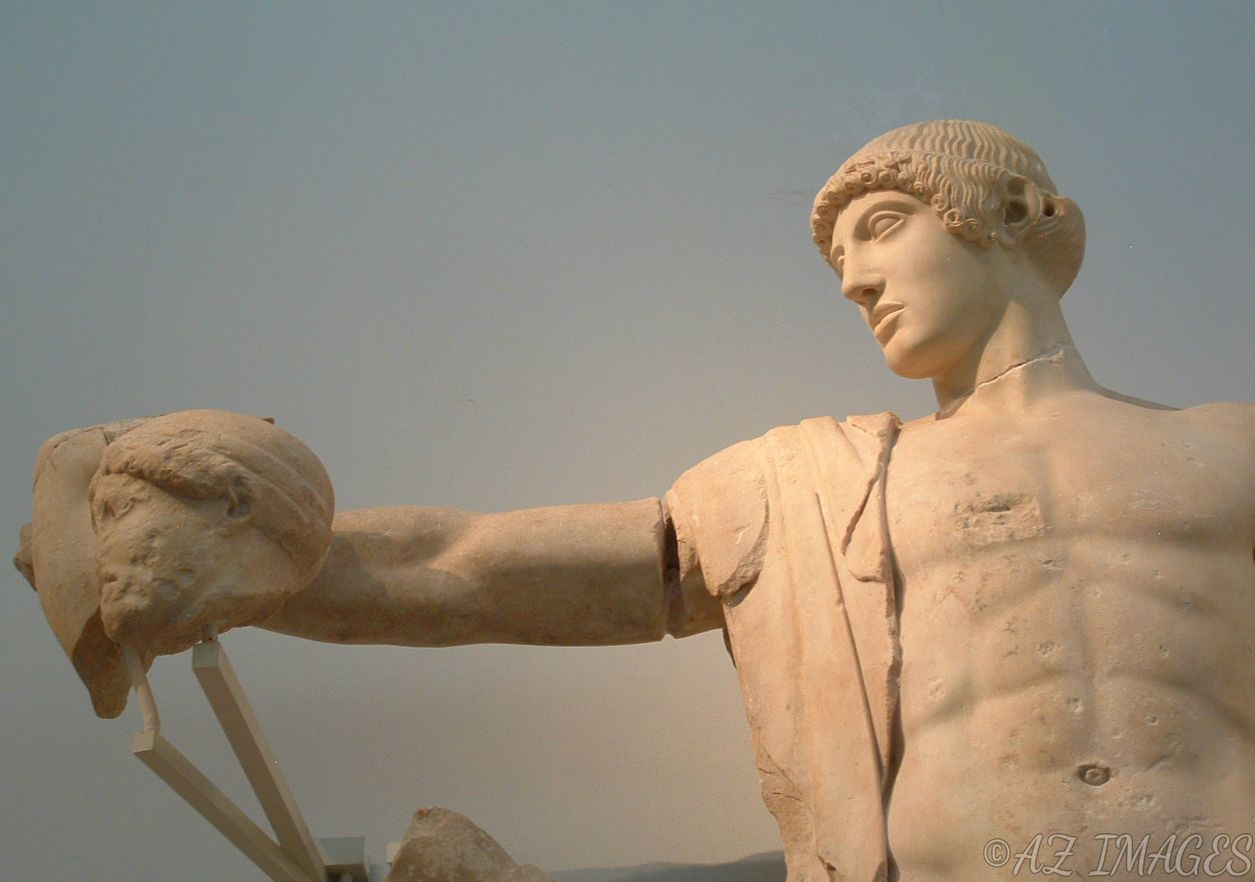
The God Apollo
This old man is not on a cell phone, he is in deep thought, because he is ‘the Seer’.
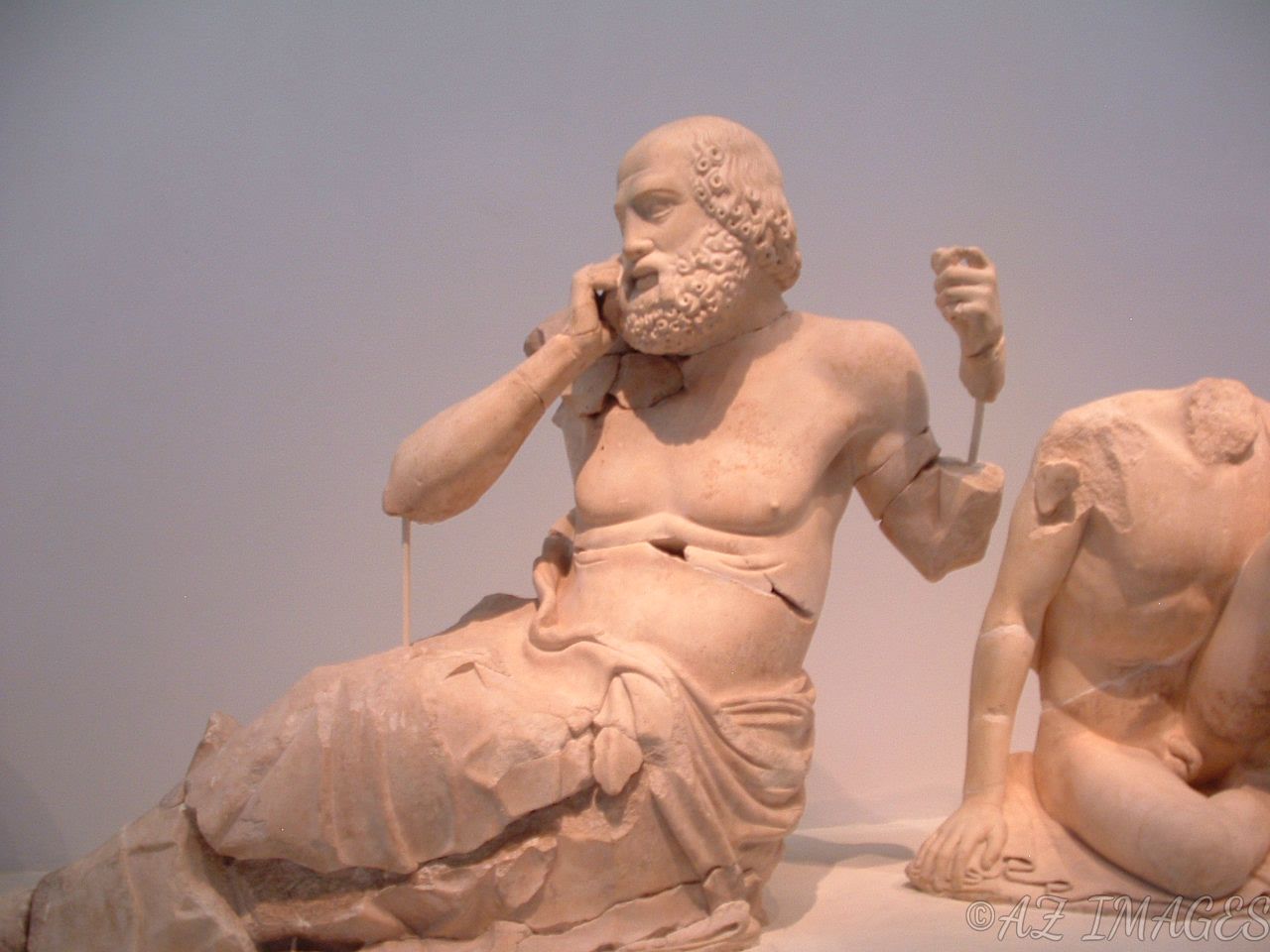
The Seer from the West Pediment of the Temple of Zeus.
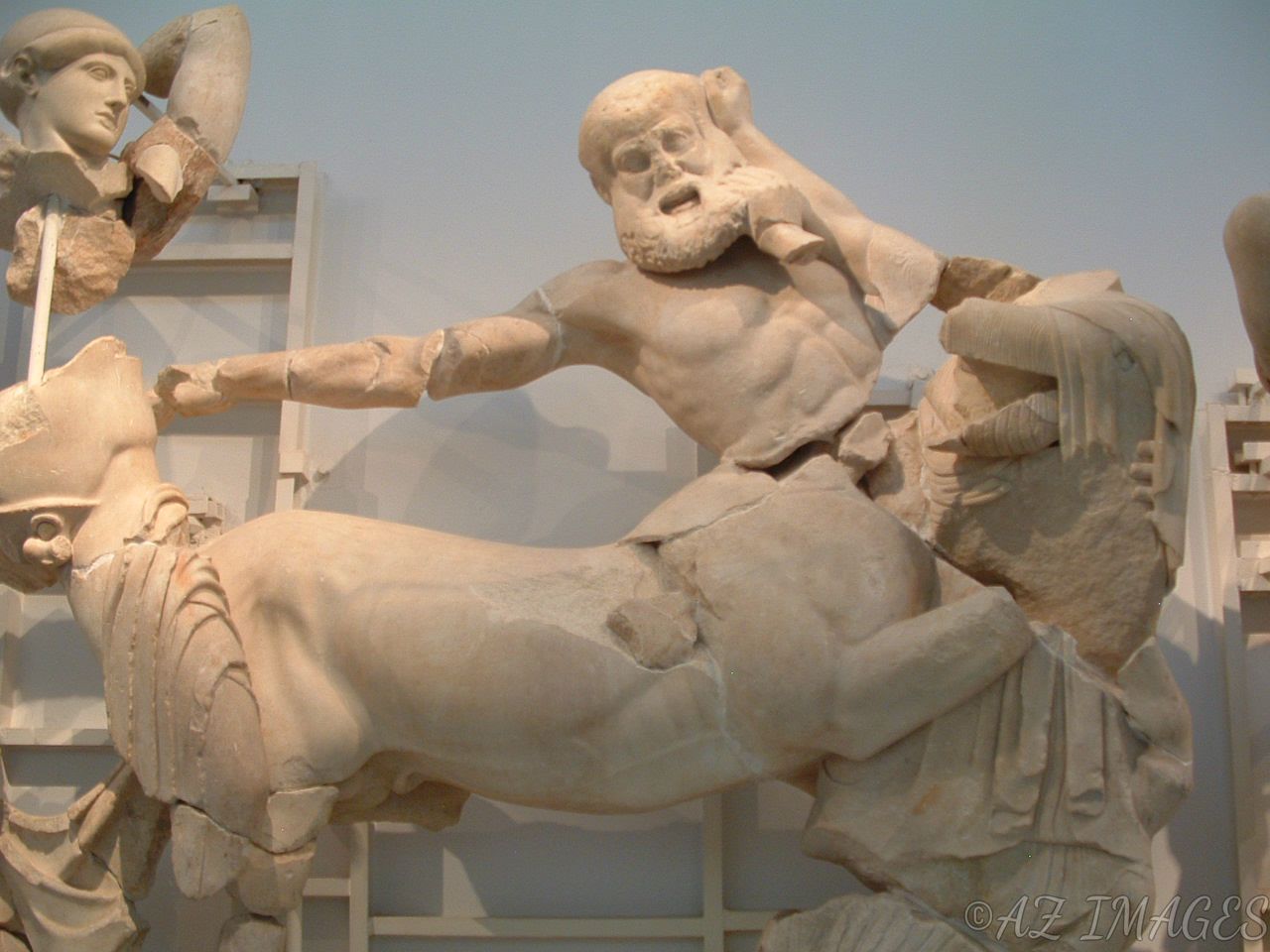
The Centaur in a battle from The West Pediment of the Temple of Zeus.
Notice the veins on the hands-now that’s impressive.
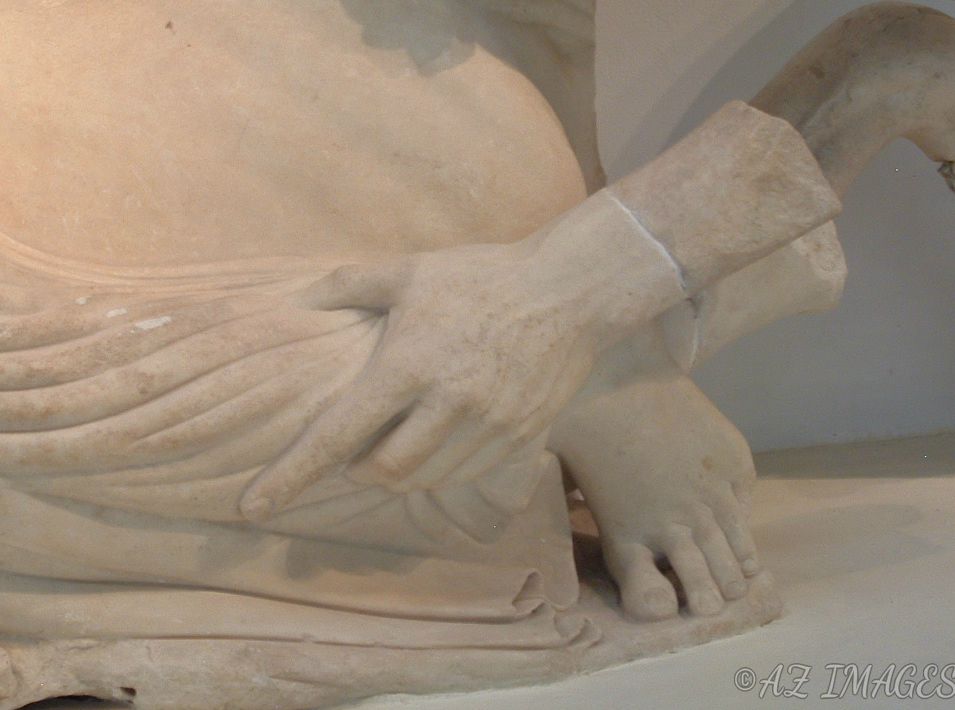
Details of a hand.
Sculptor Phidias’ work shop was as big as the temple of Zeus. It had to be the same size as the temple since the statue was so tall.
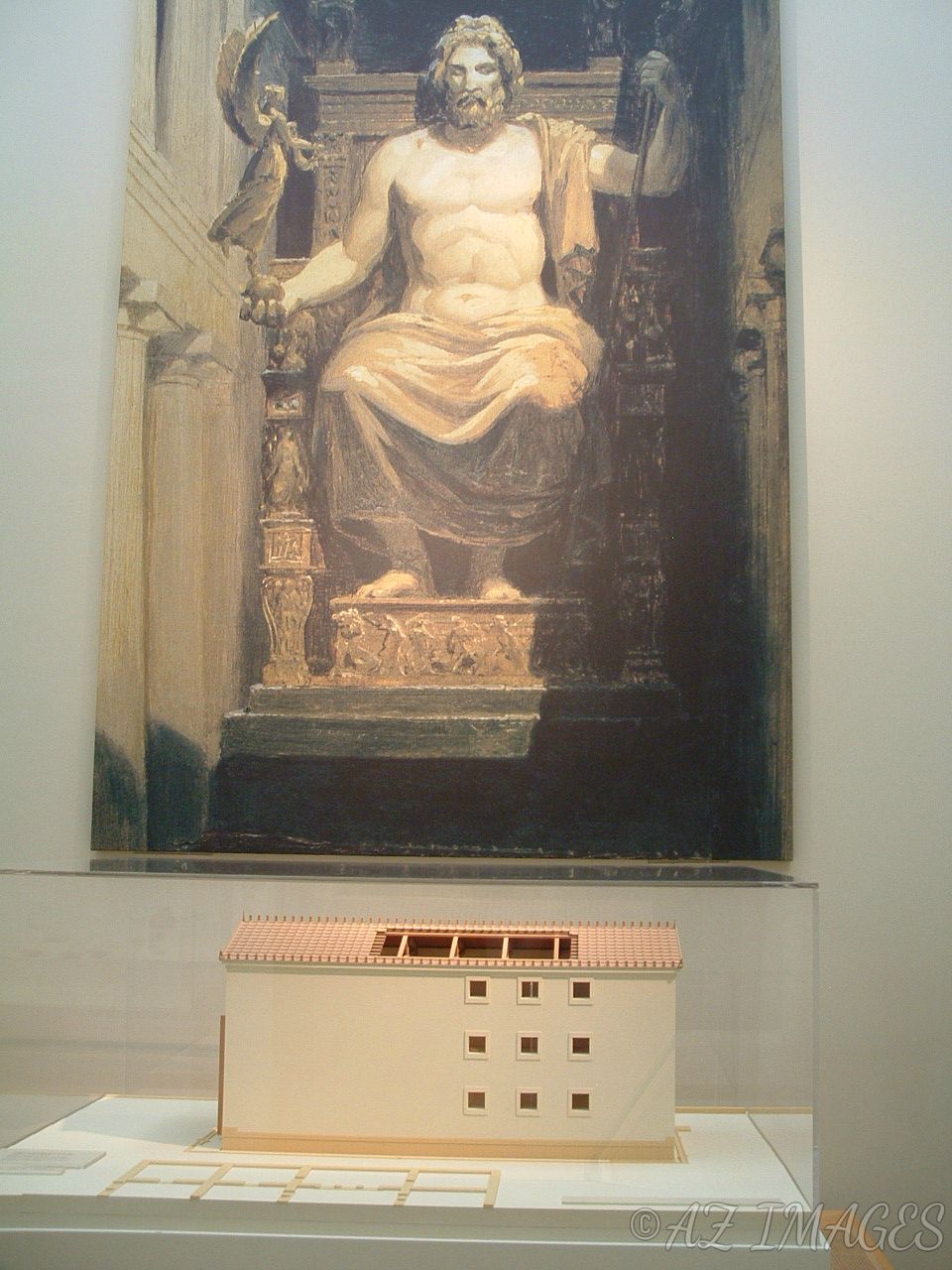
A painting of the statue of Zeus and Phidias’ workshop
There are more ‘secrets’ in the museum, but I can only put so much in a blog post. I find that some the tour guides are more knowledgable than other tour guides and some like to divulge more information than others.
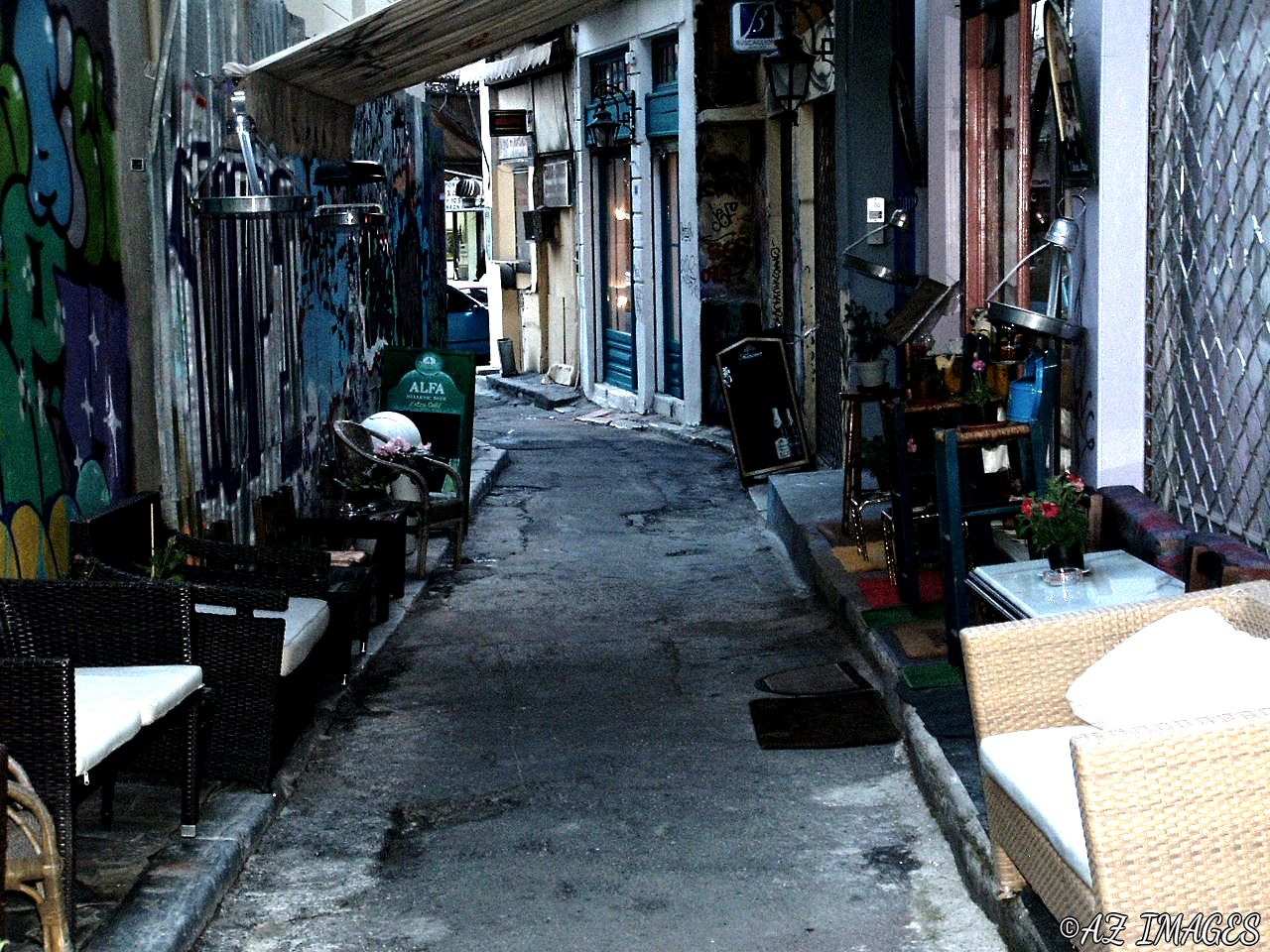
Narrow street with couches on a tiny sidewalk from an outdoor café in Psirri

Open shutters of an old building
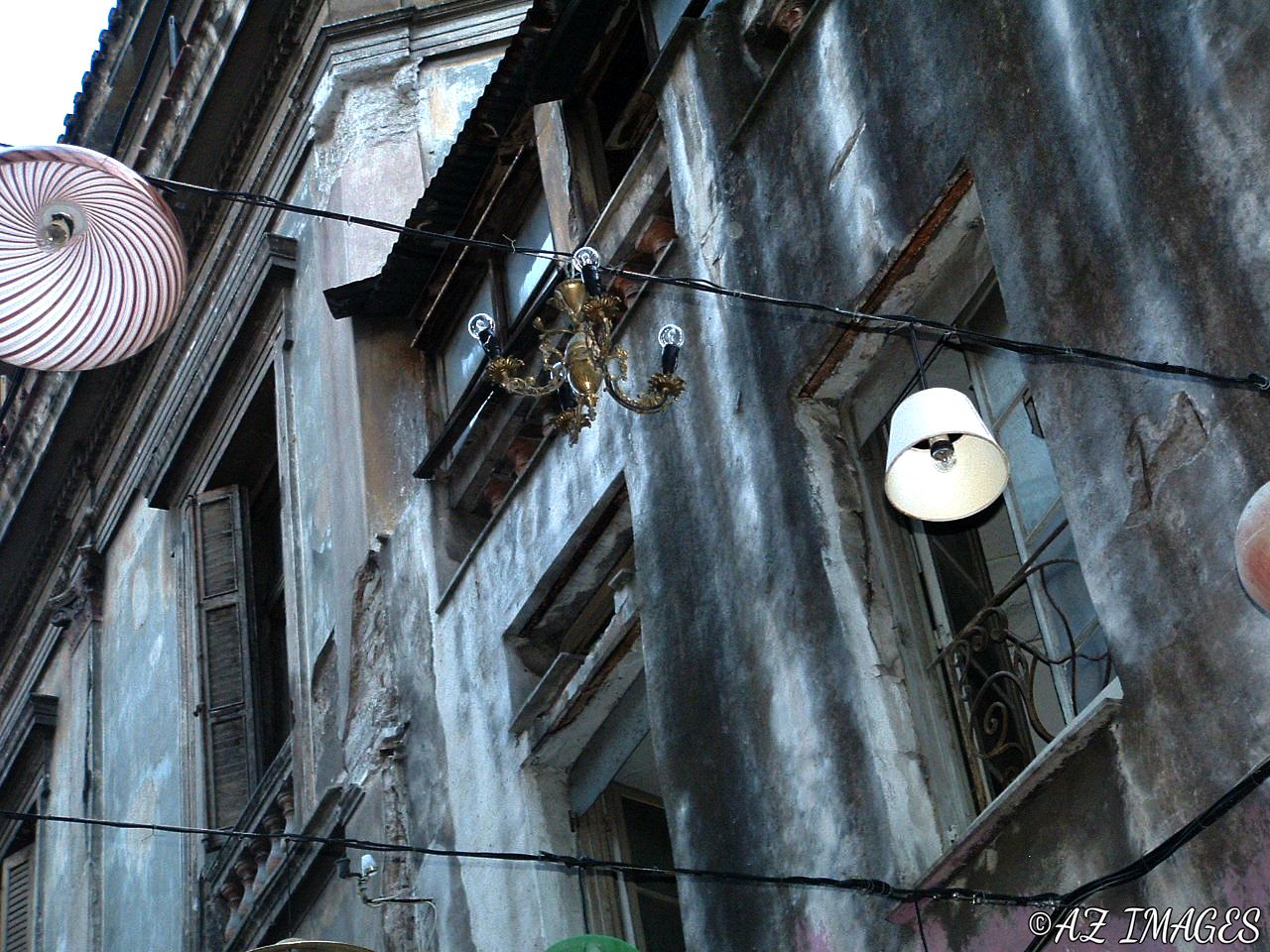
Row of lamp shades against a back drop of a run down building
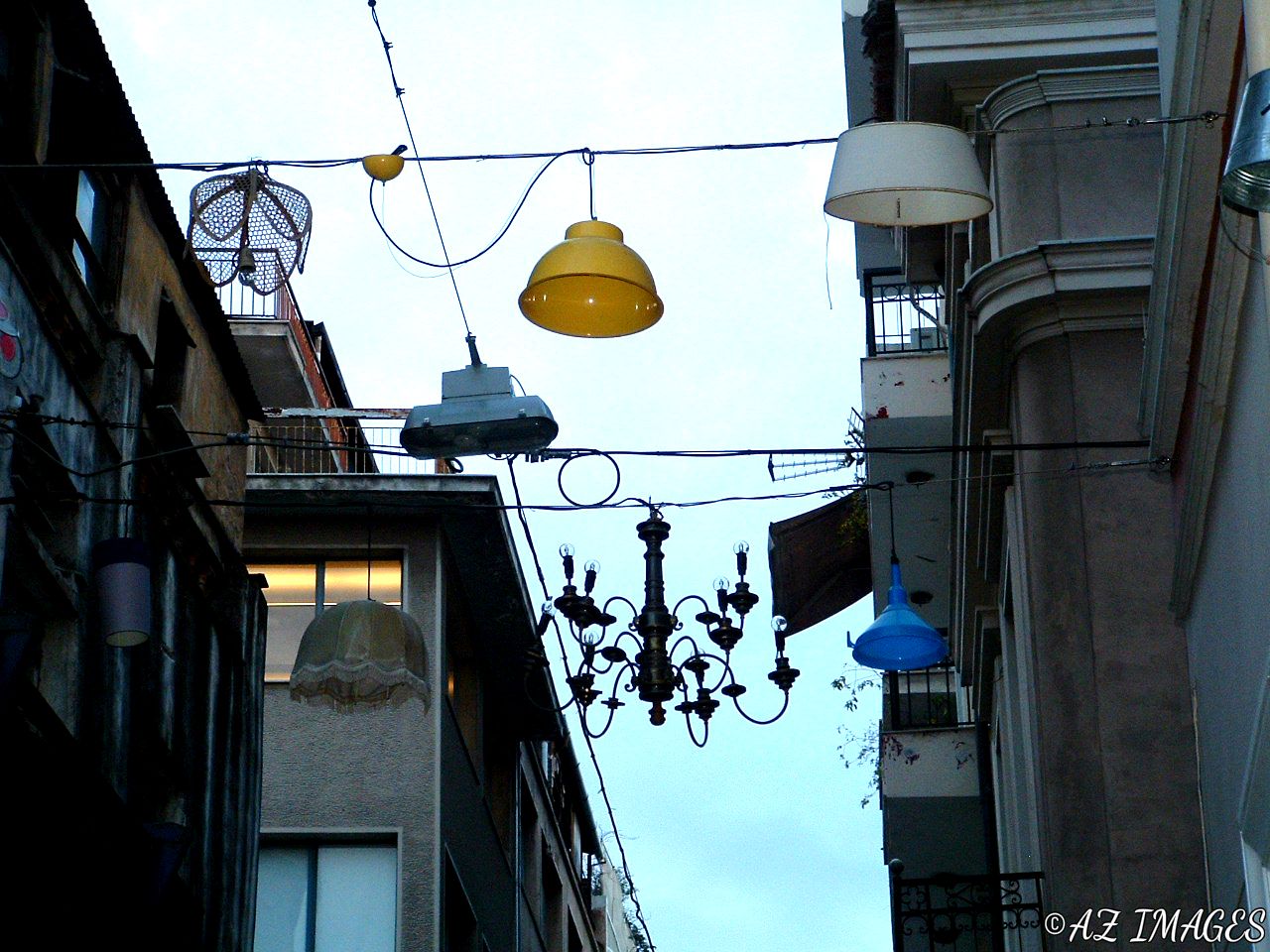
Funky lamp shades and chandeliers light the street at night
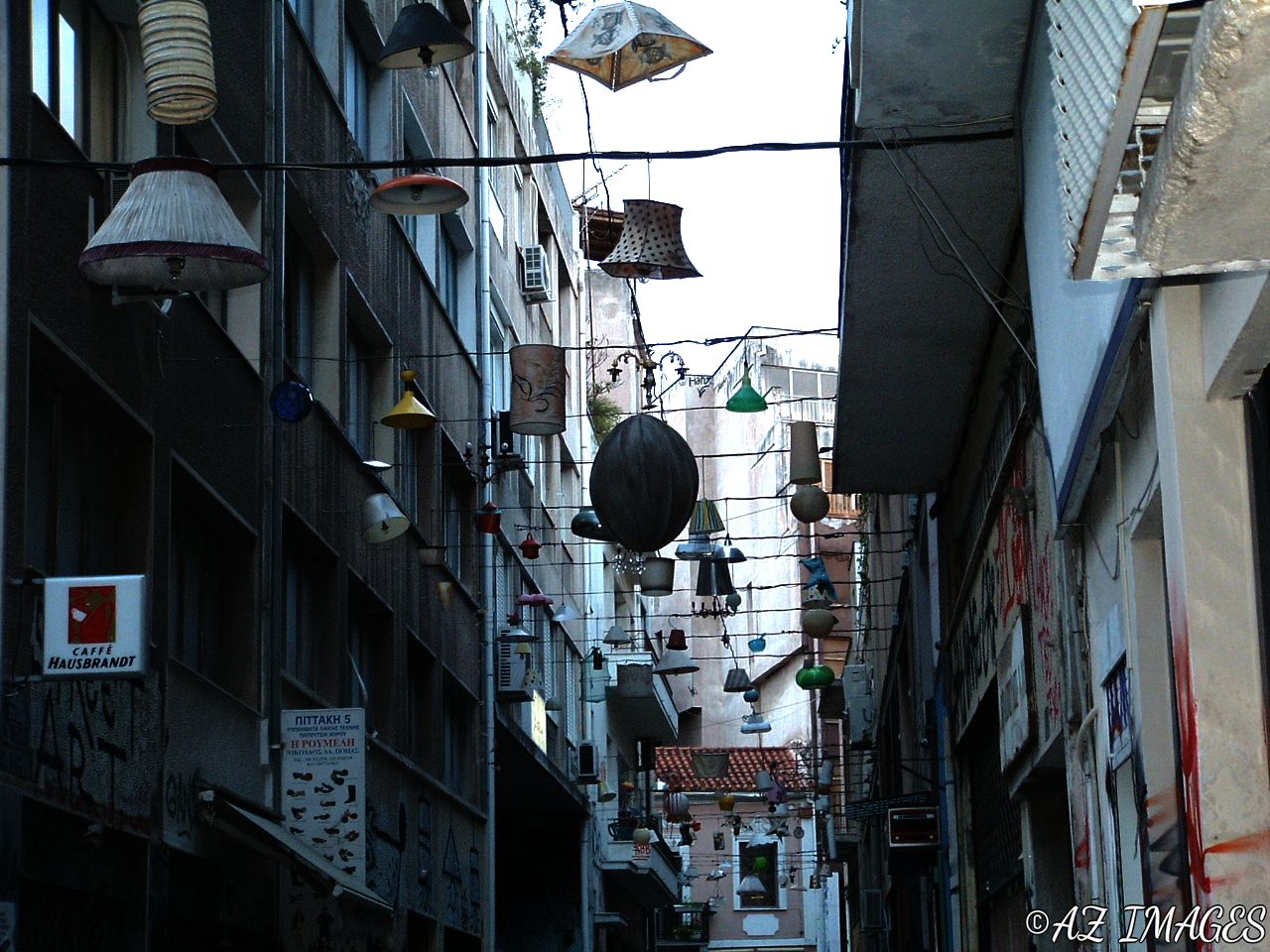
Lamp shades in Psirri
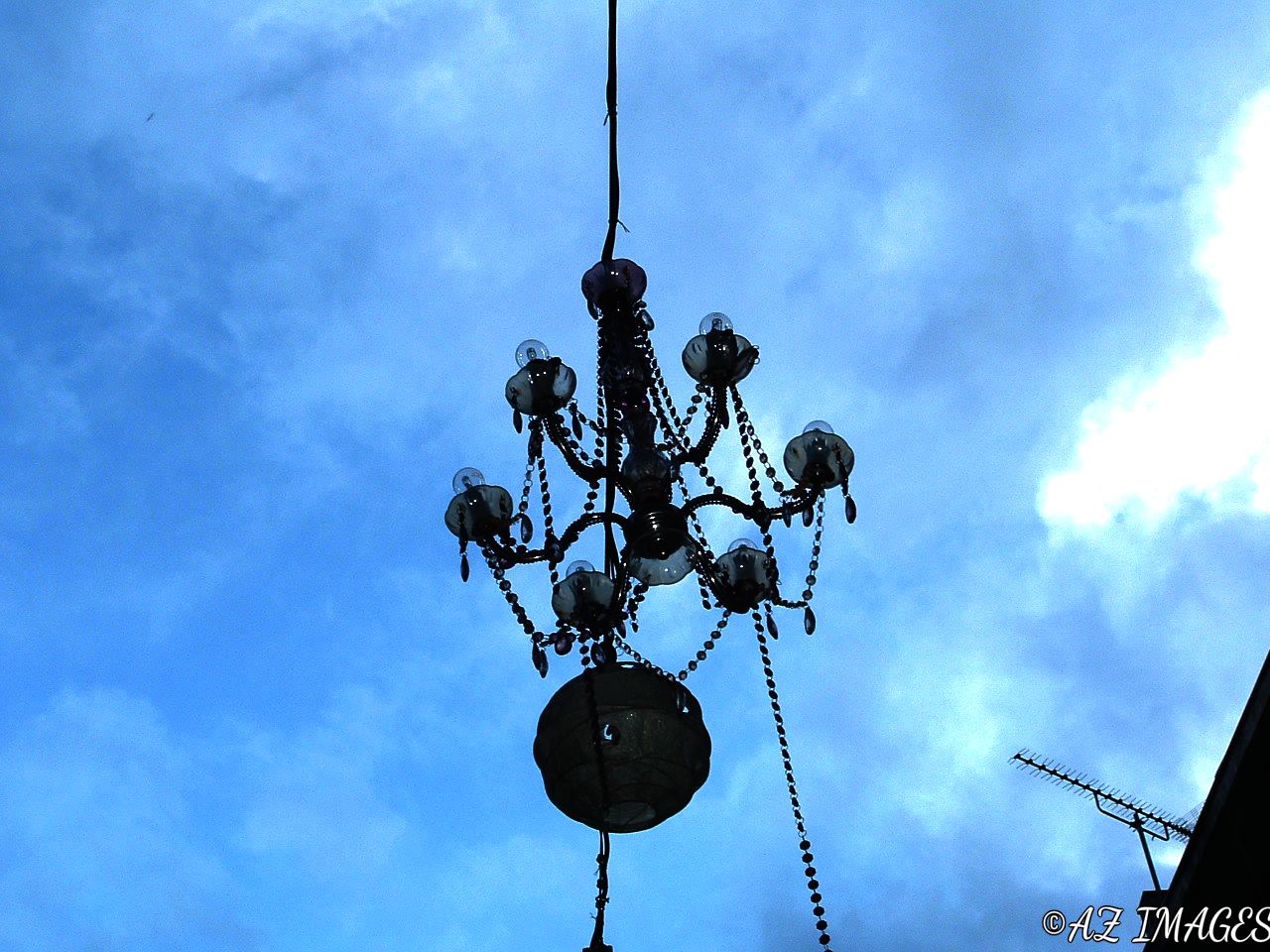
Chandelier in the sky with crystals
How can a creative person like myself not take a few photographs of the quirky and creative neighbourhood called ‘Psirri’. Psirri is located in the downtown area of ancient Athens and is a well-known ‘artsy’ area with a shady reputation. Many university students live there and they have made their presence known to visitors, an example would be the lamp shades and chandeliers hanging above the streets. They light the dark and narrow streets beautifully at night. These photographs are just a glimpse of the offbeat quality of Psirri that you won’t find in other areas of Athens.


While at Technopolis at Gazi in Athens I decided to check out the modern art exhibit inside one of the buildings. The subject of the exhibit was ‘Anti-design’. Designers were asked to re-imagine and re- create household items i.e. lamps by using recycled material, and thus making the items more affordable for people in these harsh economic times.
Ενώ ήμουν στην Τεχνόπολη στο Γκάζι , αποφάσισα να ριξω μια ματιά σε μια συχρονη έκθεση τέχνης. . Το θέμα της έκθεσης ήταν «αντι–design». Οι σχεδιαστές κλήθηκαν να δημιουργήσουν είδη οικιακής χρήσης, δηλαδή λαμπτήρες, με τη χρήση ανακυκλωμένων υλικών, ετσι ωστε να ειναι η τιμη των αντικειμενων αυτων πιο προσιτη για τους περρισοτερους ανθρώπους σε αυτές τις δύσκολες οικονομικές περιόδους.
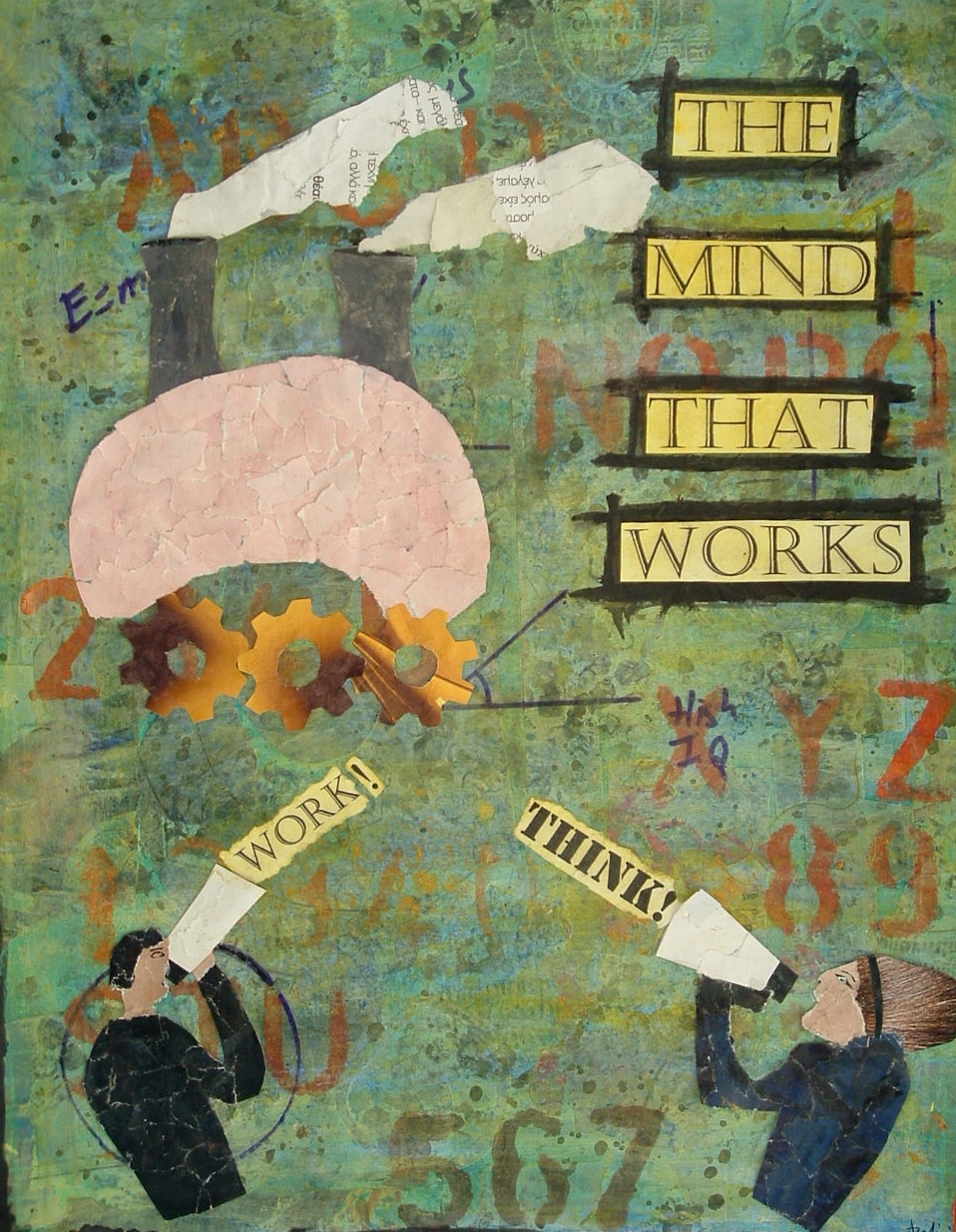
Illustration on paper by Angela Zafiris
‘We shall require a substantially new manner of thinking if mankind is to survive.’ Albert Einstein
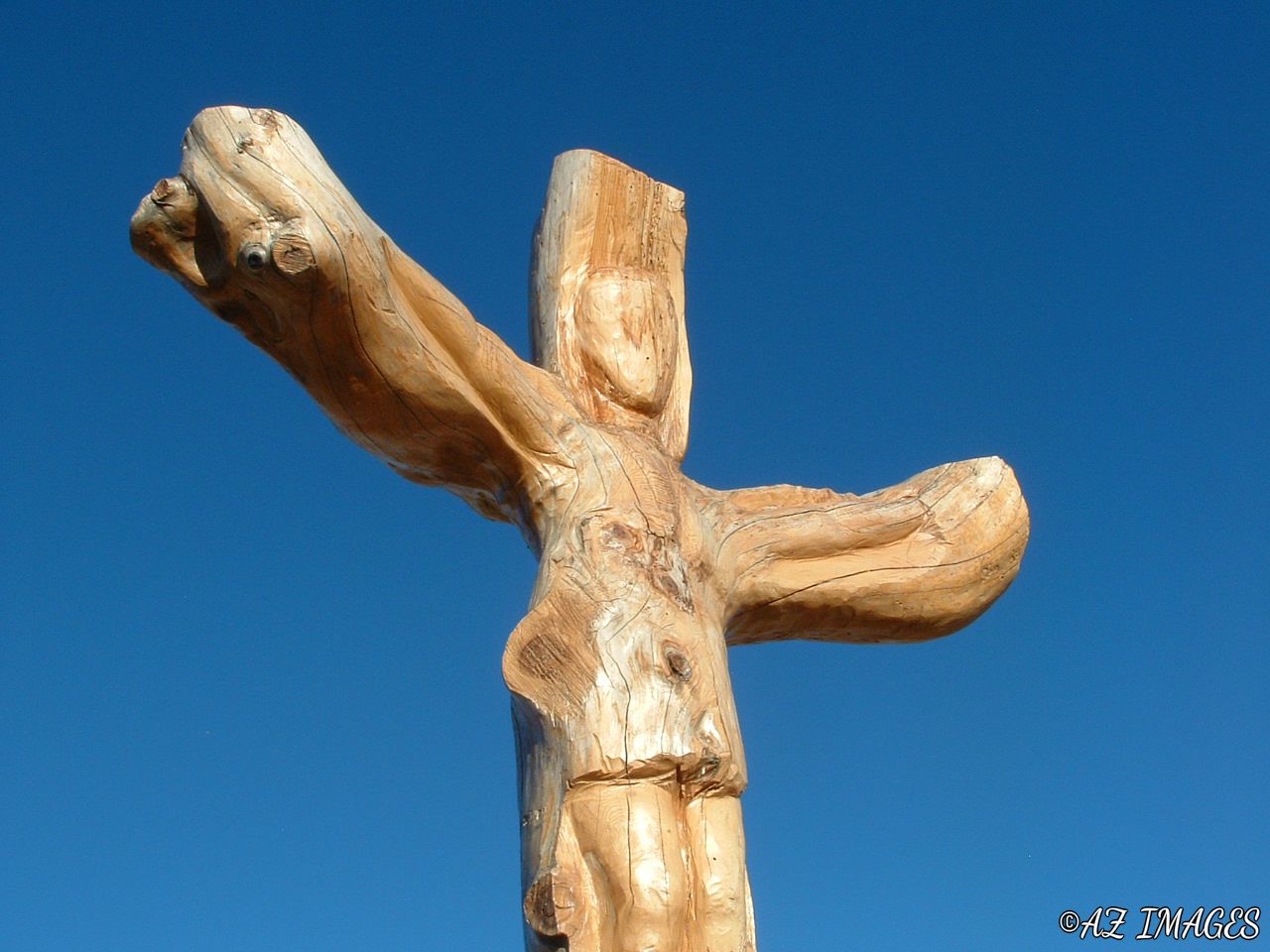
The Cross of the Martyr
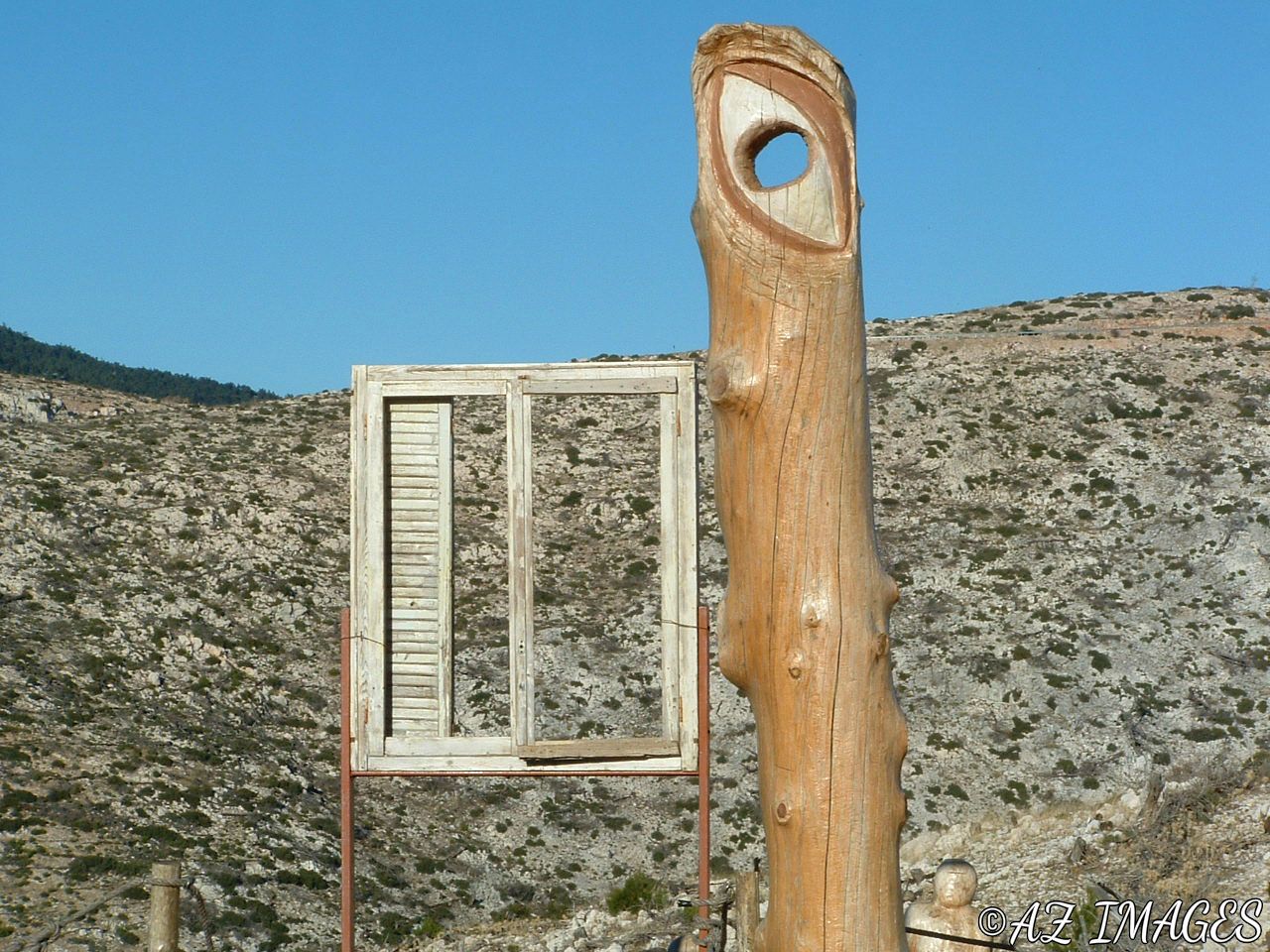
Window of hope/Eye of the soul
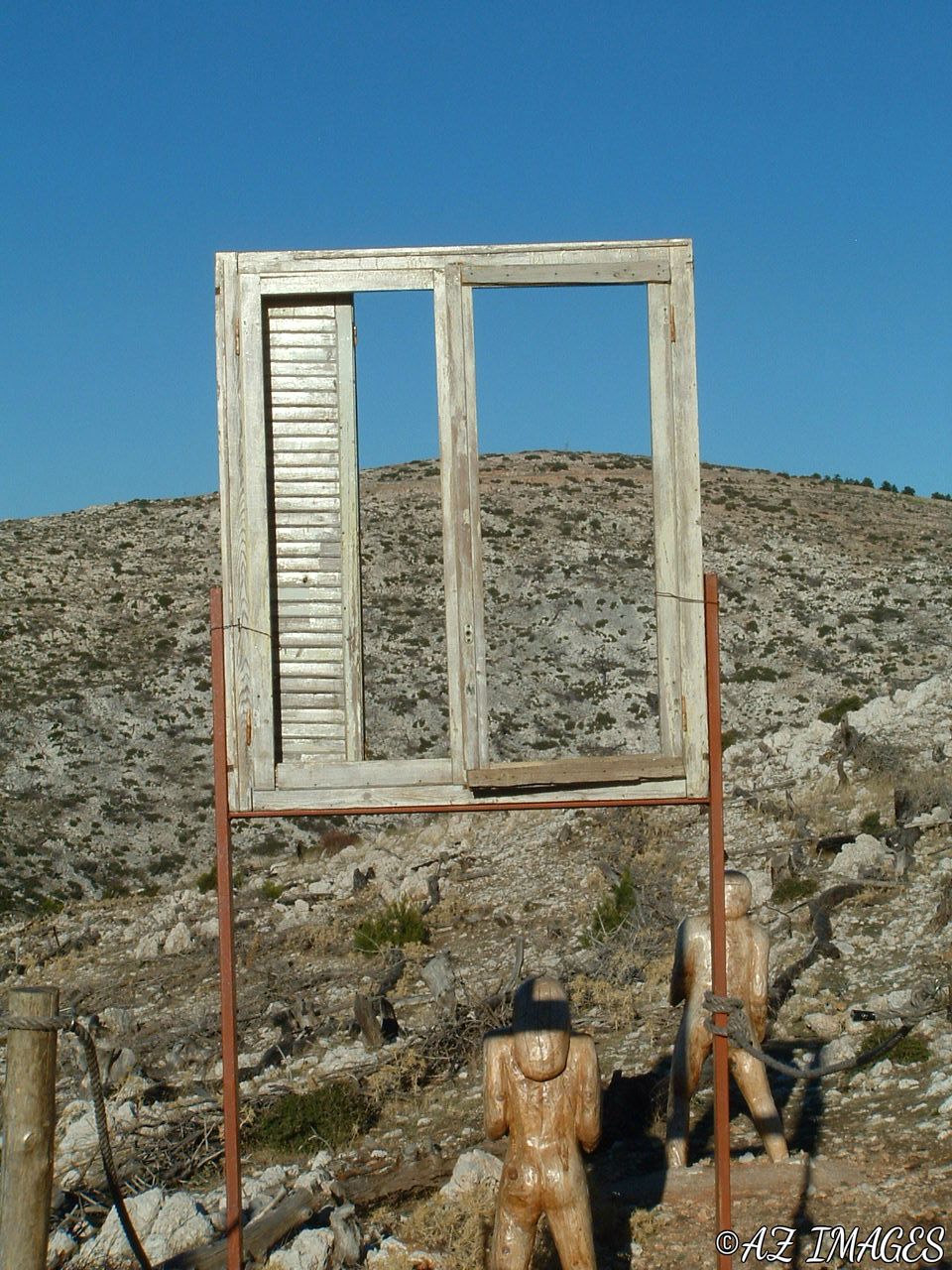
The Window of Hope
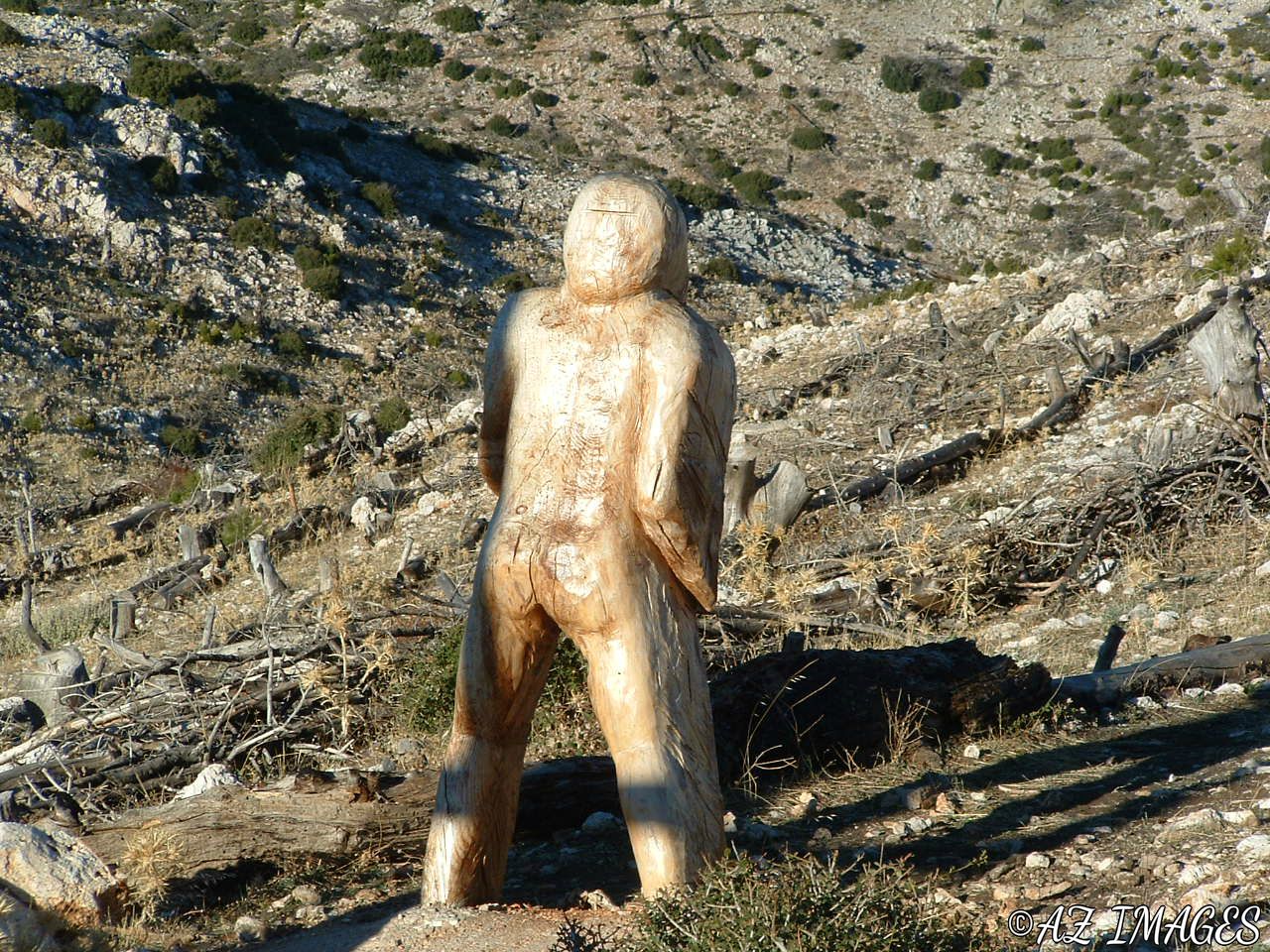
Redemption
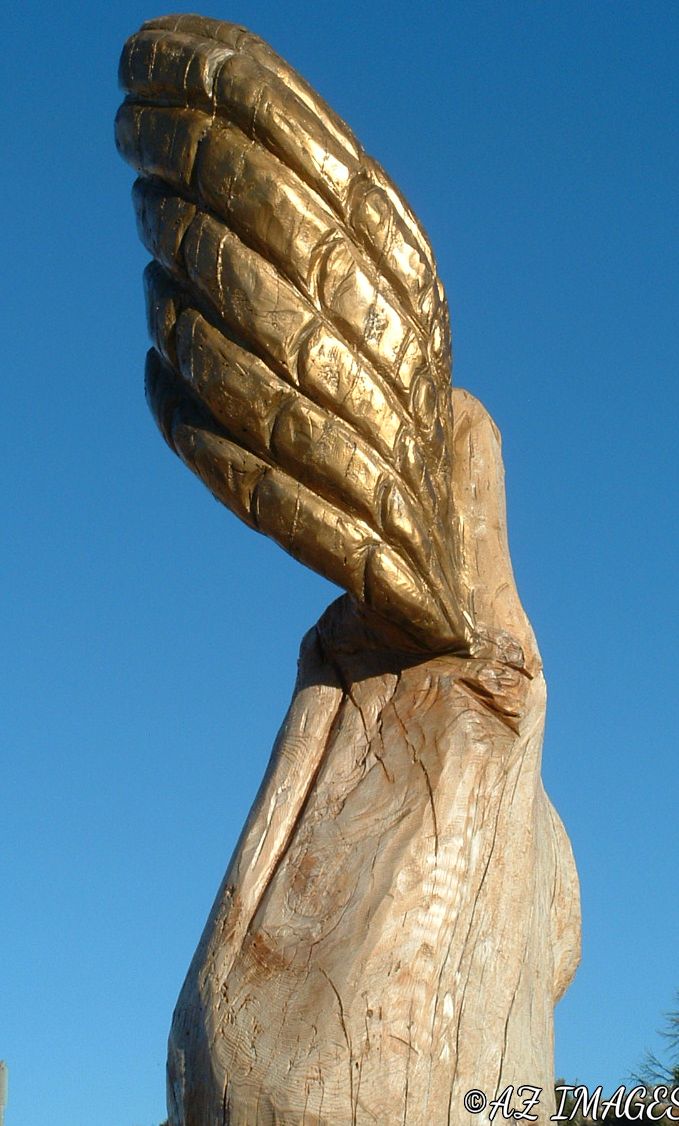
‘The Wing-symbolizes freedom’
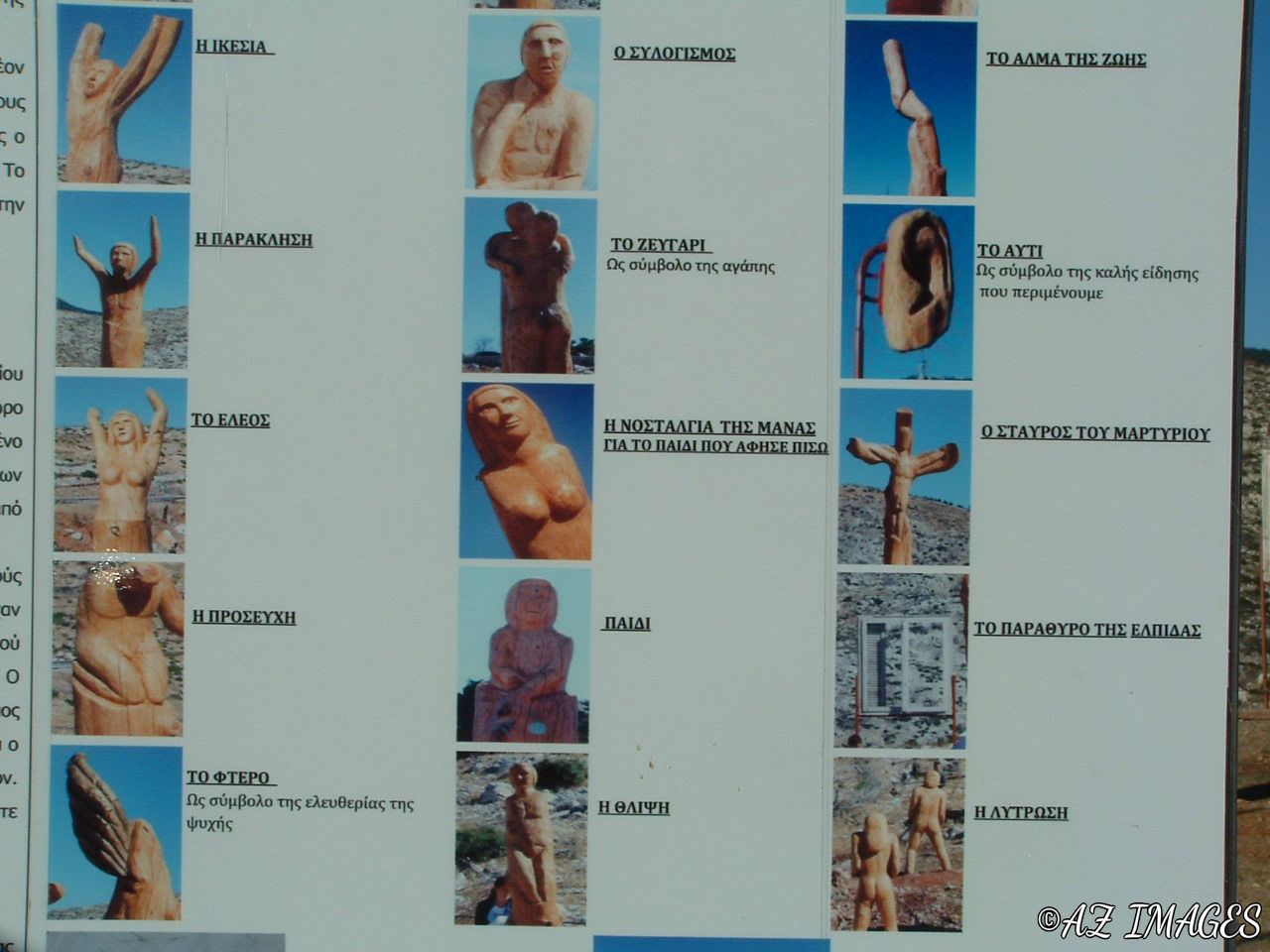
Display of scultures and their meaning
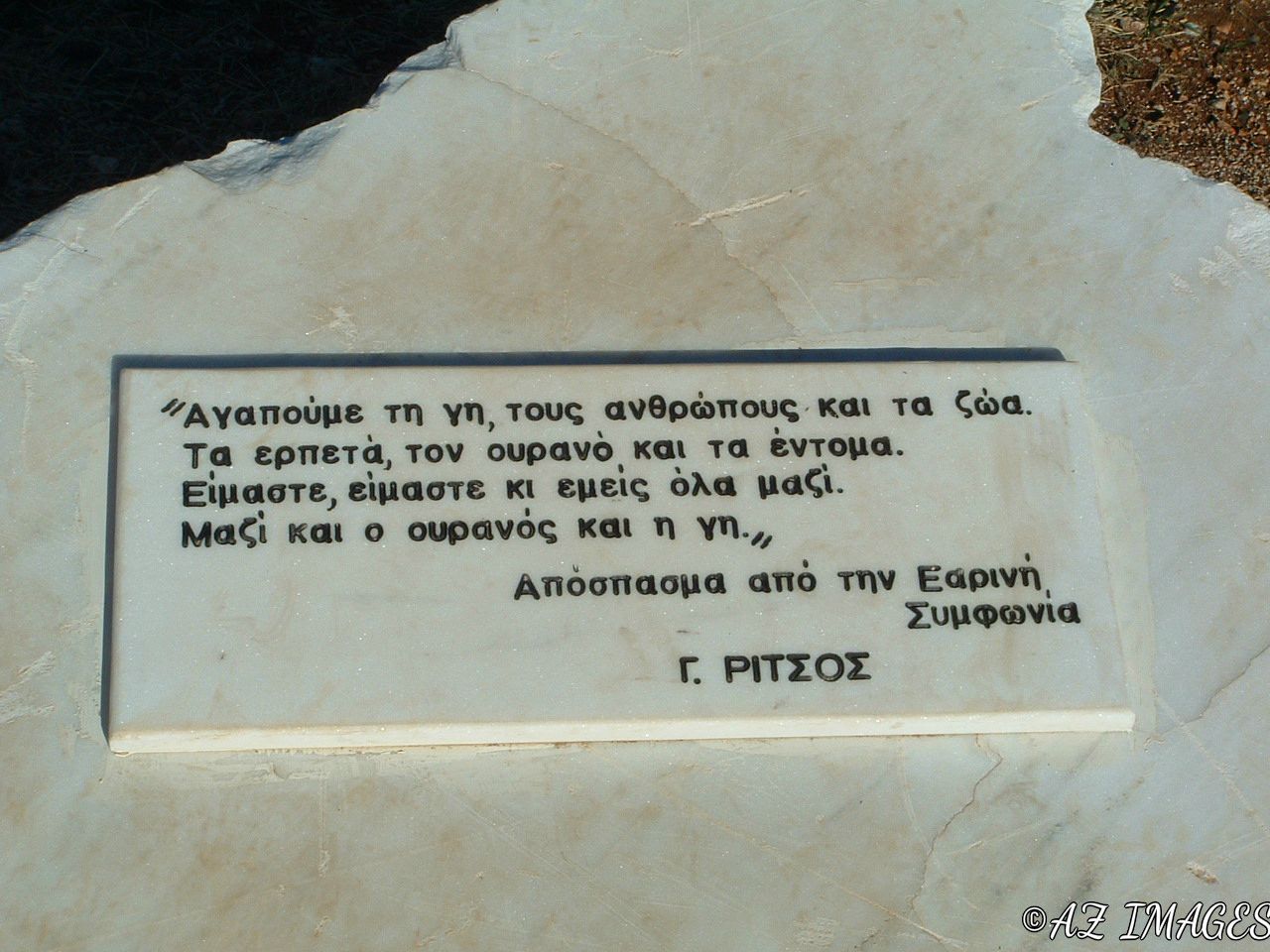
A Poem by famous Greek poet Giannis Ritsos who was a patient at the sanatorium
In my previous blog post I talked about the Sanatoruim which is located outside of Athens on the mountain of Parnitha. Across the road from the abandoned building is a small park with wooden sculptures. The wooden sculptures were created by sculptor Spirdon Dasiotis in 2012. The sculptures are an homage to the people who passed through the doors of the building when it was operating as a Sanatorium for tuberculosis patients.
‘We love the earth, , people, the animals. The reptiles, the sky, and the insects. We are, we are and all of us together. Together and the sky and earth.” Giannis Ritsos
Στο προηγούμενο αρθρο μου έγραψα για το σανατόριο στο βουνό της Πάρνηθας. Απέναντι από το εγκαταλελειμμένο κτίριο είναι ένα μικρό πάρκο με ξύλινα γλυπτά που δημιουργήθηκαν από τον γλύπτη Σπυριδων Ντασιωτης το 2012. Τα γλυπτά είναι ένας φόρος τιμής προς τους ανθρώπους που πέρασαν μέσα από τις πόρτες του κτιρίου, όταν λειτουργούσε ως σανατόριο για τους ασθενείς της φυματίωσης.
One of my favourite things to take pictures of are statues. Both Gods and mortals have been the subjects of the talented ancient sculptors. These artisans with their skilled and caring hands have captured the beauty of the Gods and Goddesses and the burdens of the mortals. Skilled hands that have carved such realistic eyes that seem as though they are looking right at you. Skilled hands that have carved such realistic mouths that seem like they could speak to you. During their two thousand-year existence these statues have seen it all. If only those statues could speak. If they could what would they say?
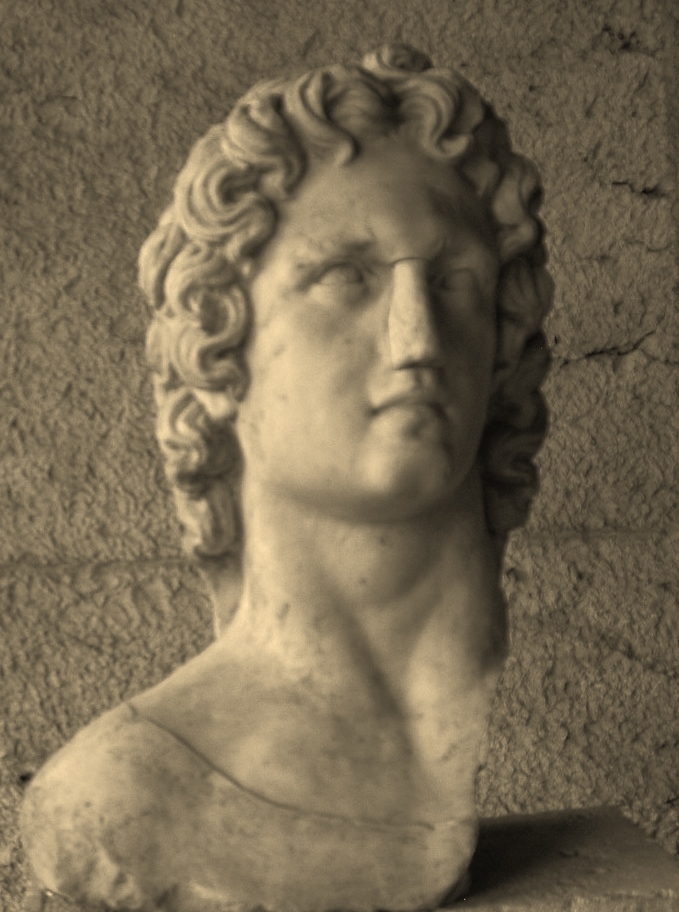
Helios In The Shade
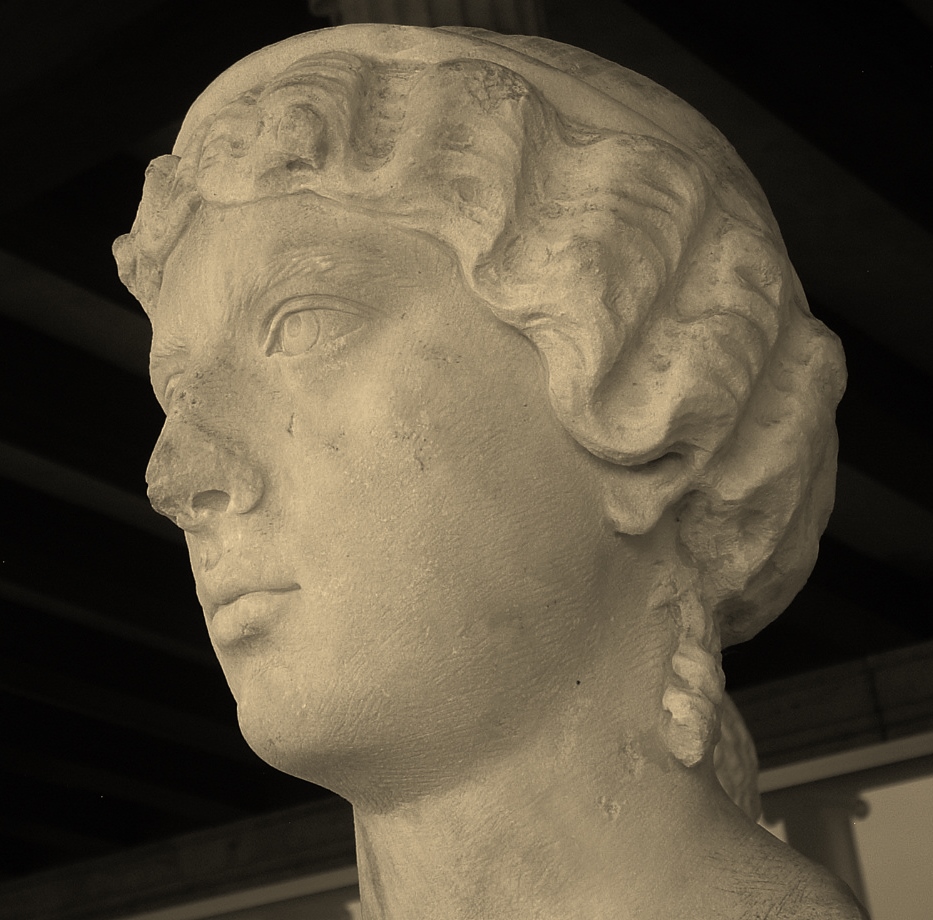
The Mortal Womans’ Gaze

Ancient Agora
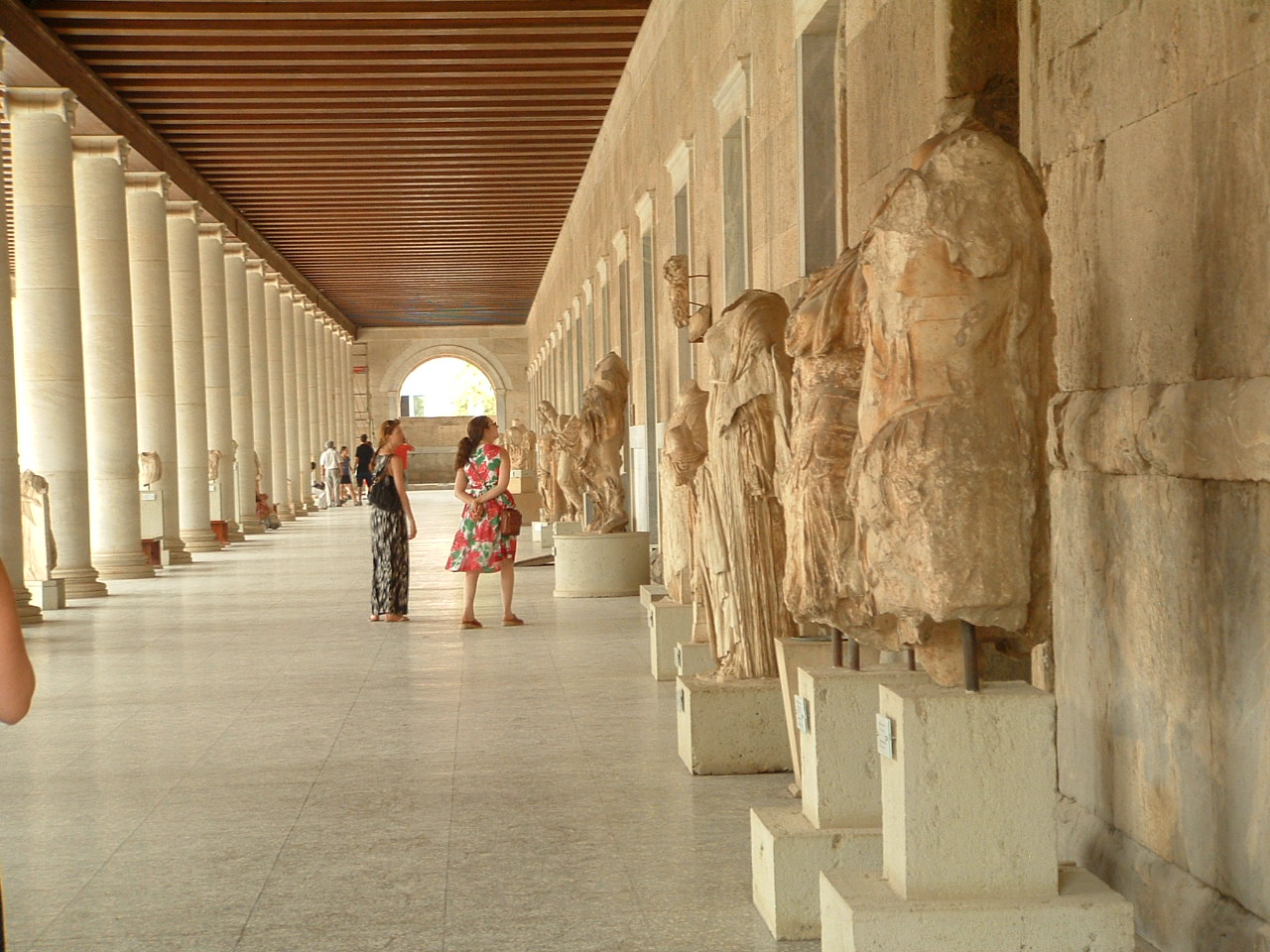
The Entrance Lined With Statues
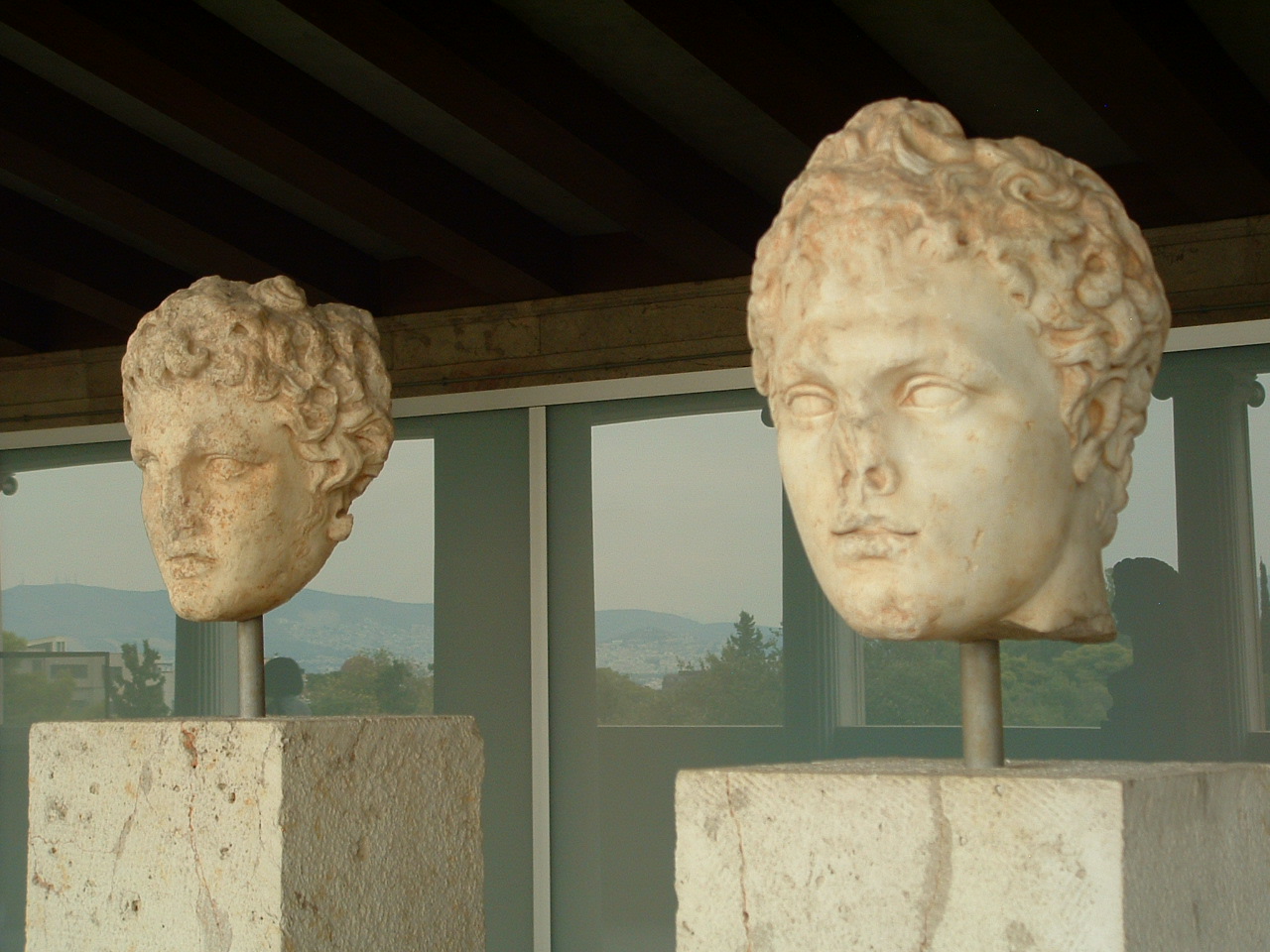
Two Young Boys
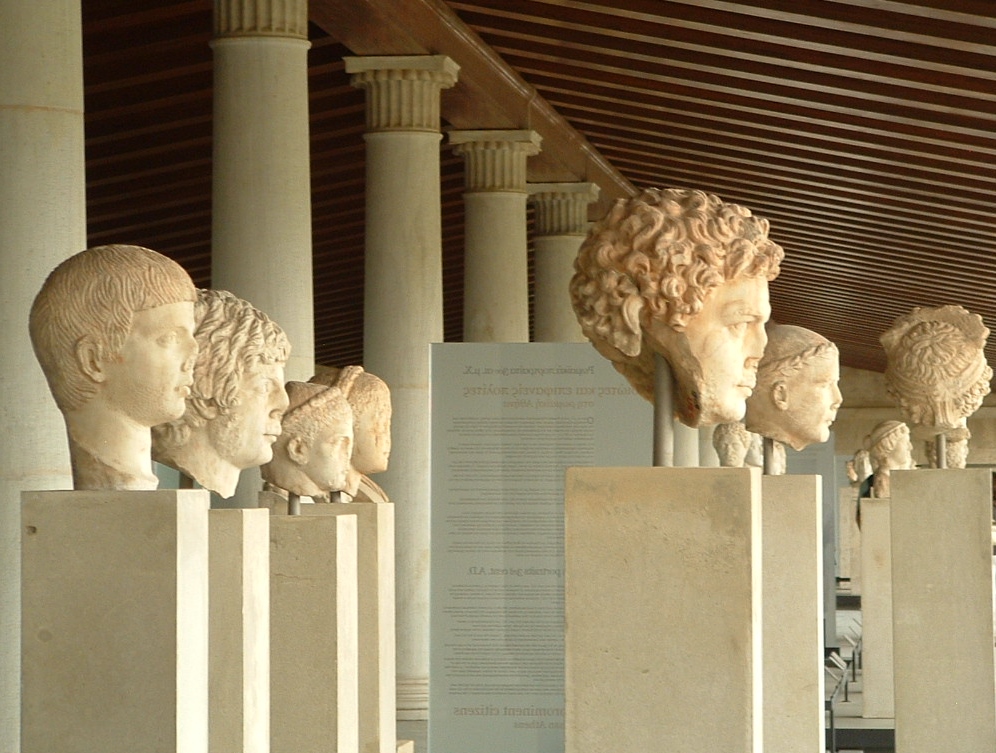
Facing The Sun
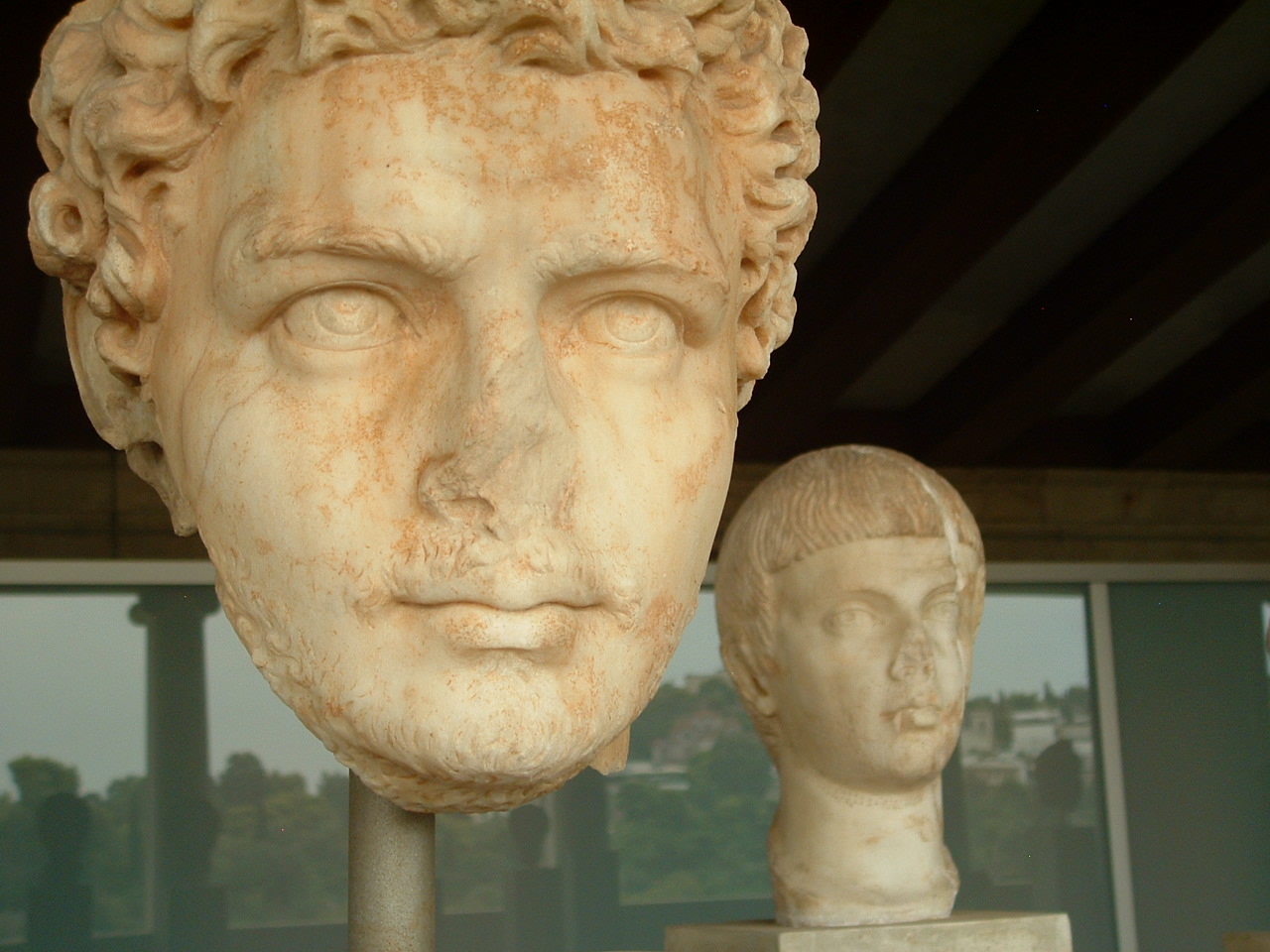
Close-up of Young Boy
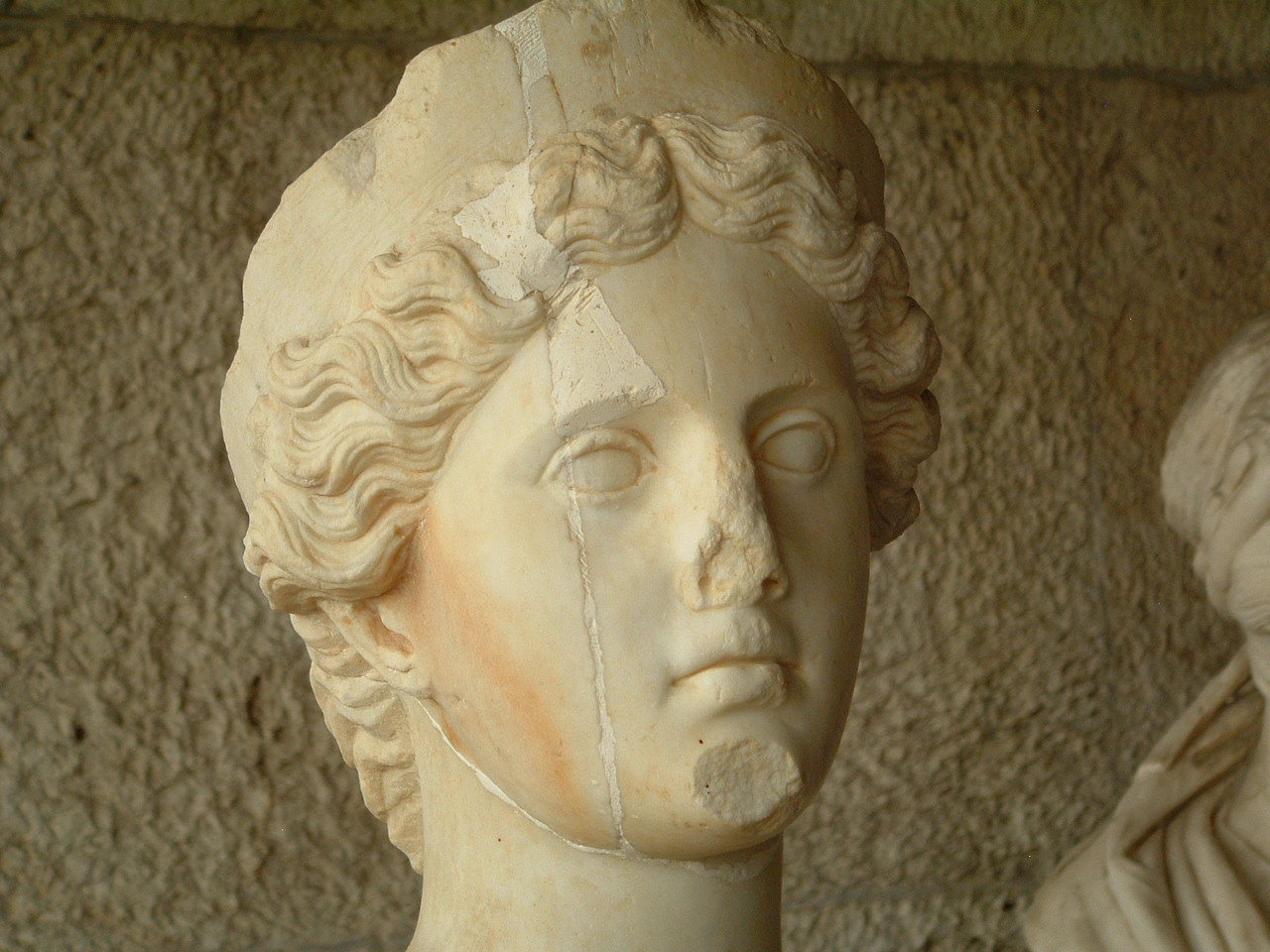
Nemesis. Doesn’t look like a Nemesis to me!
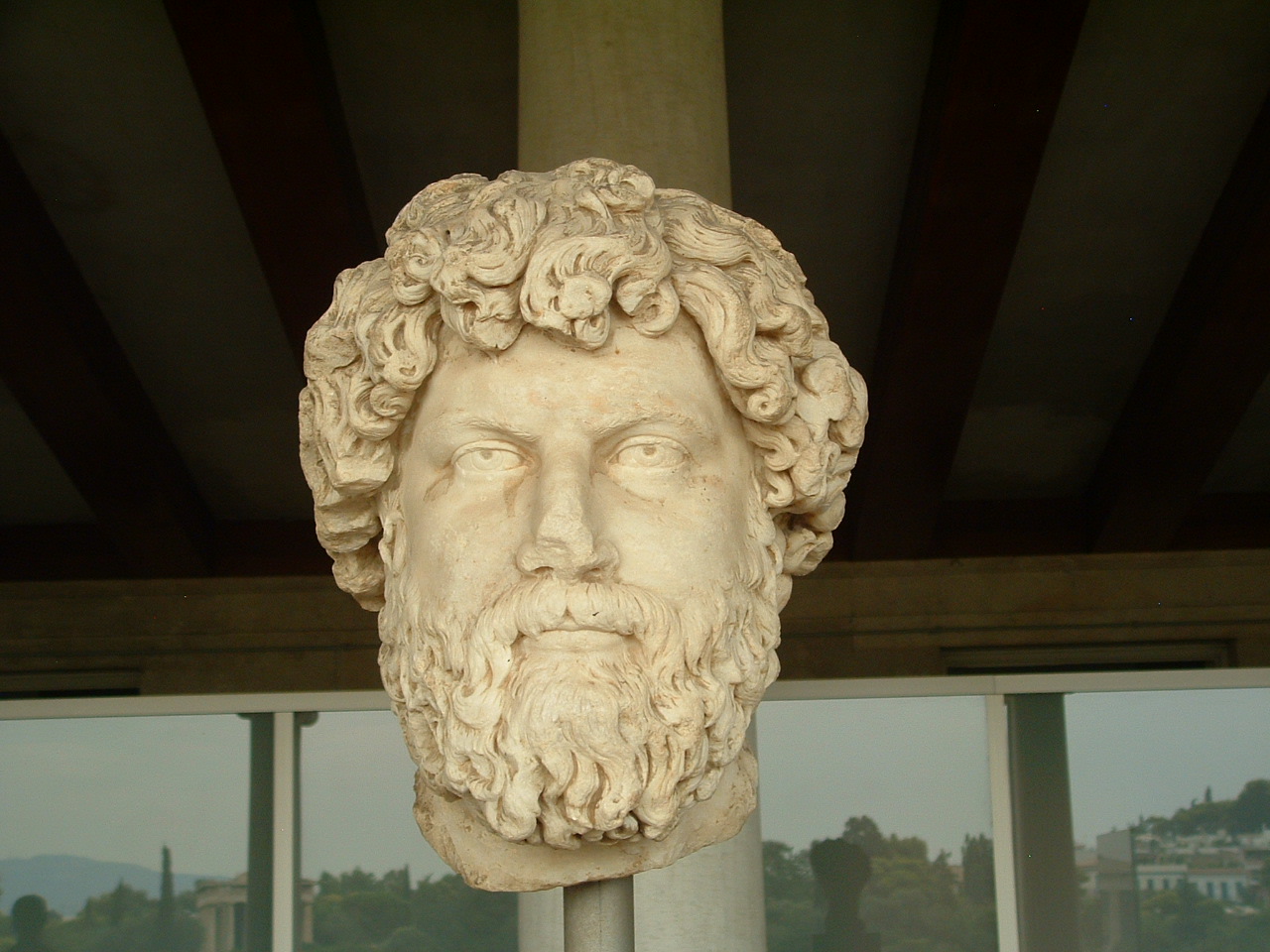
Probably a philosopher. He has that look in his eye ‘I am wiser than you!’

Ancient Rock Star? No, it’s Alexander the Great. Same thing.
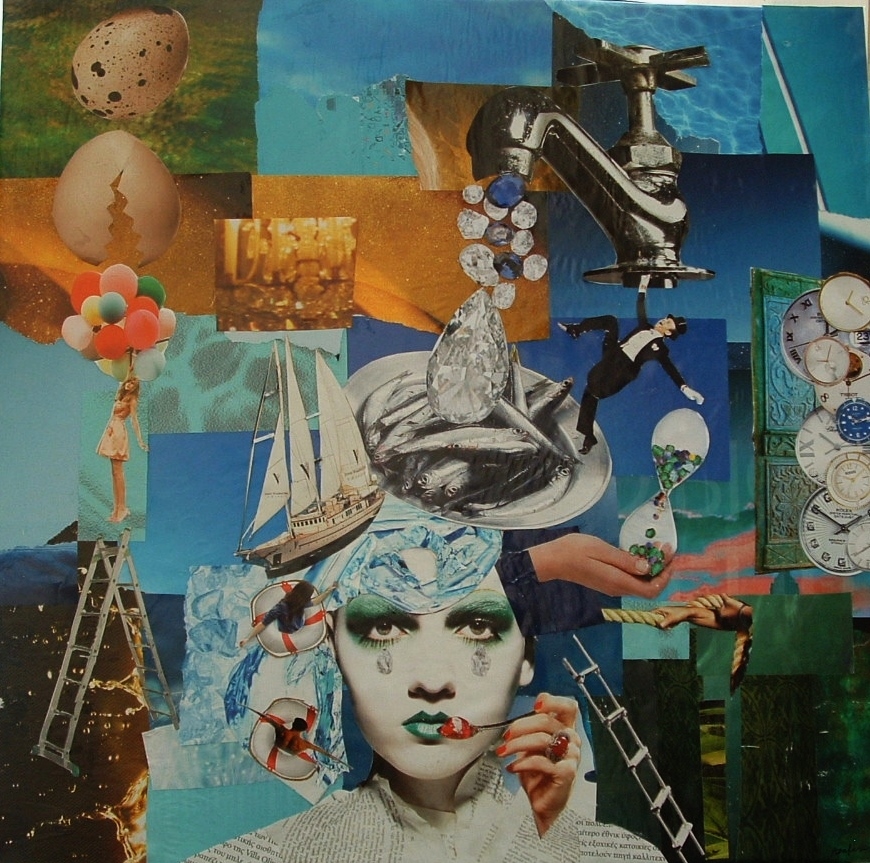
Paper collage on 40 x 40 cm canvas
By Angela Zafiris
When I began making my artwork I had no idea what the theme would be i just worked from intuition placing images together on the canvas. When I was done, I decided that I was going to call it ‘Precious Time’ since I used jewels and faces of watches. That same day I was on the internet when I cam across an article n about mythological creatures. One creature that caught my attention was that of Charybdis. In Greek mythology Charybdis was the daughter of Poseidon and Gaia . She was once a beautiful naiad who was turned into a sea monster by Circe, a witch, who was extremely jealous of the maiden. Charybdis is the personification of a whirl pool in the ocean that sinks Greek ships. She is referenced in Homers’ ‘The Odyssey’ where Odysseas is faced with Scylla (another monster) and Charybdis in a narrow strait and where Scylla took the lives of some of his crew men.
Was it mere coincidence? Fate? Whatever it was I just thought it was so odd how I came across this mythology that I wasn’t very familiar with on the day that I was to name and publish my artwork on my site. Artwork that might have been inspired by the mythology but was not-or maybe it was… perhaps subconsciously?
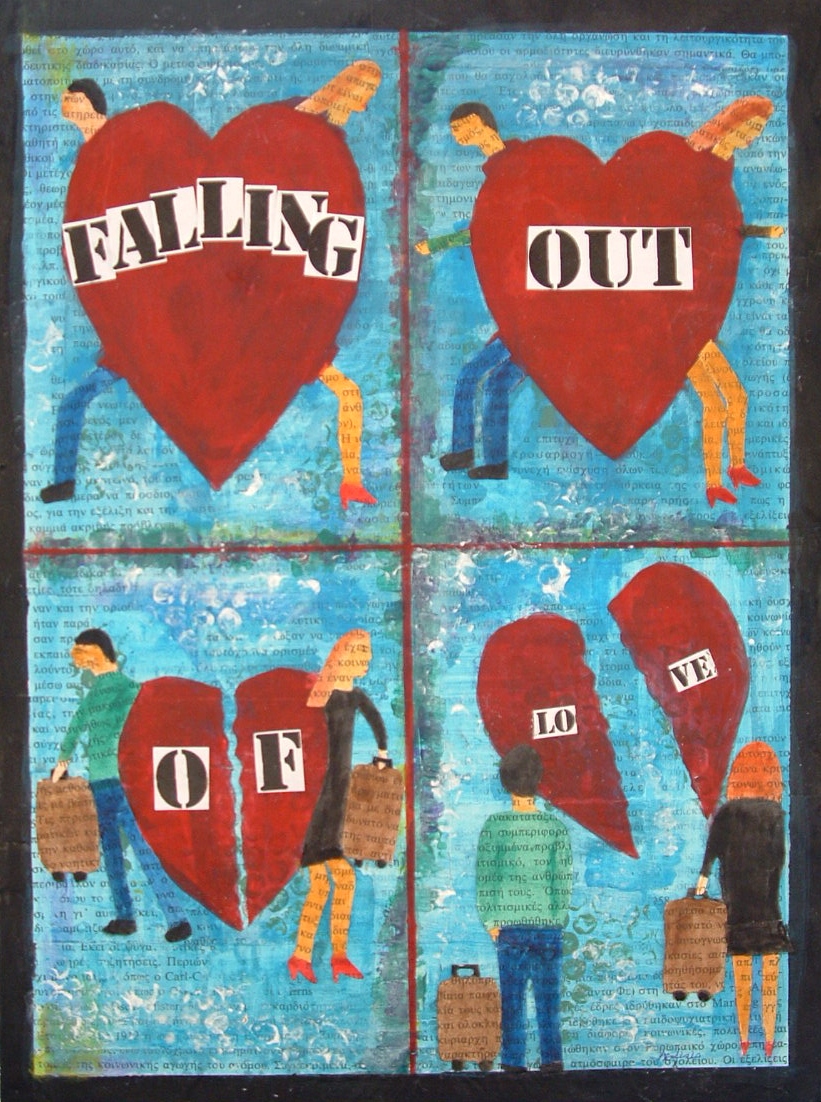
Illustration 24 x 32 cm on canvas by Angela Zafiris

