The Neighbourhood of the Gods/Η Γειτονιά των Θεών

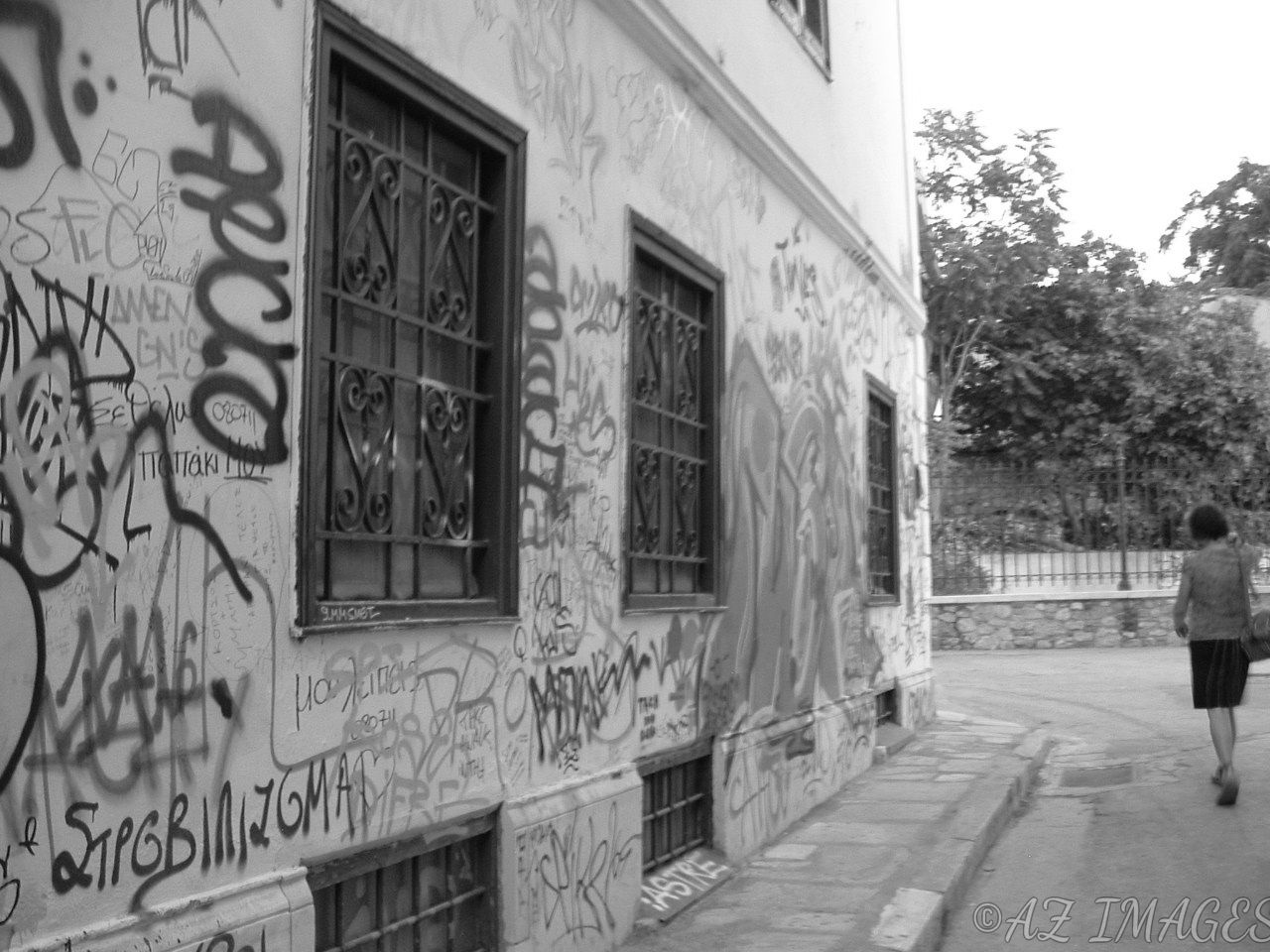
ladygrafittitext.jpg

A woman walks by the graffiti.

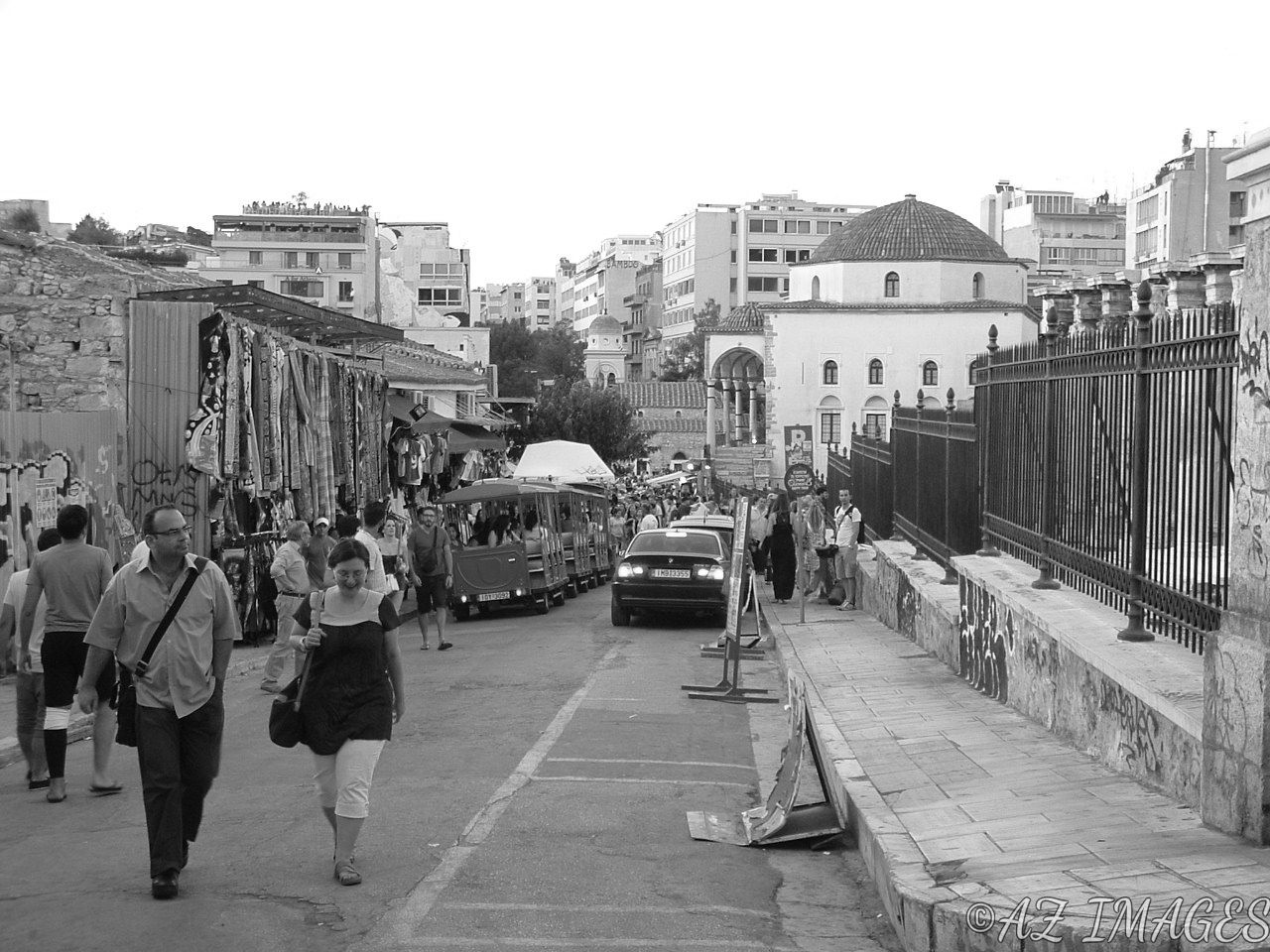
plakatext.jpg

A view of Monastiraki square below from Plaka.

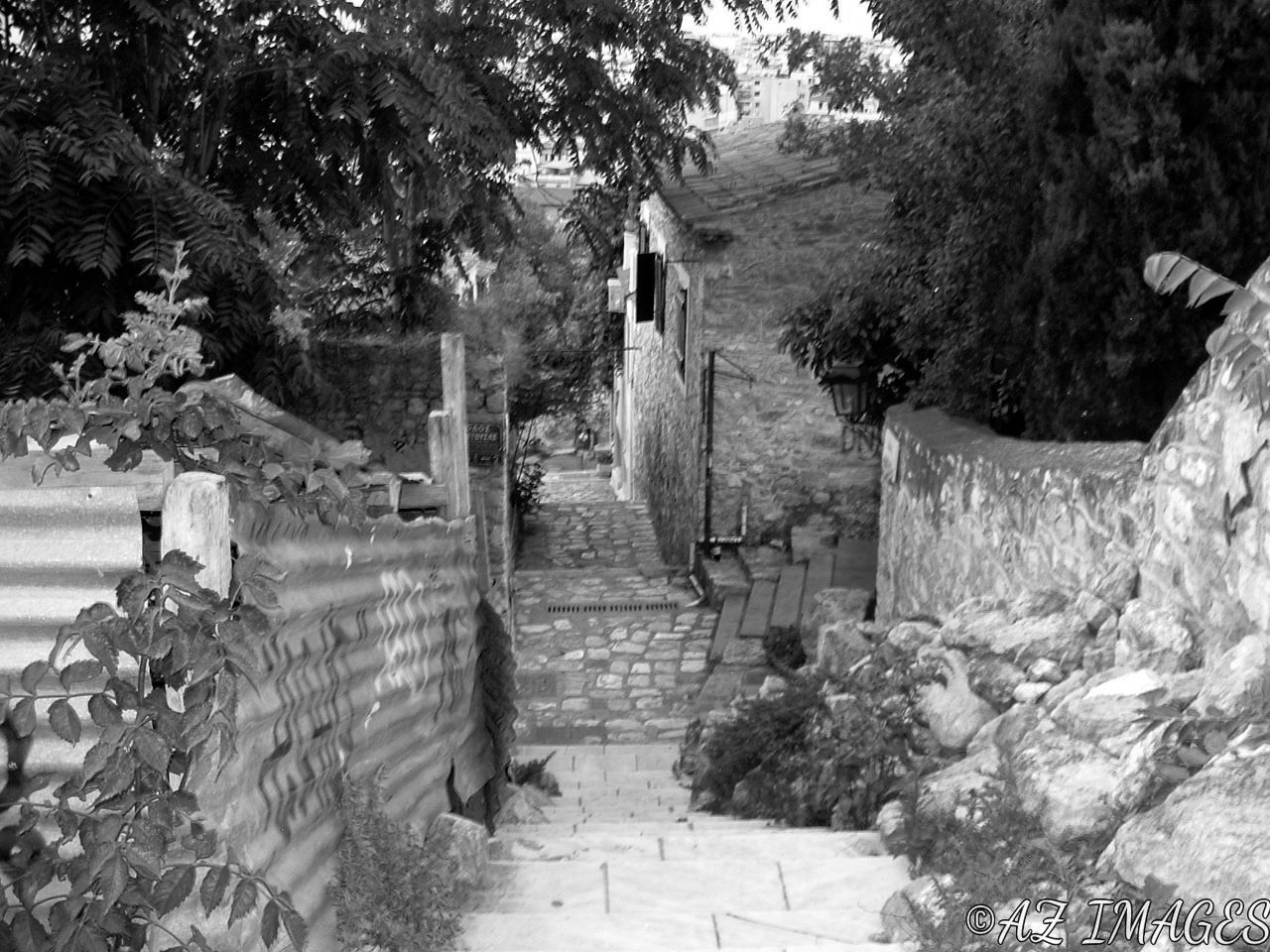
smallpathtext.jpg

Narrow cobble stone path in Plaka.

The neighbourhood of Plaka in Athens is nicknamed ‘ the neighbourhood of the Gods’ becaue of  its close proximity to the Parthenon.

It is a very touristy neighbourhood,  and it has so many hidden features. You can never take enough pictures while in Plaka. I read that settlers from the Cyclades built the neighbourhood which explains why the architecture is similar to the architecture of the Cycladic islands specifically from ‘Anfi’ from where the settlers came from.

Η γειτονιά της Πλάκας στην Αθήνα έχει το παρατσούκλι «η γειτονιά των Θεών», καθώς βρίσκεται πολύ κοντά στον Παρθενώνα.
Είναι μια πολύ τουριστική περιοχή, και έχει τόσα πολλά κρυμμένα χαρακτηριστικά. Δεν μπορείτε ποτέ να τραβηξετε αρκετές φωτογραφίες στην Πλάκα. Διάβασα ότι οι άποικοι από τις Κυκλάδες εχτίτησαν τη γειτονιά  και γι ‘αυτό εξηγεί γιατί η αρχιτεκτονική της είναι παρόμοια με την αρχιτεκτονική των Κυκλάδων, συγκεκριμένα από το νησί της«Anfi»  όπου οι έποικοι προέρχονταν.

Little Paris/To Μικρό Παρίσι

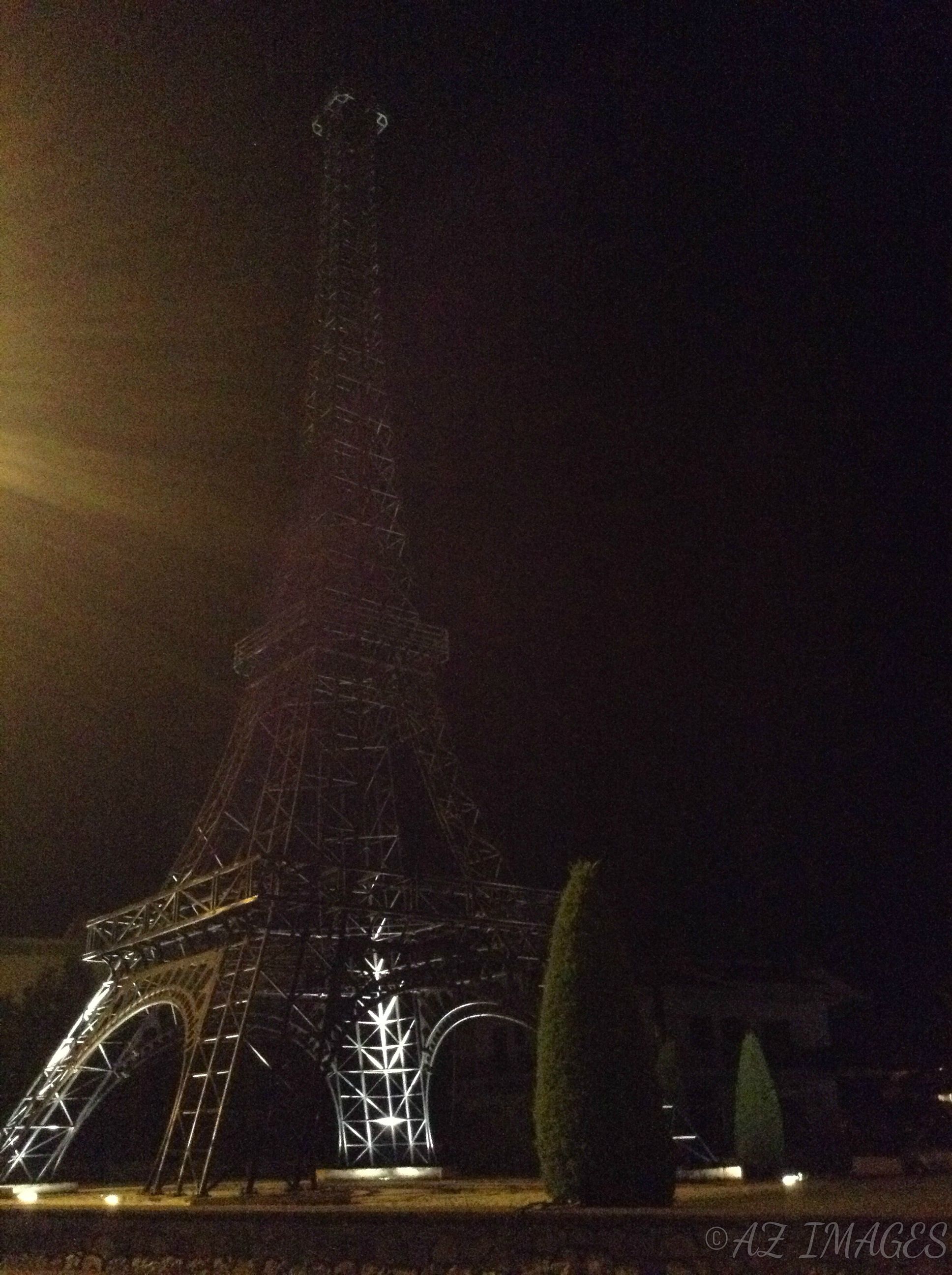
eiffeltowertext.jpg

A nighttime shot of the Eifel tower at Filiatra.

eifeltower2text.jpg

The small town of Filiatra is located in the prefecture of Messinia in the Peloponesse. It is called ‘little Paris’ by the locals and you can see why since the towns’ landmark is a replica of the Eifel tower which is located at the entrance of the town. This area exports grapes to many countries in Europe and the French are the biggest consumers. I heard that the Eifel tower was built in the last century to honour the French who praised the quality of the grapes from Filiatra.

There are many other replicas of the Eiffel tower all over the world from Las Vegas to China. I had no idea there were that many!

For more images of replicas:

http://www.huffingtonpost.com/2013/08/19/replicas-eiffel-tower_n_3721294.html

Secrets of the Museum

herashead.jpg

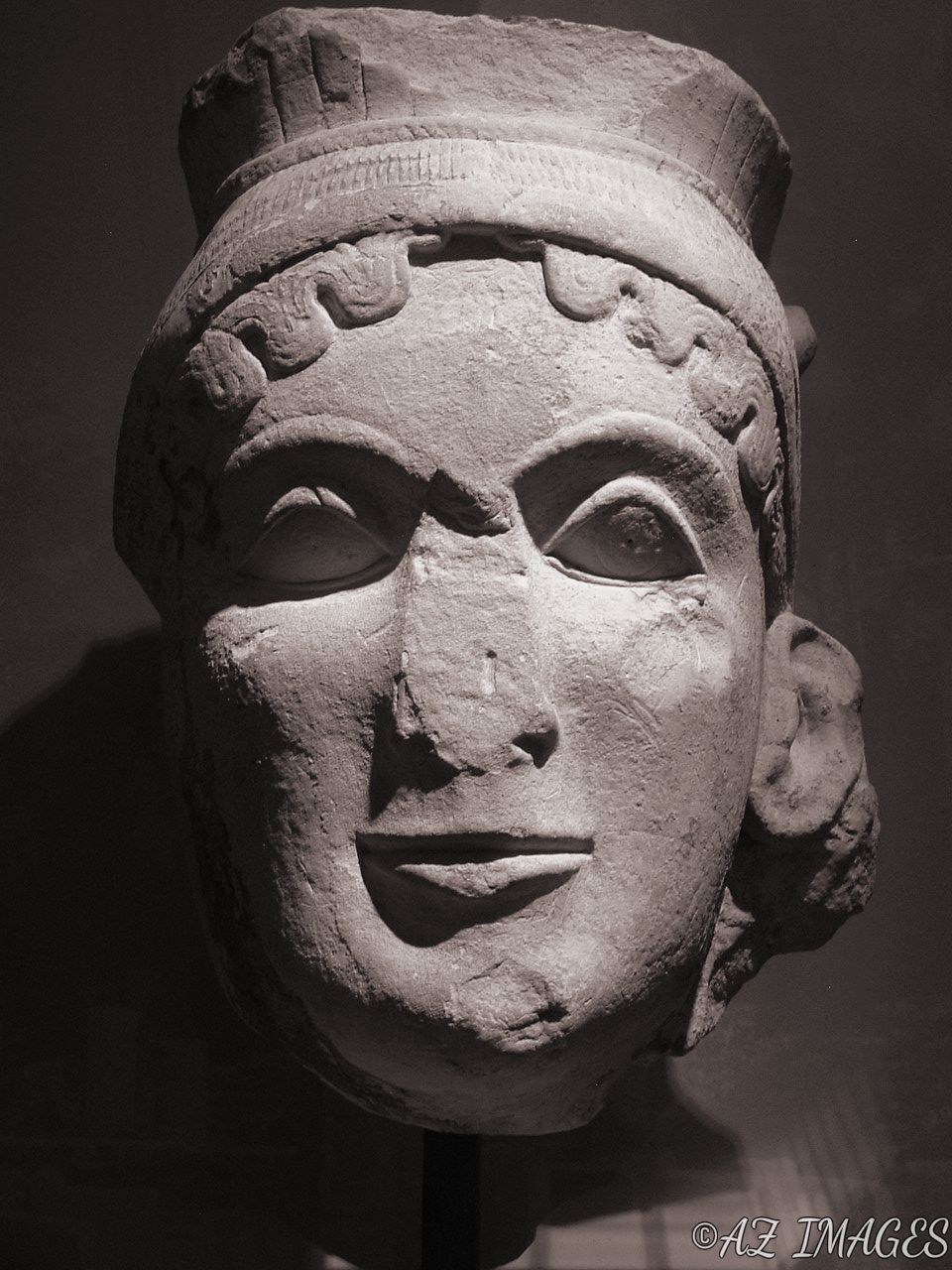
A Colossal female head made of lime stone. Possibly the Goddess Hera.

This was my second visit to the Archaeological Museum of Olympia in Greece. This year, I had some cousins that were working there and they, with their observant eyes  and knowledge. were able to point out some things that I did not notice on my first visit.

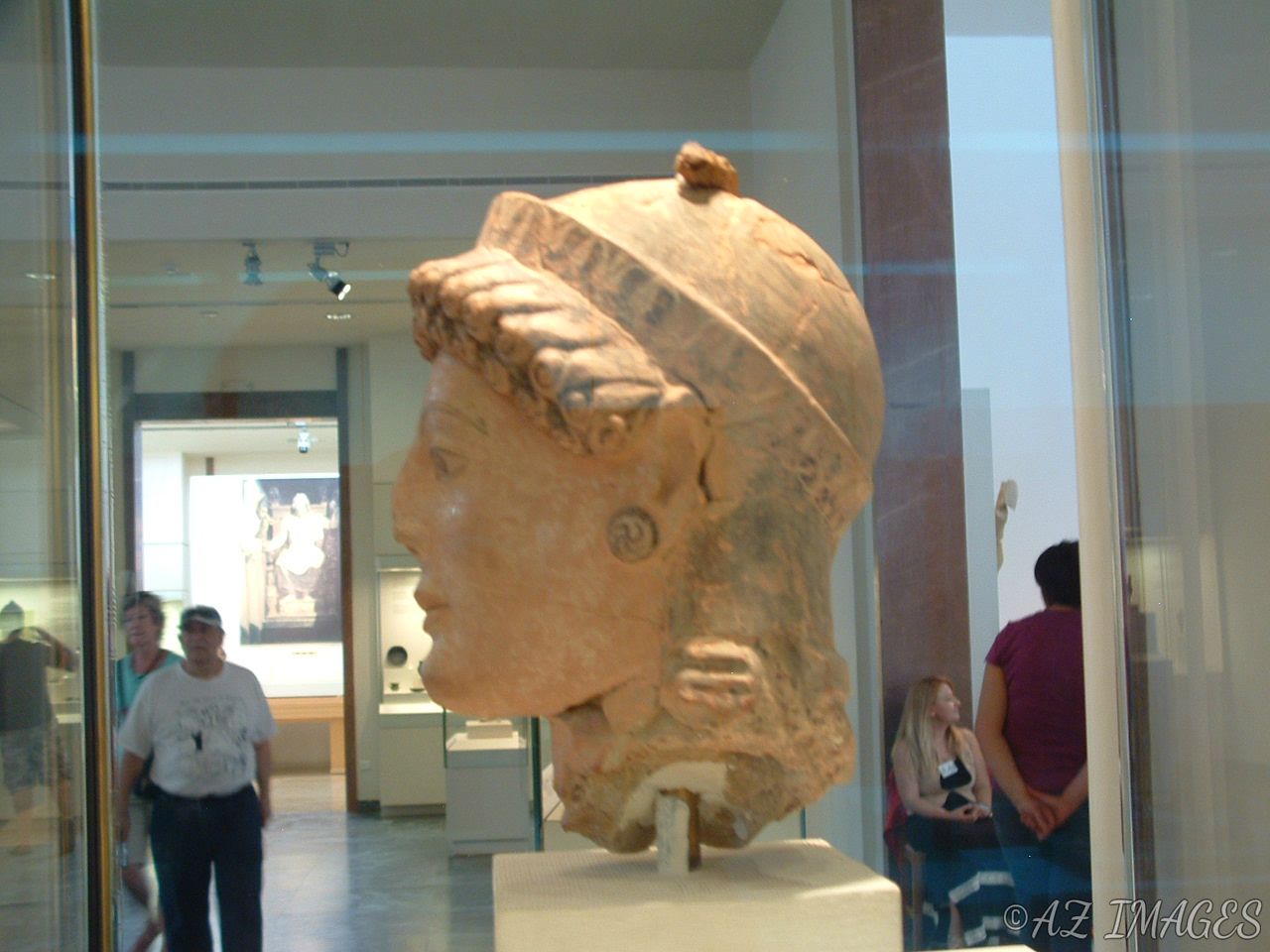
One of the things that I didn’t notice on my first visit was a snake that is coming out of Hera’s head in the photograph below.
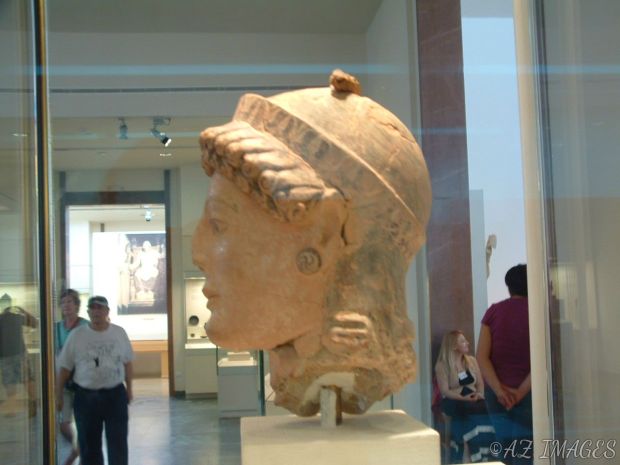
Snake coming out of Heras' Head

Snake coming out of the Goddess Hera’s Head. Yuck I hate snakes!

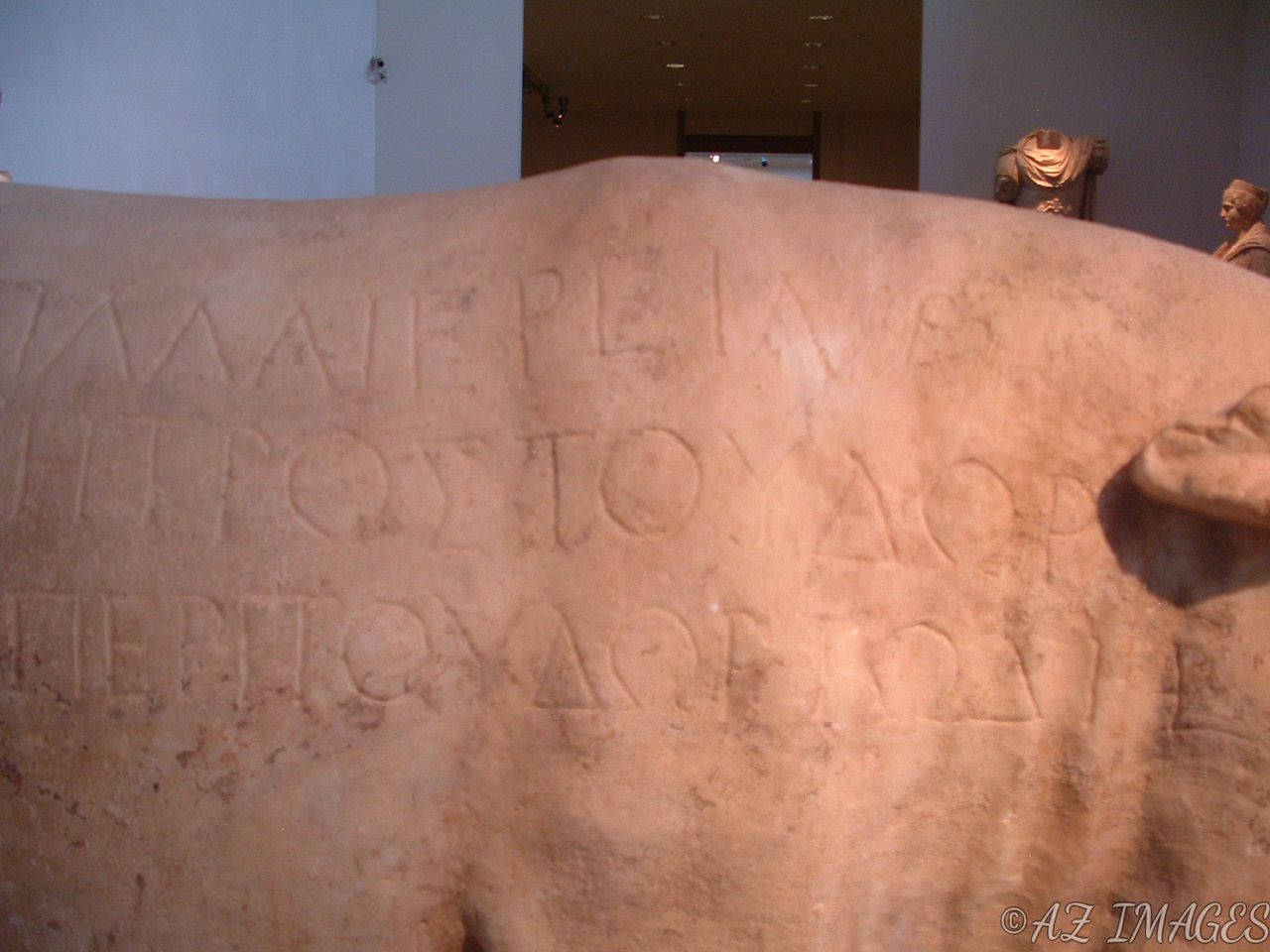
I was suprised to discover a heart shape on the upper right side of  this sculpture of a bull. It was prominent Greek aristocrat Herod of Atticus who had this statue of a bull made in honour of  his Roman wife Aspasia Regilla. He even built the theatre ‘Odeon of Atticus’, which is next to the Parthenon, in memory of  her. This man really loved his wife! So much so that he even had a little heart drawn on the upper right side.  Who knew people drew hearts back then too?
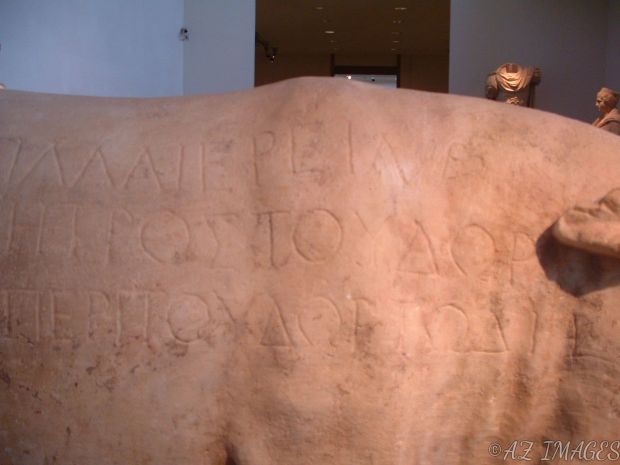
cowhearttext.jpg

The inscription reads, ‘Regilla priestess of Demeter offers the water and appendices to Zeus’.

Aspasia hung around Olympia a lot and was even the only woman to be officially a spectator at the games. Only men were allowed to take part and be spectators at the games. Yes, my ancestors were very misogynistic.  Also, bulls were used as sacrifices for Zeus at his temple in Olympia.
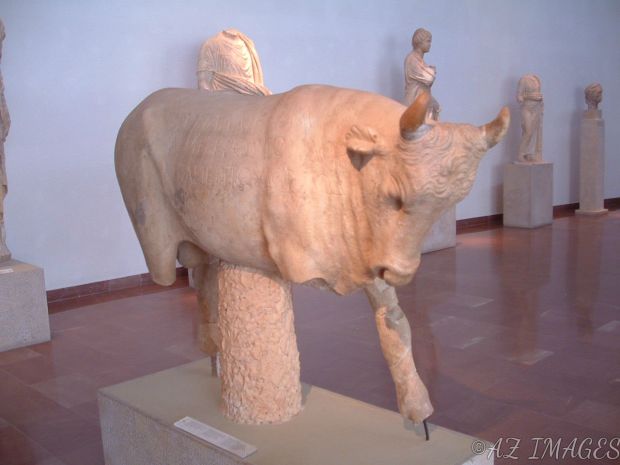
The Bull a gift to Aspasia wife of Herod

The Bull was a gift for Aspasia Regilla the wife of Herod

The is the very famous statue of Hermes by Greek Sculptor Praxiteles from Athens.  This is the only authentic statue that has been saved from Praxiteles. It was found in the temple of Hera in Olympia in 1877 and it dates back to 343 A.D. Hermes (messenger of the Gods)  is holding baby Dionysos (God of wine) who is crying trying to grab something while crying. Hermes  (when he had his arm) most likely had some grapes in his hand. There are some very skilful techniques in this statue, from the left he looks sad, from the right happy and from the front he looks calm.
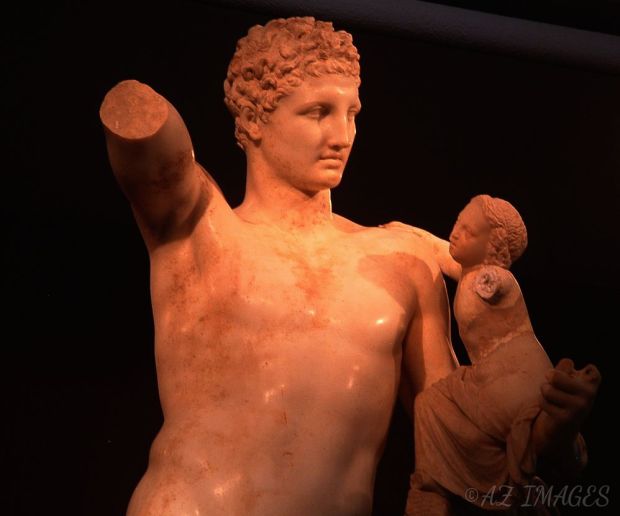
hermesdarktext.jpgI didn’t know that Praxiteles wasn’t happy with his masterpiece, and that is why the back of the marble statue has not been polished.   Artists are such perfectionists!

Front and back view of Hermes

Front and back view of Hermes. The front is polished the back is not.

This is the breast-plate of Roman emperor Marcus Aurelius.  Marcus had an affinity towards Greece. He wrote his famous philosophical book called ‘The Meditations’ in Greek.  To show his love for Greece he had carved on his breast-plate the Goddess Athena (with the owl and serpent on each side of her representing wisdom)  standing on top of the Etruscan she-wolf who is nursing the twins Romulus and Remus. The twins are central characters in the origin mythology of Rome. The fact that the Goddess Athena is depicted as standing over the twins means that Marcus believed that Athens was superior to Rome. We can see that Athena is being crowned as well.
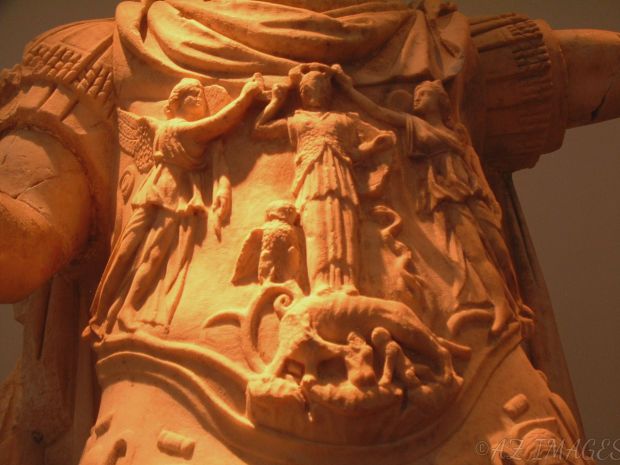
breastplatetext.jpg

Breast-plate of Roman Emperor Marcus Aurelius.

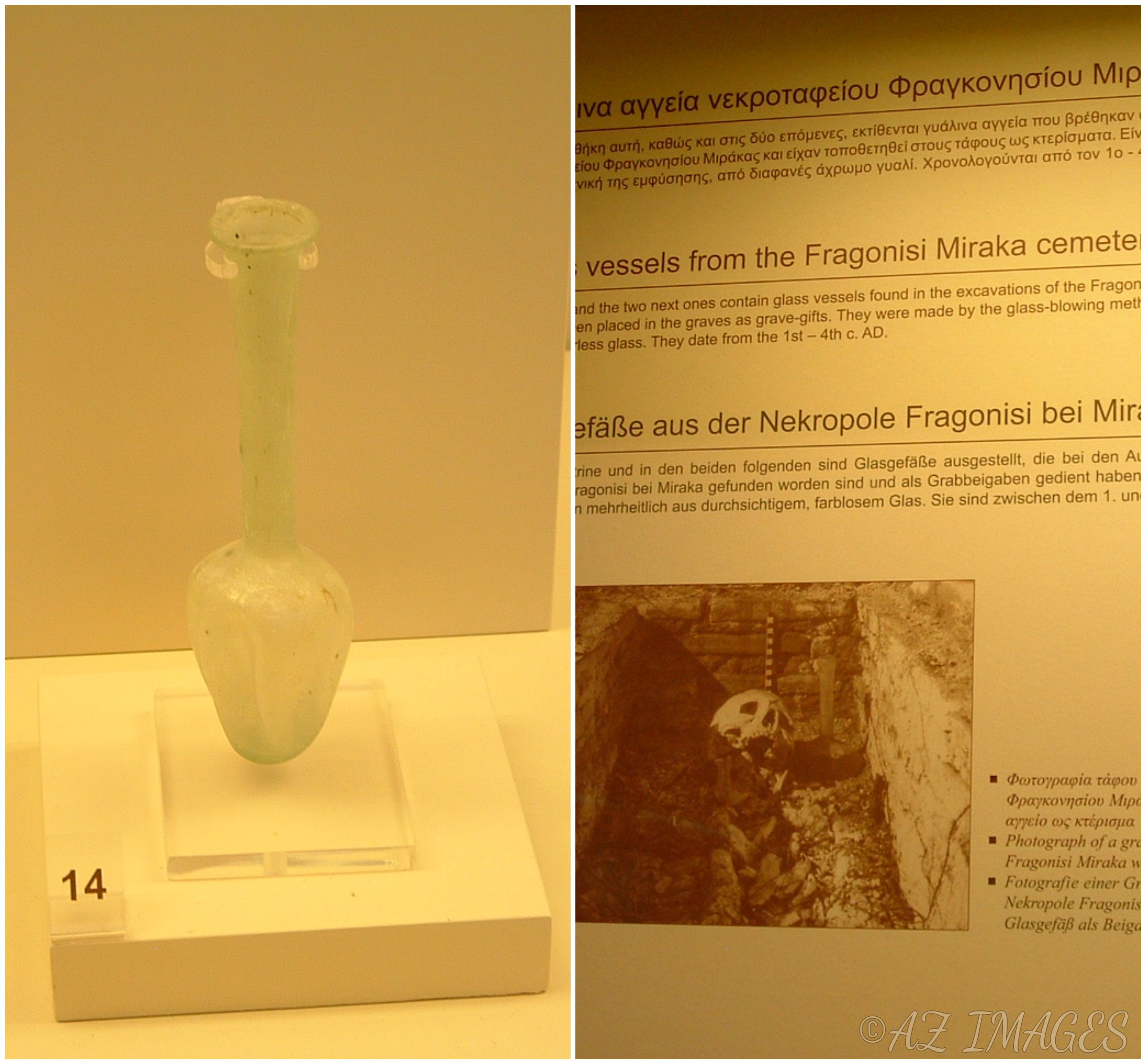
I wasn’t aware of the history of tear bottles. These tear bottles were found in a cemetery in a grave in Miraka cemetery.  The ancient mourners of the deceased would collect their tears in the glass bottles and place them in the graves to show their respect and grief. This tradition dates back to ancient Persia, Biblical times, Rome and it made a come back in the Victoria era.

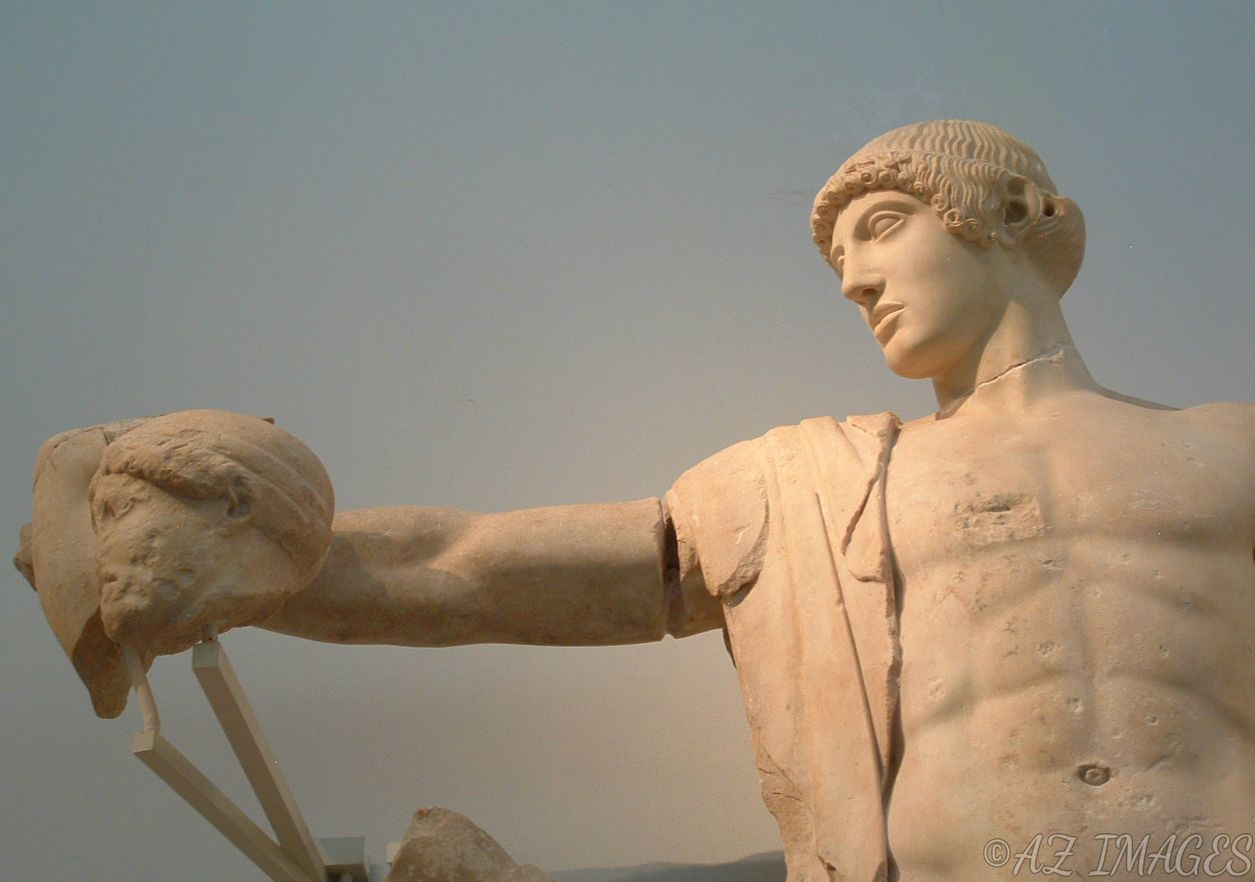
Tear BottleOne of my favourite statues at the museum. The statue of Apollo in the west pediment of the temple of Zeus which was built in 472 and 456 BC. The temple was built by sculptor Phidias at Olympia. The temple housed the 13 m (43 ft) high statue of Zeus-one of the 7 wonders of the ancient world.
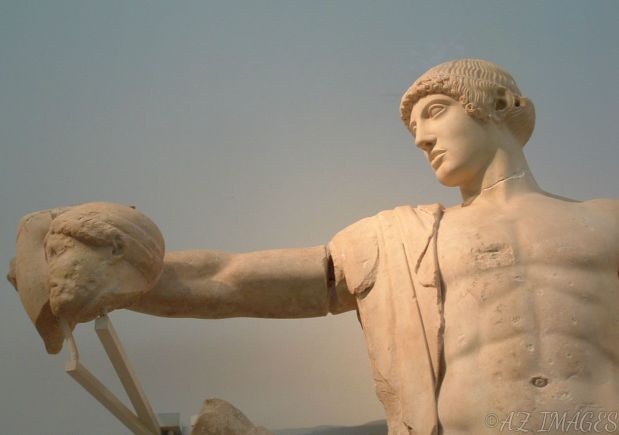
Apollo

The God Apollo

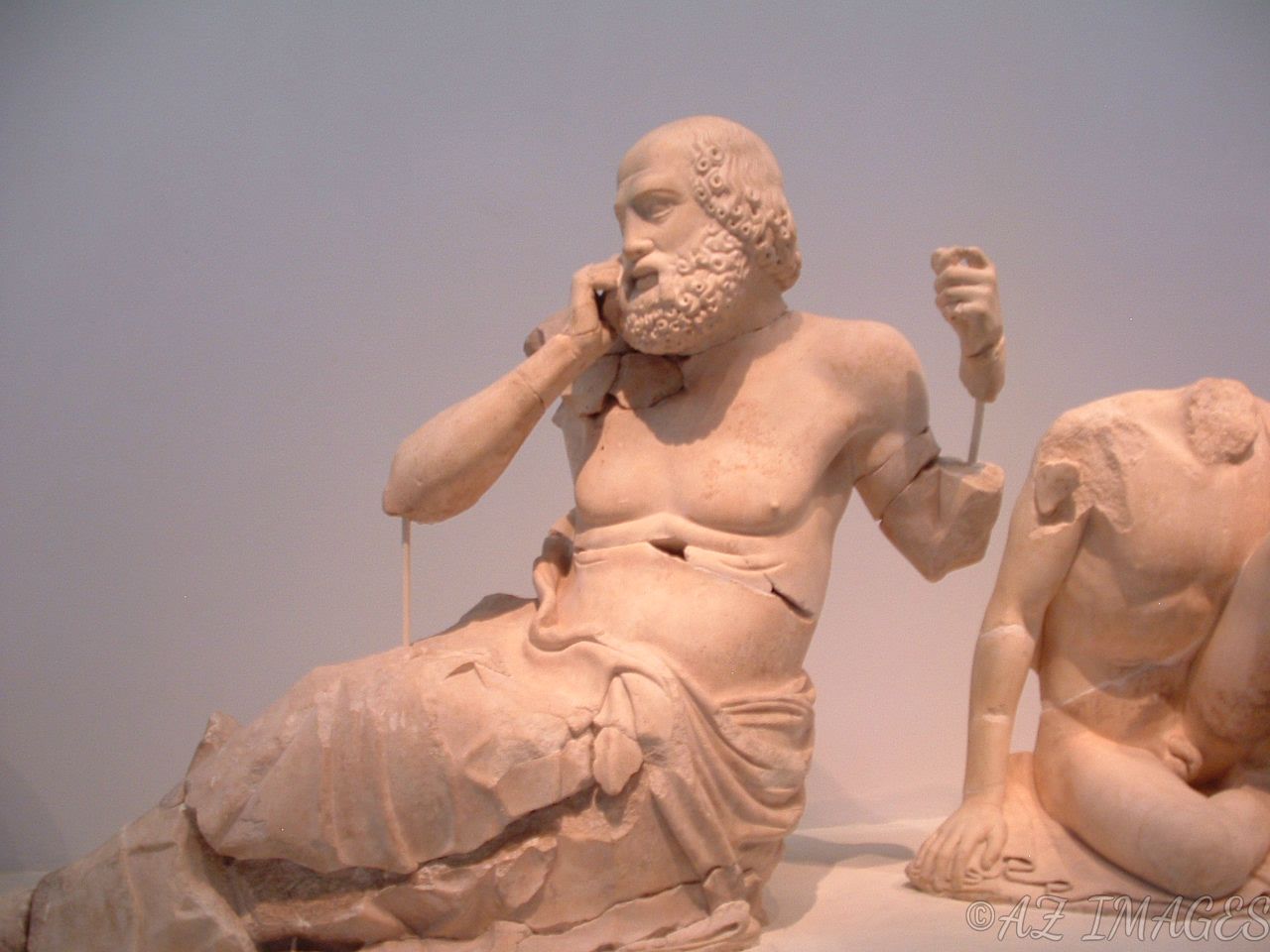
This old man is not on a cell phone, he is in deep thought, because he is ‘the Seer’.
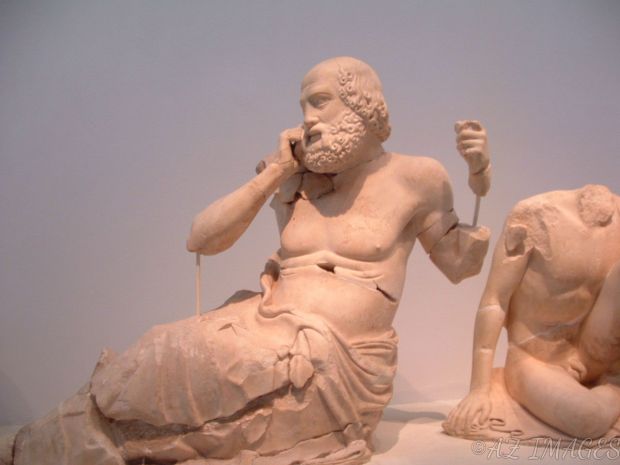
The Seer

The Seer from the West Pediment of the Temple of Zeus.
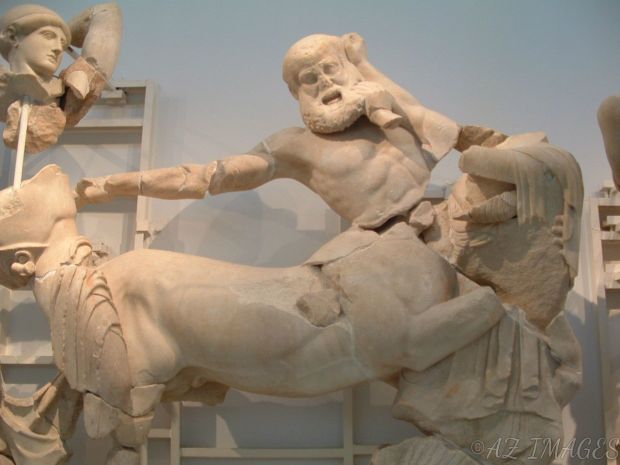
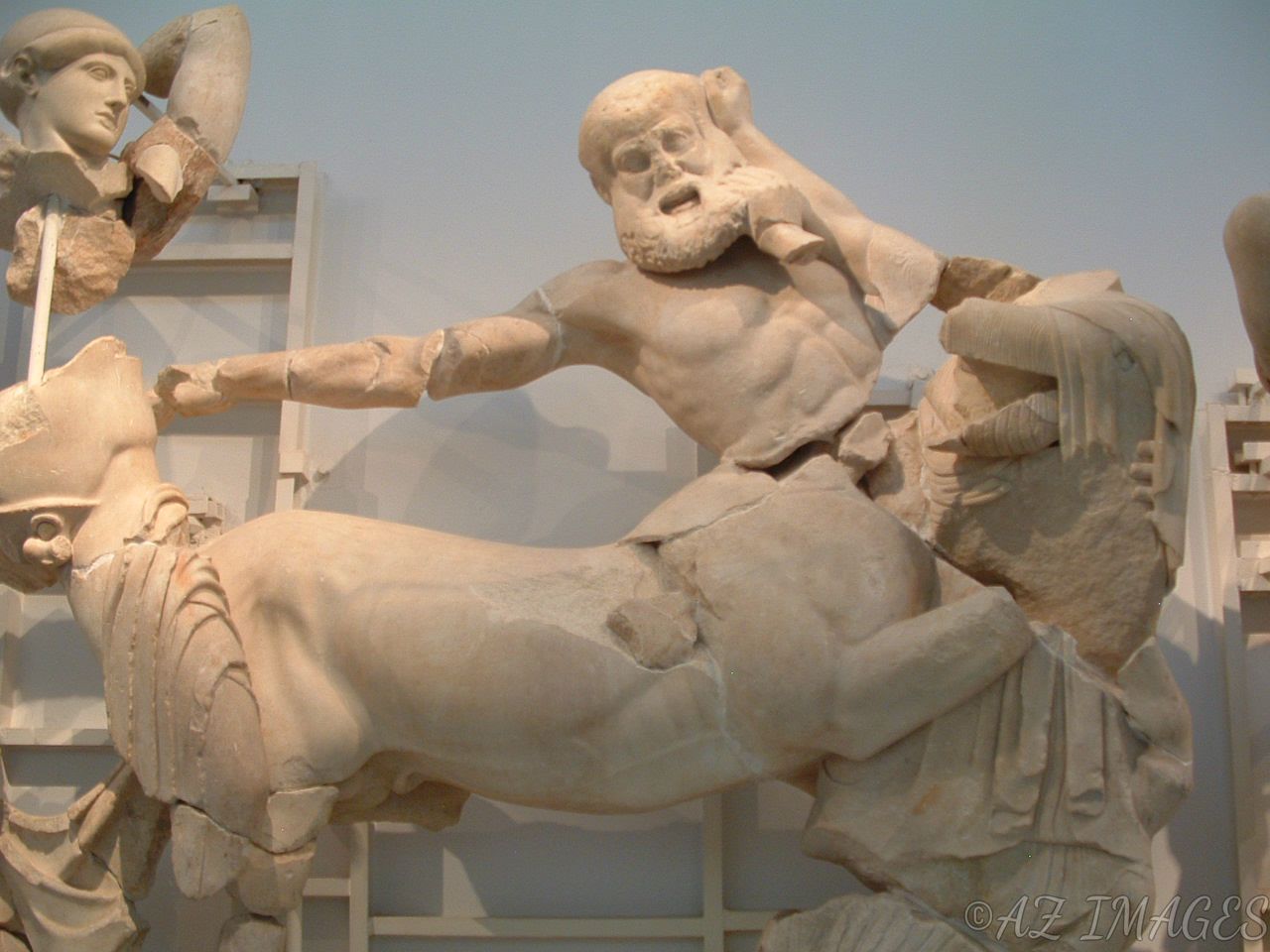
thecentaurtext.jpg

The Centaur in a battle from The West Pediment of the Temple of Zeus.

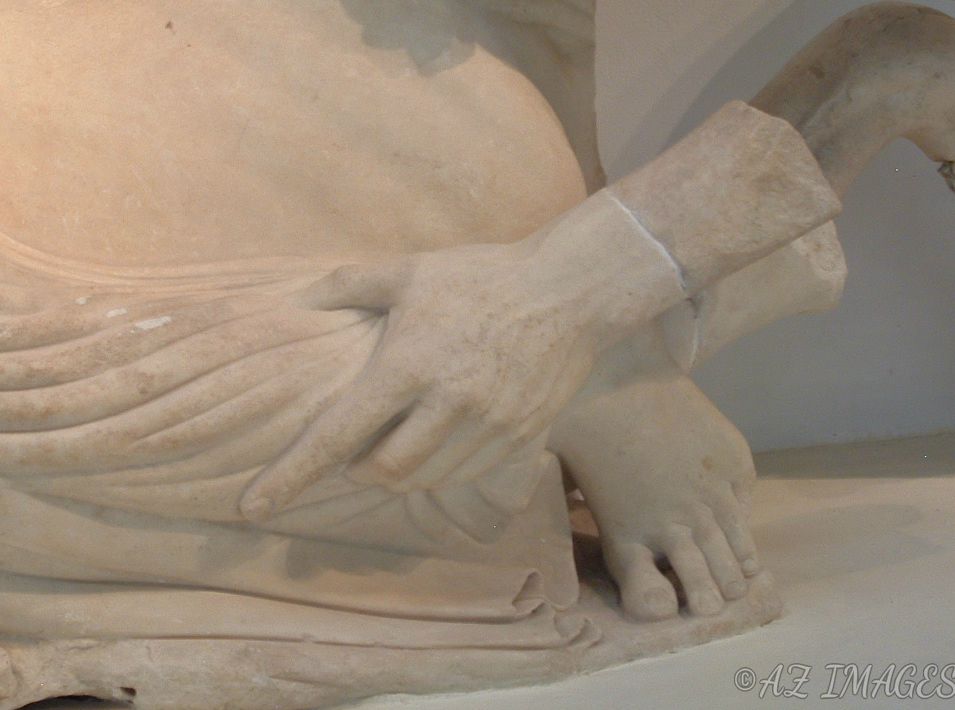
Notice the veins on the hands-now that’s impressive.
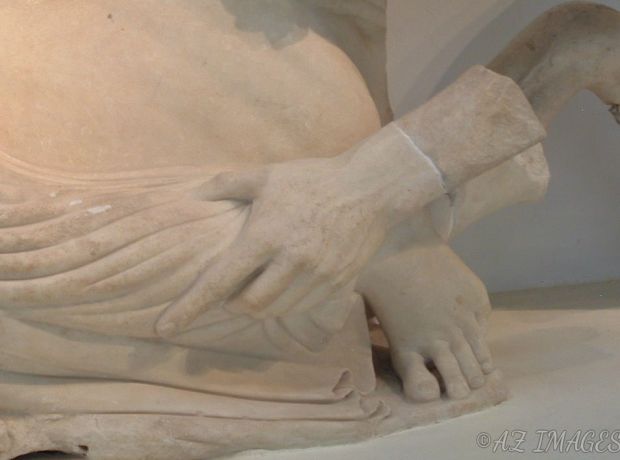
handtext.jpg

Details of a hand.

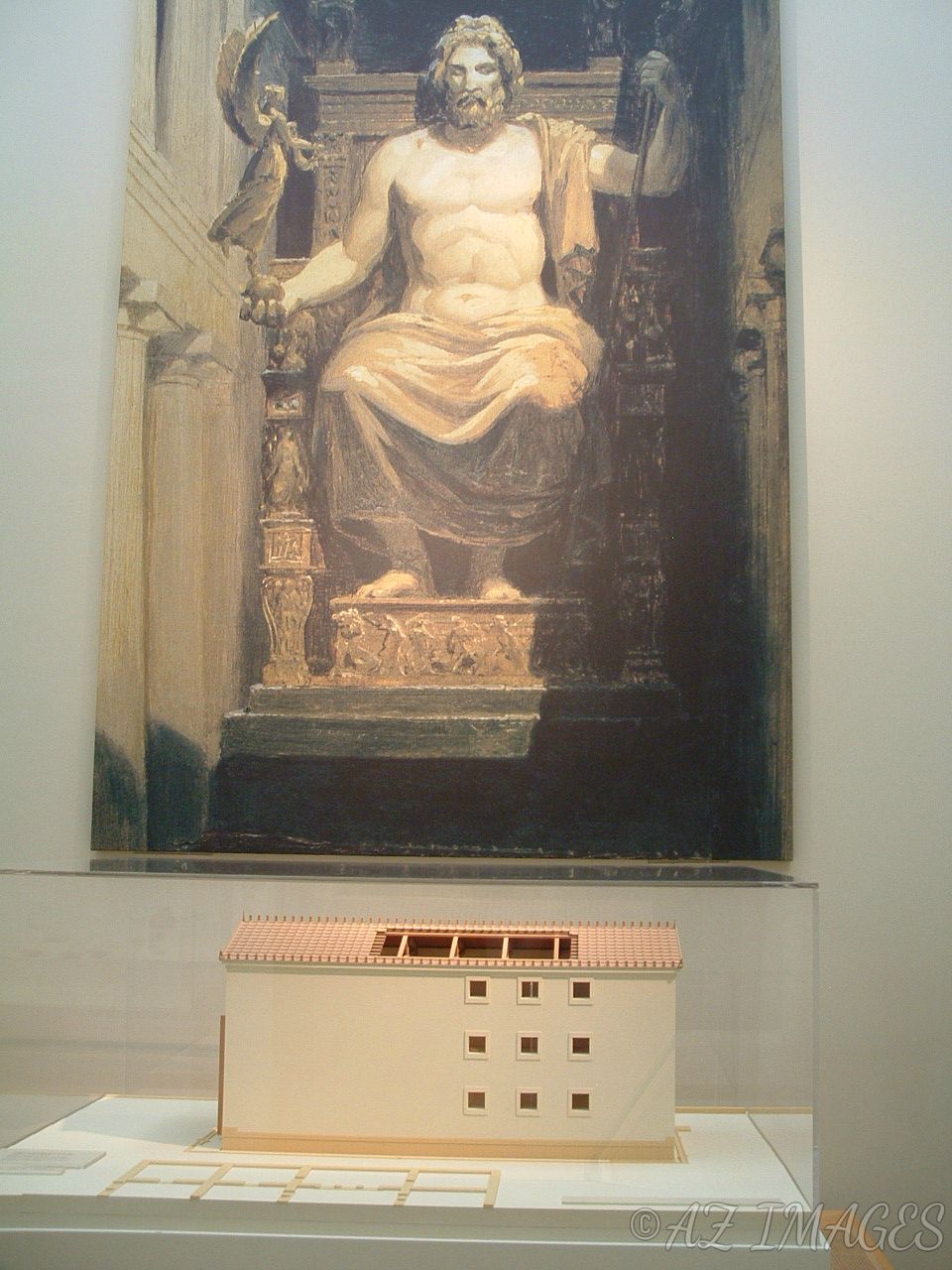
Sculptor Phidias’ work shop was as big as the temple of Zeus. It had to be the same size as the temple since the statue was so tall.
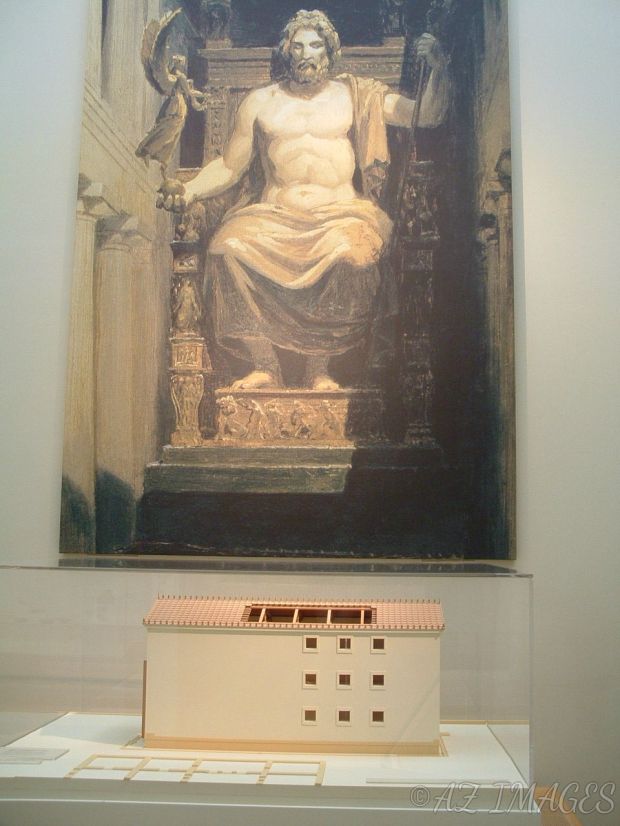
 

Portrait of the statue of Zeus and Phidia's

A painting of the statue of Zeus and Phidias’ workshop

There are more ‘secrets’ in the museum, but I can only put so  much in a blog post. I find that some the tour guides are more knowledgable than other tour guides and some like to divulge more information than others.

The Ancient Ruins of Olympia

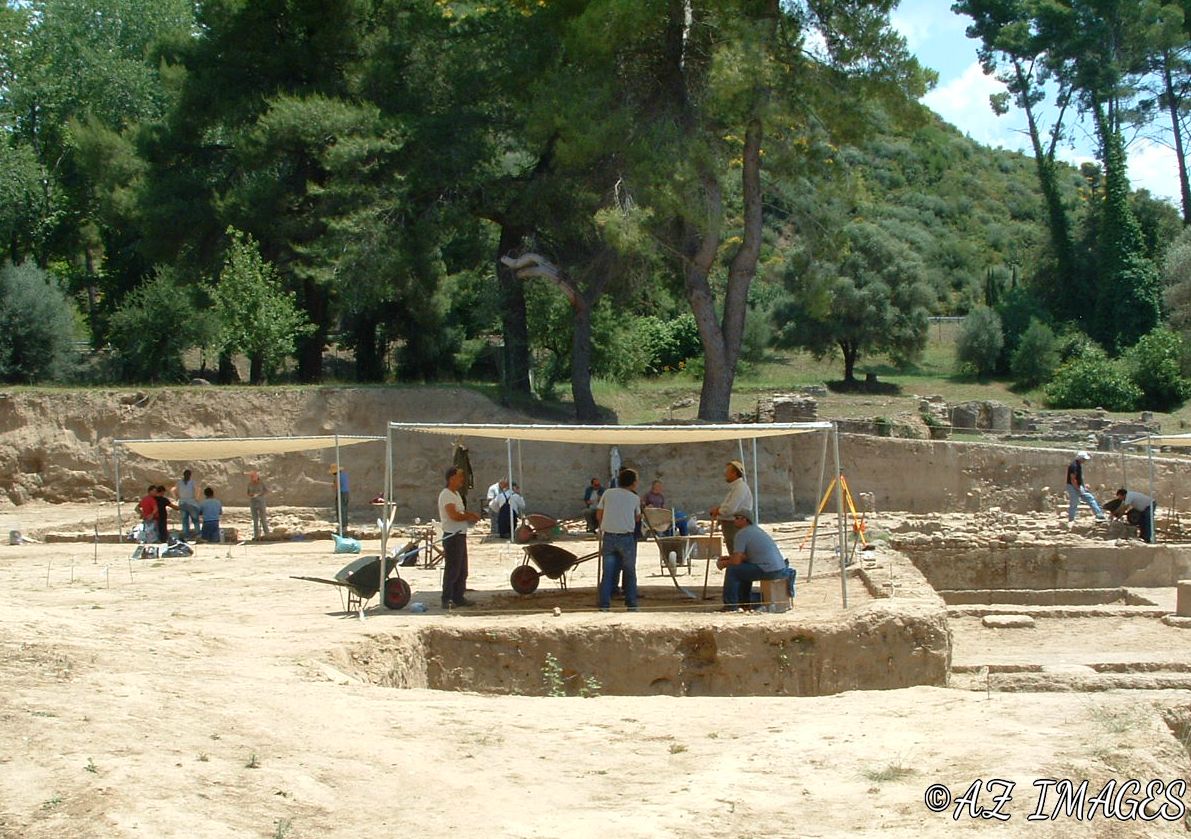
archaeologisttext.jpg

Archaeologists at work close to the entrance of the site.

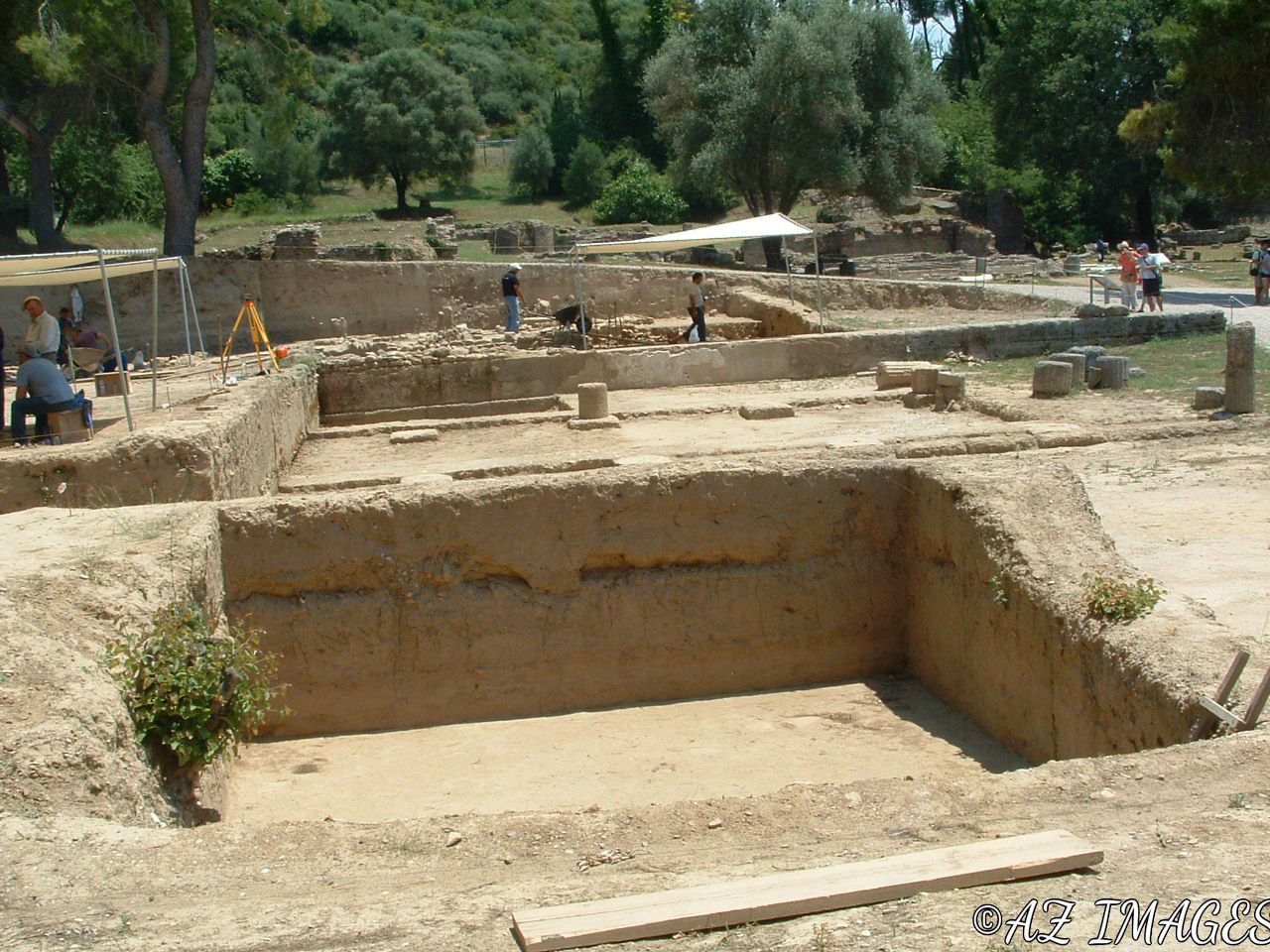
archaeositetext.jpg

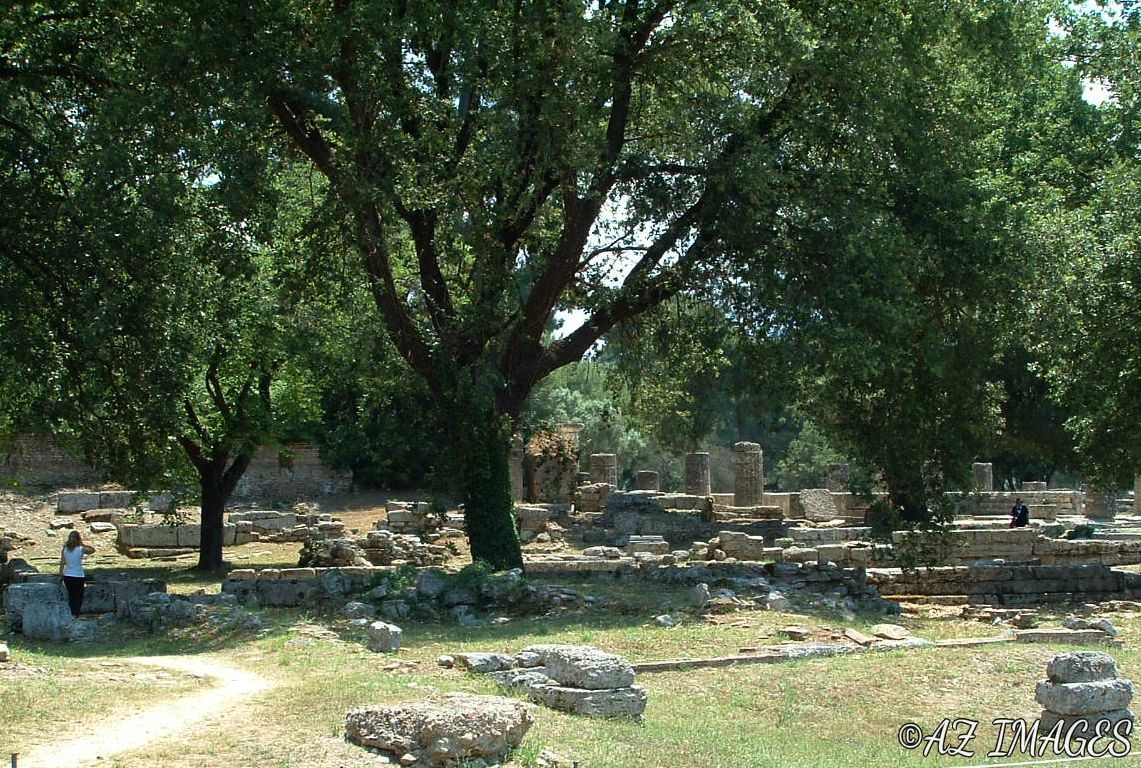
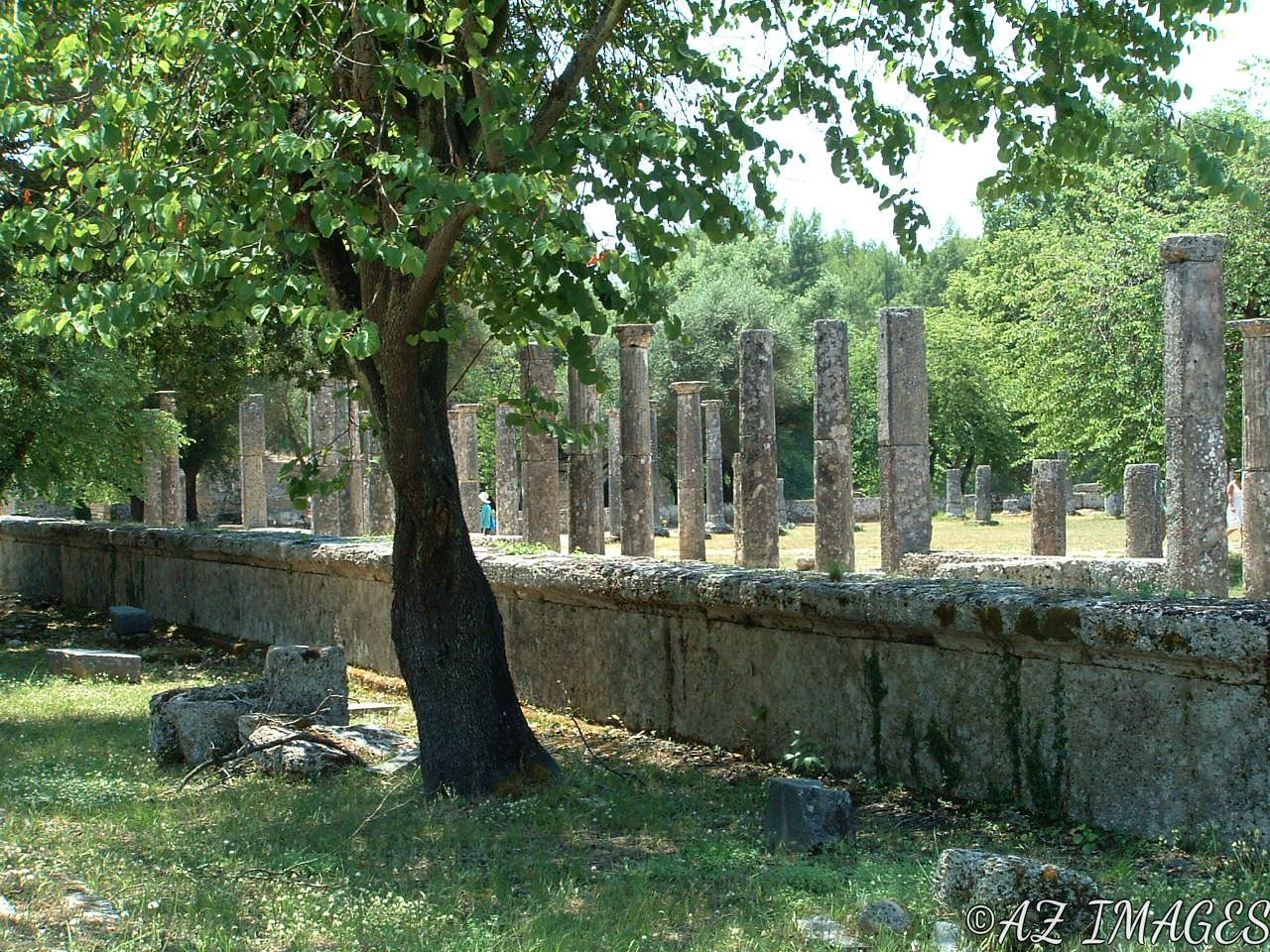
Archaeologists uncovered a gymnasium 186 meters in length dating back to the 3rd & 4th Century A.D

archaeositetext3.jpg

archaeosite4text.jpg

archaeosite5text.jpg

archaeotext9.jpg

The many tourists at the archaeological site

The many tourists at the archaeological site

The Entrance to the Stadium for the Athletes

The Entrance to the Stadium for the Athletes

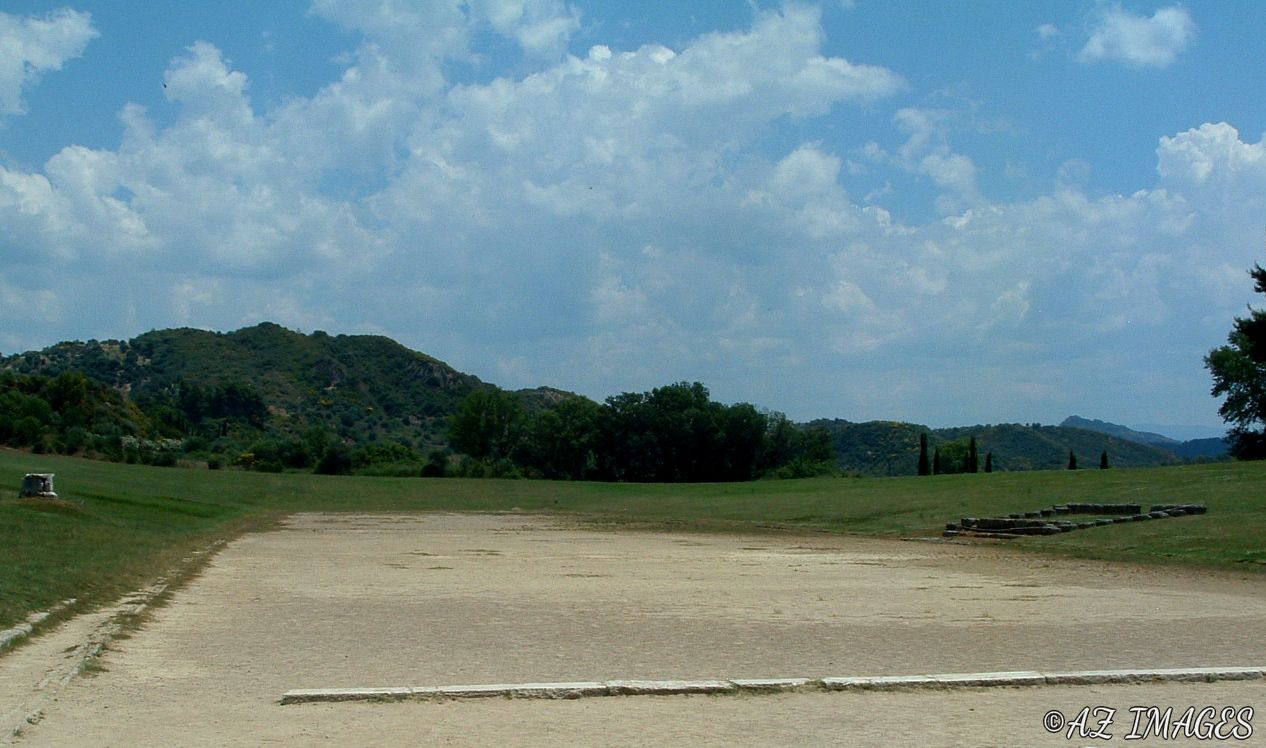
The Ancient Stadium. The judges sat on the right.

The Ancient Stadium. The judges sat on the right where the stones are.

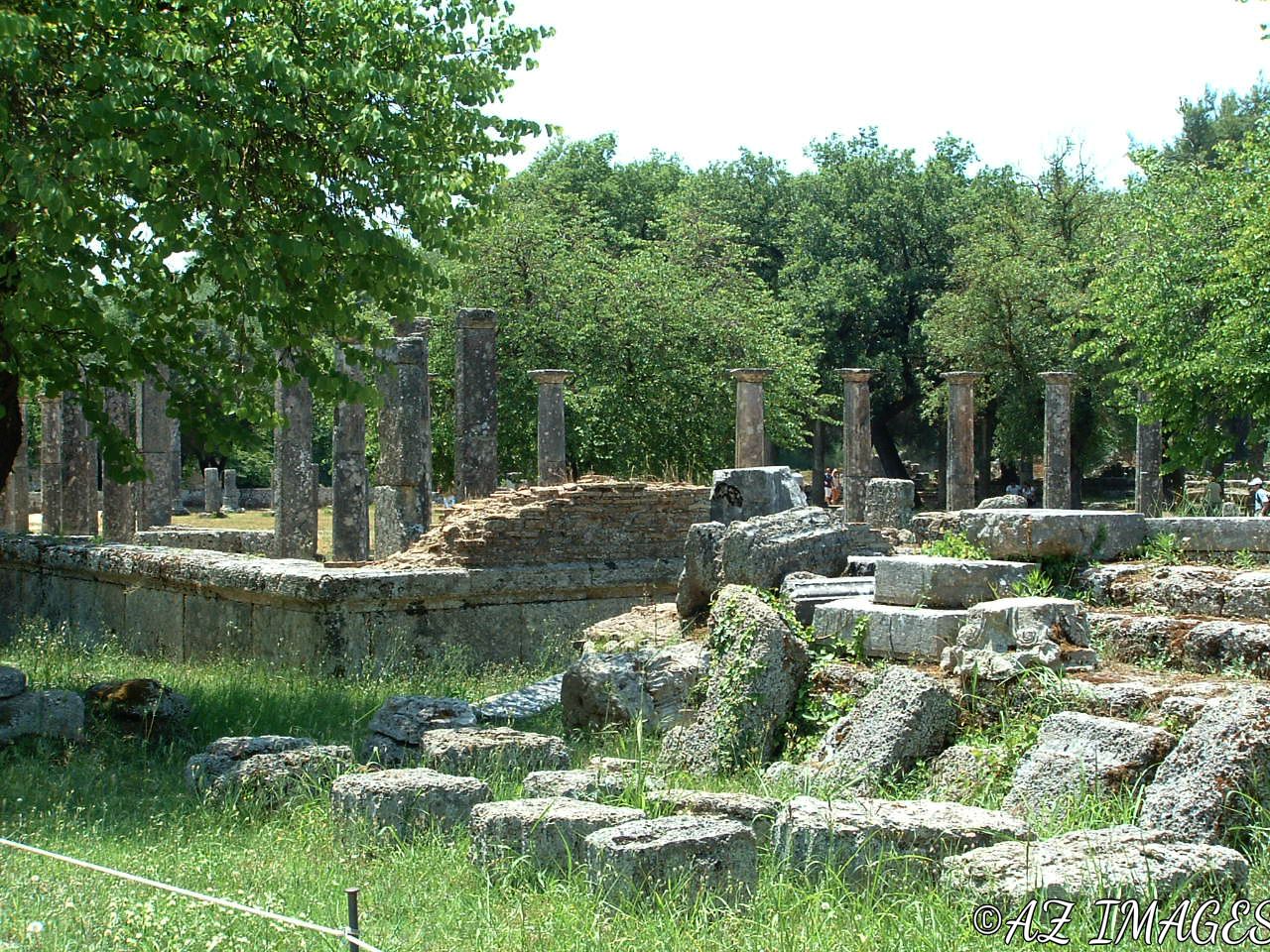
This is the first time that I visited the archaeological site (Altis) at ancient Olympia. I have driven by the site many times to visit my mothers’ village. I even went to the museum, but I did not have the opportunity to visit the site where the gymnasiums were. This was where the athletes would train for the games.  I remember back in the summer of 2004, when Athens was hosting the Olympic games, and sitting on the grass of the ancient stadium with other spectators from around the world. We were waiting for the priestess to light the torch in the gymnasium area. It was a cloudy morning and all of a sudden the sun came out and the torch was lit. It was an experience that I will never forget.

Walking through the site I was a bit disheartening to see everything in ruins. It’s hard to imagine how the site looked like back then. Despite being in ruins the site was very beautiful and tranquil.

Ancient Olympia/Αρχαία Ολυμπία

he Olive Groves of Olympia

The Olive Groves of Olympia

A Lone Cypress Tree

A Lone Cypress Tree

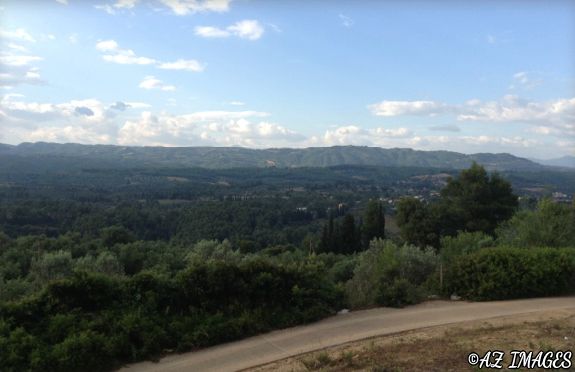
The Landscape of Olympia

The Landscape of Olympia

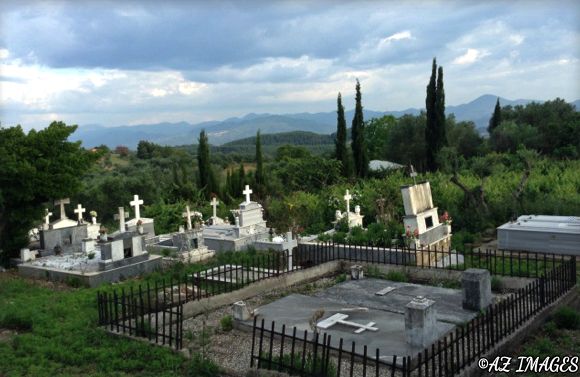
The Church Cemetary

The Church Cemetary

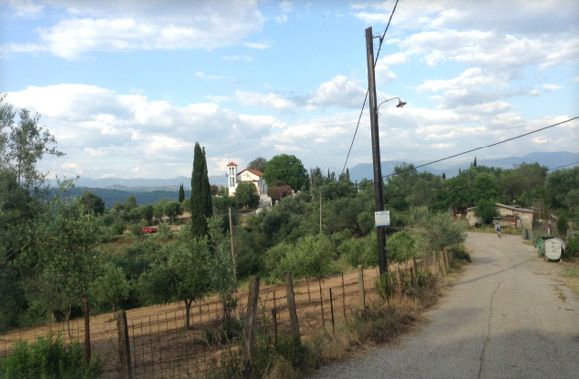
In the distance, the church of Saint Sotiros (Saviour)

In the distance, the church of Saint Sotiros (Saviour)

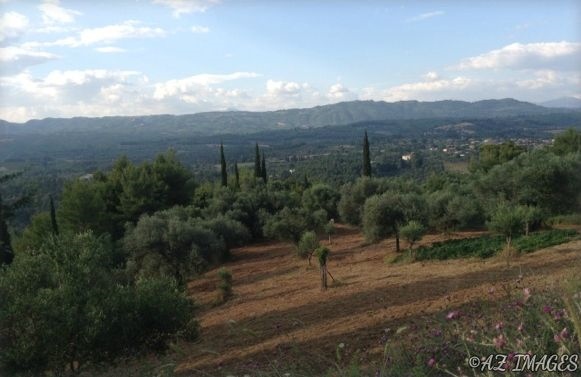
Recently, I took some photographs of the lush green landscape of Olympia located in the western Peloponnese in Greece. I took most of the photographs from the church which offers a great view of the surrounding land with its many olive groves. My mother is from this region and I have gone many times but I never took photographs like these. It is a very beautiul and important place as it is where the original Olympic games were held.

Πρόσφατα, τραβηξα μερικές φωτογραφίες από το καταπράσινο τοπίο της Ολυμπίας που βρίσκεται στη δυτική Πελοπόννησο στην Ελλάδα. Τραβηξα τις φωτογραφίες κοντα στην εκκλησία η οποία προσφέρει μια υπέροχη θέα στη γύρω περιοχη με τις πολλες ελαιώνες. Η μητέρα μου είναι από την περιοχή αυτή και έχω πάει πολλές φορές, αλλά ποτέ δεν ειχα τραβηξει φωτογραφίες σαν αυτές. Η Αρχαια Ολυμπια είναι ένα πολύ ομορφο και σημαντικο μερος καθώς είναι το σημείο όπου πραγματοποιήθηκαν οι πρωτες Ολυμπιακες Αγώνες

Voidokilia Beach/Η Παραλία Της Βοϊδοκοιλιάς

‘Voidokilia’ beach is a very famous beach in Greece and it is considered to be one of the most beautiful in Greece. It is located in Messinia, Peloponnese.   The  landscape is very unique  with its sand dunes and marshland, and the beach that has a circular Omega type shape.  It is a great place for bike riding too.  The day that I went was not great for swimming.  It has been a rainy summer so far in Greece.  I arrived in the evening as I was just quickly passing through with no intention for staying too long, but I when I got there I wanted to stay a while longer. So,  I will definitely re-visit this place when the weather is better in the near-future.

Methoni Castle/Το Κάστρο της Μεθώνης


castlebridgebwtext.jpg

The bridge to leading to the castle

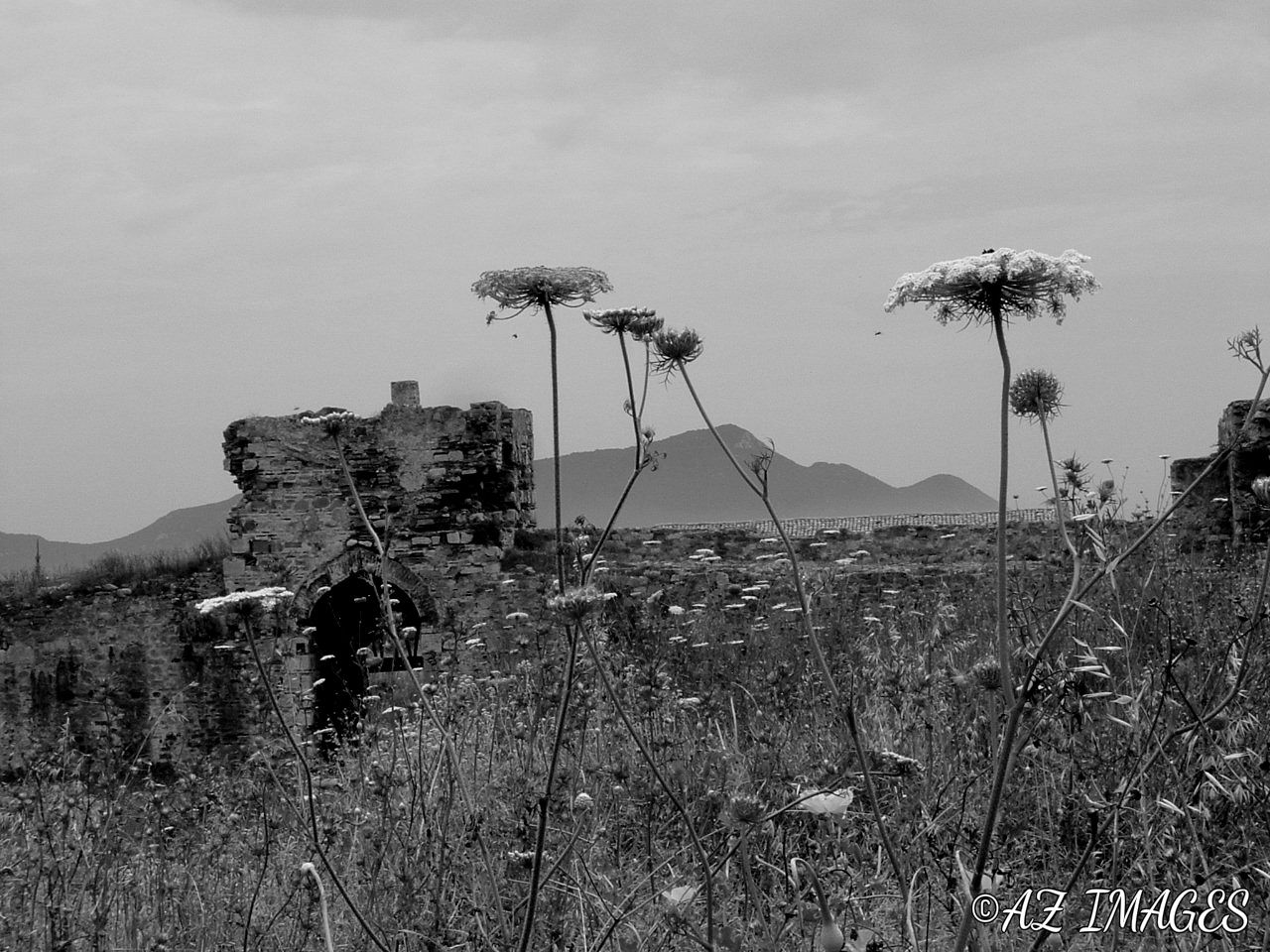
flowerscastlebwtext.jpg

hiddendoorbwtext.jpg

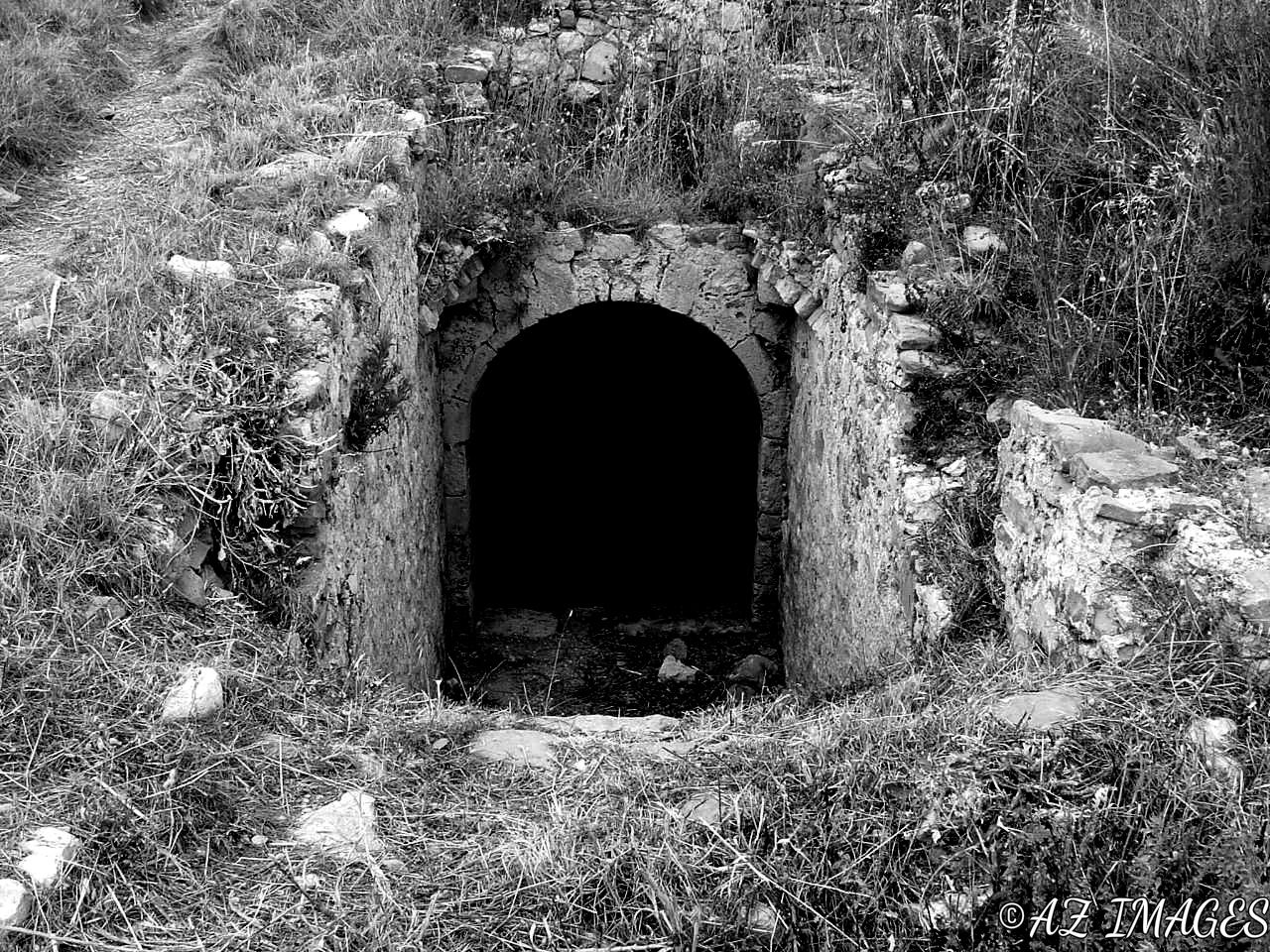
Creepy hidden passageway

My next stop on my tour of the southern Peloponnese is a small town called ‘Methoni’ which is located in Messinia in the west coast part of the Peloponnese. The town of Methoni is famous for its’ medieval castle (Game of Thrones style) which might be in ruins now,  but it is still awe-inspiring.  The climb to the top offers a spectacular view of the sea and of the town with its red tile roofs.  The site was known in Homeric times as it was called ‘Pedasus’.  Homer called the site “ampeloessa” (of vine leaves) in the Iliad.  In 1209 A.D the Venetians built the castle as it was the ideal spot for trade.   Due to its strategic location between Venice and the Holy Lands, Methoni was conquered by many people. The castle was conquered by the Franks and the Venetians and even pirates and then it went into the hands of the Turks in the 18th Century and then back into the hands of the Greeks in the 19th Century.

When I went there was no one there so there was no entrance fee and I roamed freely with just a few tourists scattered around. I took a lot of photographs and it was very difficult to choose the right ones for this blog. Some photographs I felt were better in black and white, but I didn’t want them all to be black and white, even though it was  cloudy that day, there was some good light and the colourful landscape showed up well in the photographs.